Note: this post contains affiliate links. As an Amazon Associate, I earn from qualifying purchases at no extra cost to you.
A Few Notes Before We Get to the Healthy Toddler Meals

Day 1 of Healthy Toddler Meals: Fresh fruit focus
Fruit provides many of the same nutrients as vegetables — vitamins, minerals, antioxidants and fiber — and works well as a substitute when a child resists veggies. Berries tend to be lower in sugar than many other fruits, making them a great everyday option for toddlers.
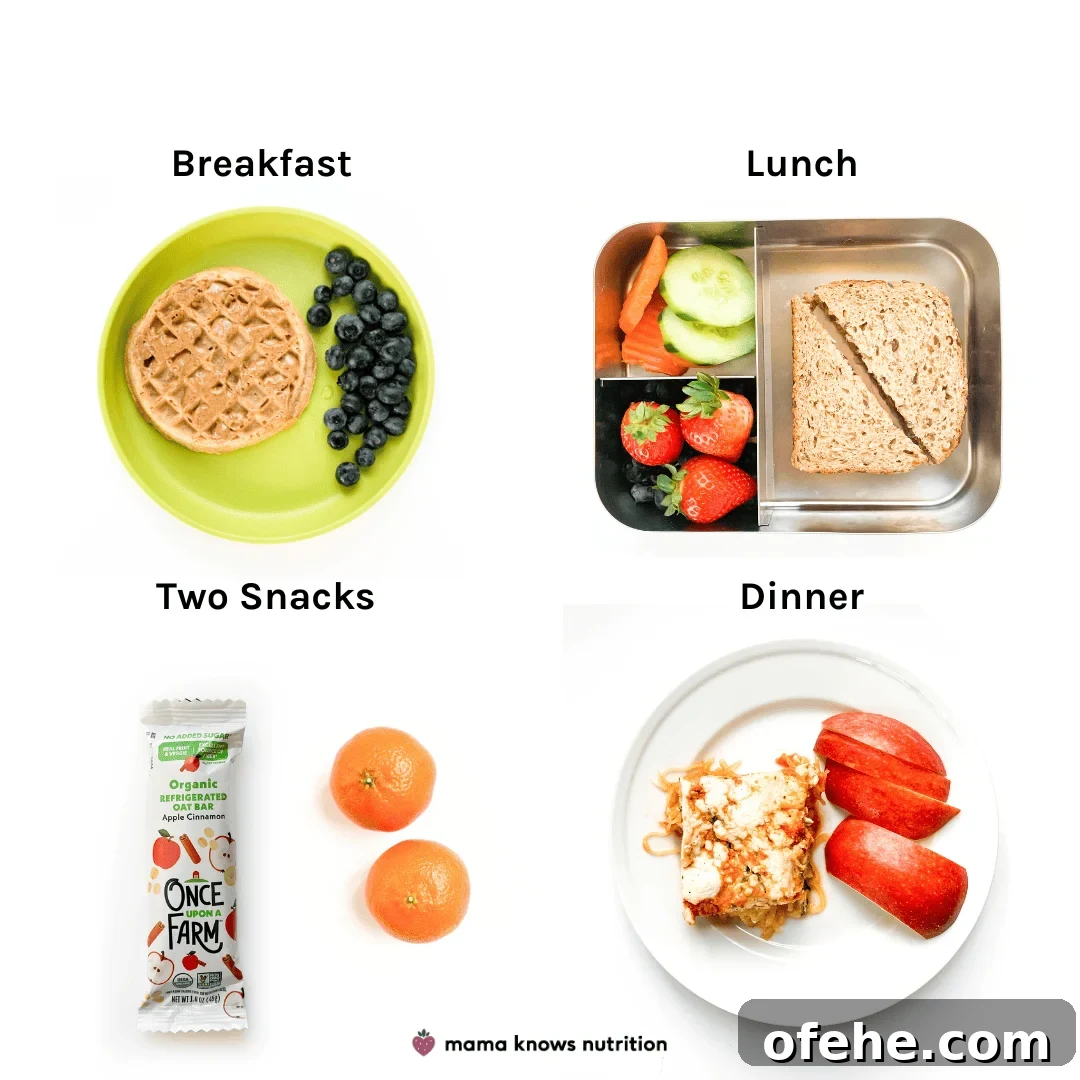
BREAKFAST: Whole grain waffle with a thin layer of peanut butter and blueberries. A cup of whole milk on the side.
AM SNACK: A few seedless clementines or mandarins.
LUNCH: Almond butter and a teaspoon of fruit spread on whole wheat, with cucumbers, carrot sticks, strawberries and blueberries.
PM SNACK: Apple cinnamon oat bar (oat-based, no added sugar).
DINNER: Spaghetti squash “lasagna” and apples. (Note: children’s appetites vary — one child may love a meal while another barely eats.)
Day 2: Super easy toddler meals
These meals take under five minutes to assemble.
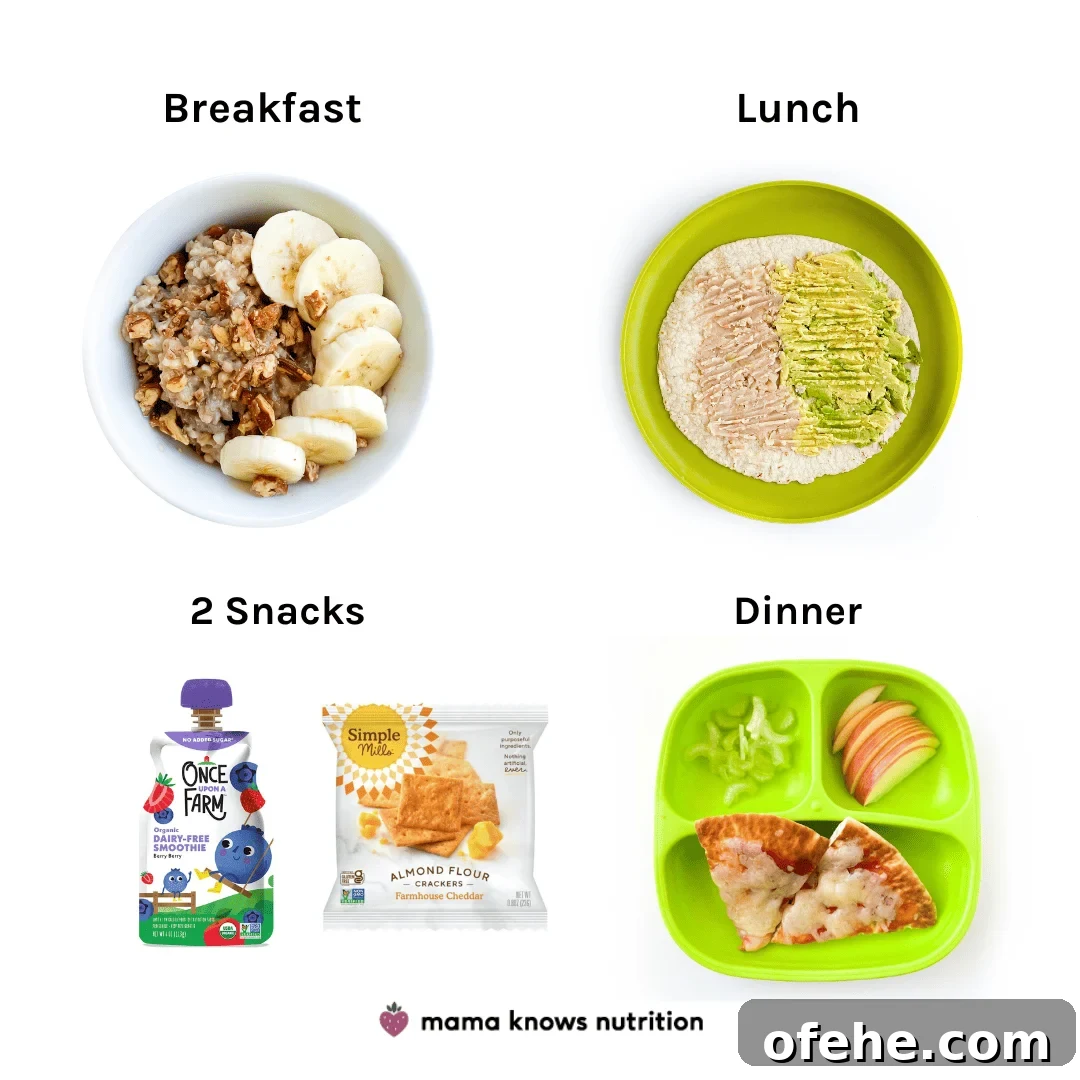
BREAKFAST: Oatmeal made with milk, topped with crushed walnuts and banana slices; hemp seeds stirred in.
AM SNACK: Smoothie pouch for on-the-go.
LUNCH: Tortilla with mashed avocado and mashed white beans (from a can).
PM SNACK: Almond flour crackers.
DINNER: Pita pizzas with thinly sliced celery and apple. (Tip: serve small variations when kids refuse certain toppings.)
Day 3: Healthy fats are important for toddlers
Cottage cheese is a high-protein, moderate-fat option that many kids enjoy. Healthy fats from seeds and nut butters support brain development — chia, flax, hemp and ground flax are easy to sprinkle into foods.
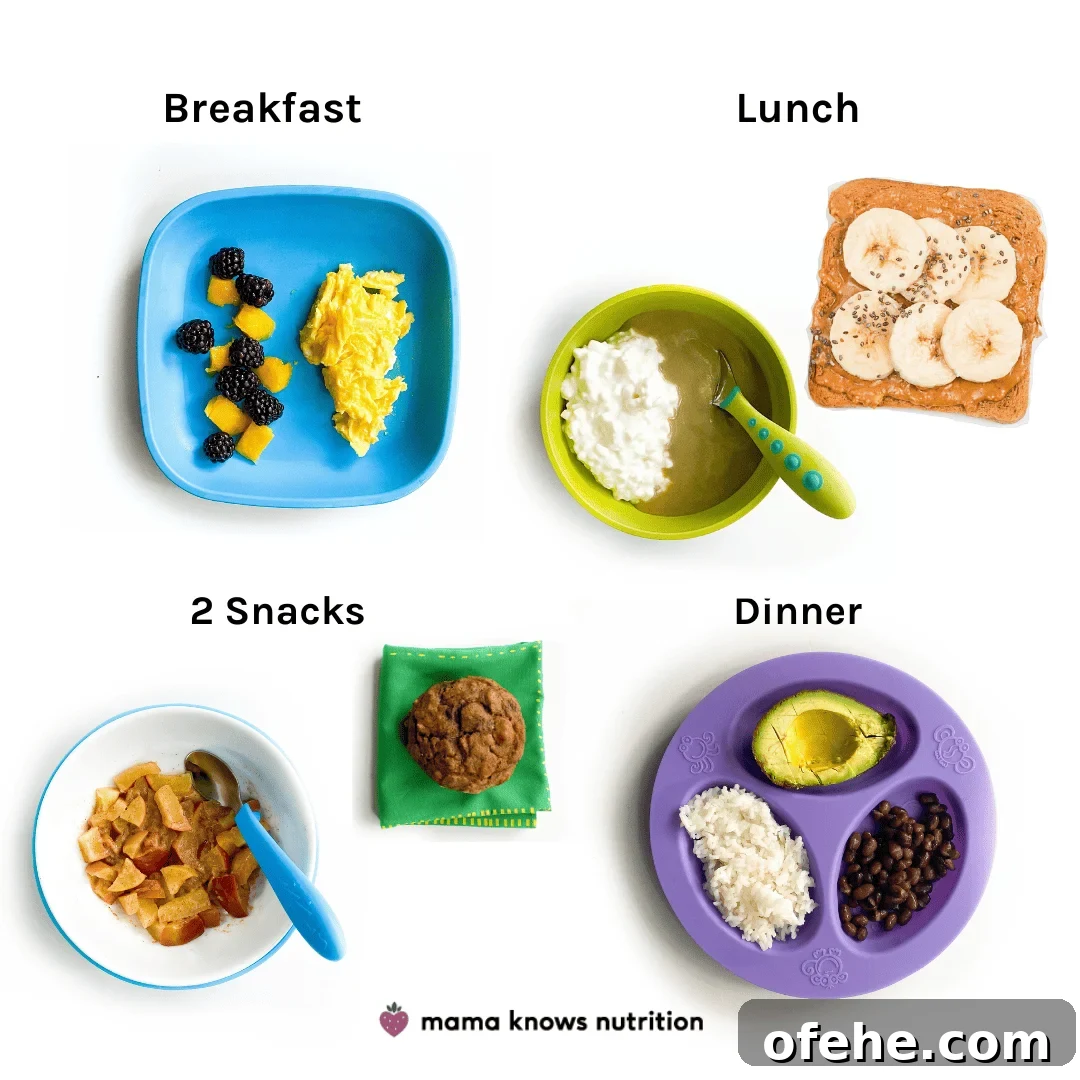
BREAKFAST: Scrambled eggs in butter, blackberries and mango, plus a cup of milk.
AM SNACK: Microwaved chopped apple with cinnamon and ground flaxseed (“apple pie apples”).
LUNCH: Cottage cheese mixed with a fruit or veggie pouch; toast topped with peanut butter, banana and chia seeds.
PM SNACK: Homemade banana bread muffins.
DINNER: Rice, black beans and avocado; adults had pork carnitas on the side.
Day 4: Simple balanced meals
Portions vary; offer milk at breakfast and dinner and water during the day. Adjust amounts to your child’s appetite.
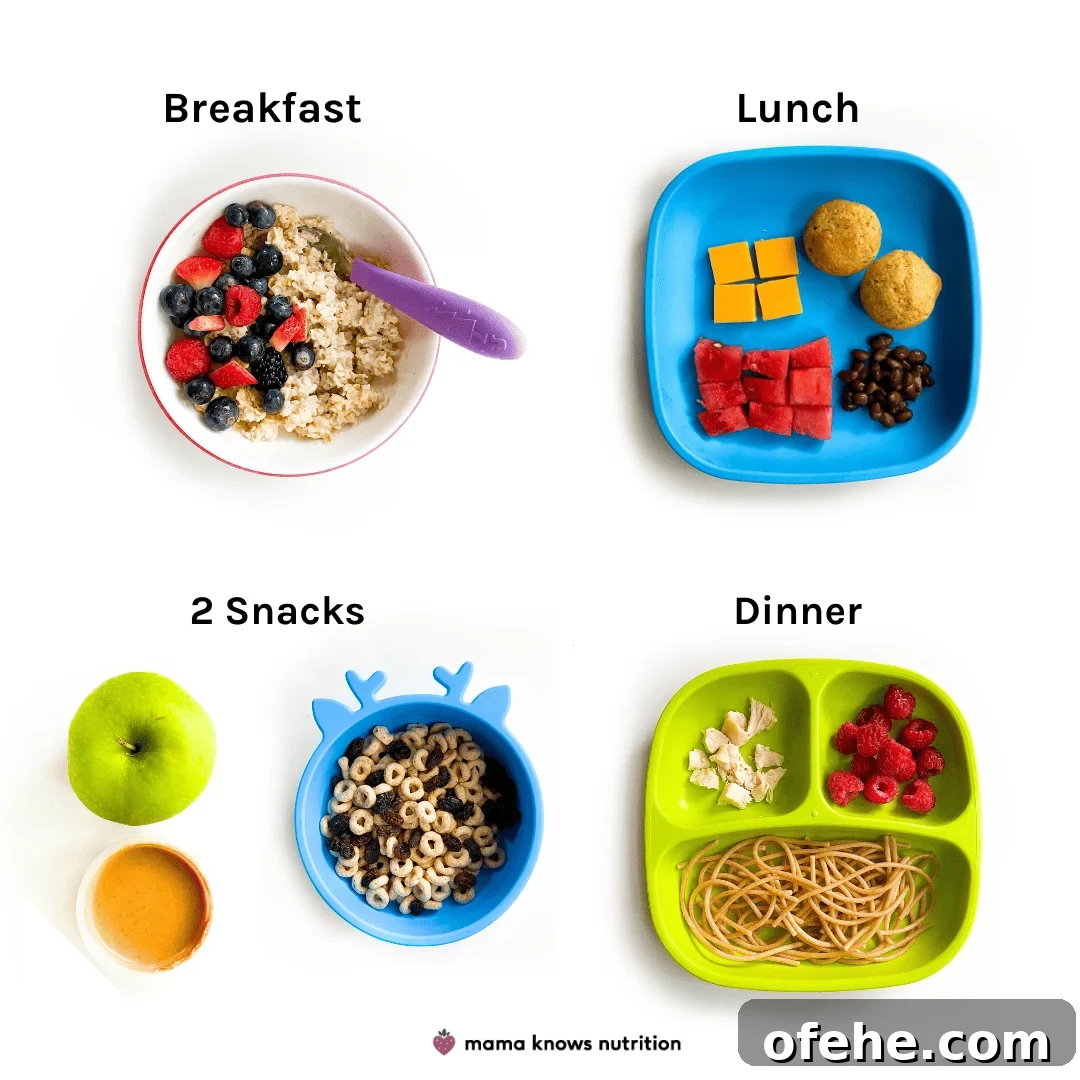
BREAKFAST: Oatmeal with a whisked egg stirred in while cooking, topped with mixed berries.
AM SNACK: Thinly sliced green apple with a light spread of peanut butter (finger-food friendly).
LUNCH: Snack-style plate: cheddar cheese, cornbread muffin, watermelon and black beans.
PM SNACK: Plain Cheerios and raisins.
DINNER: Roasted chicken, whole wheat spaghetti with butter, and raspberries.
Day 5: Extra veggies and vegetarian
On meatless days, toddlers often eat more dairy. Watch for constipation and adjust milk servings if needed. Serve varied textures to keep meals appealing.
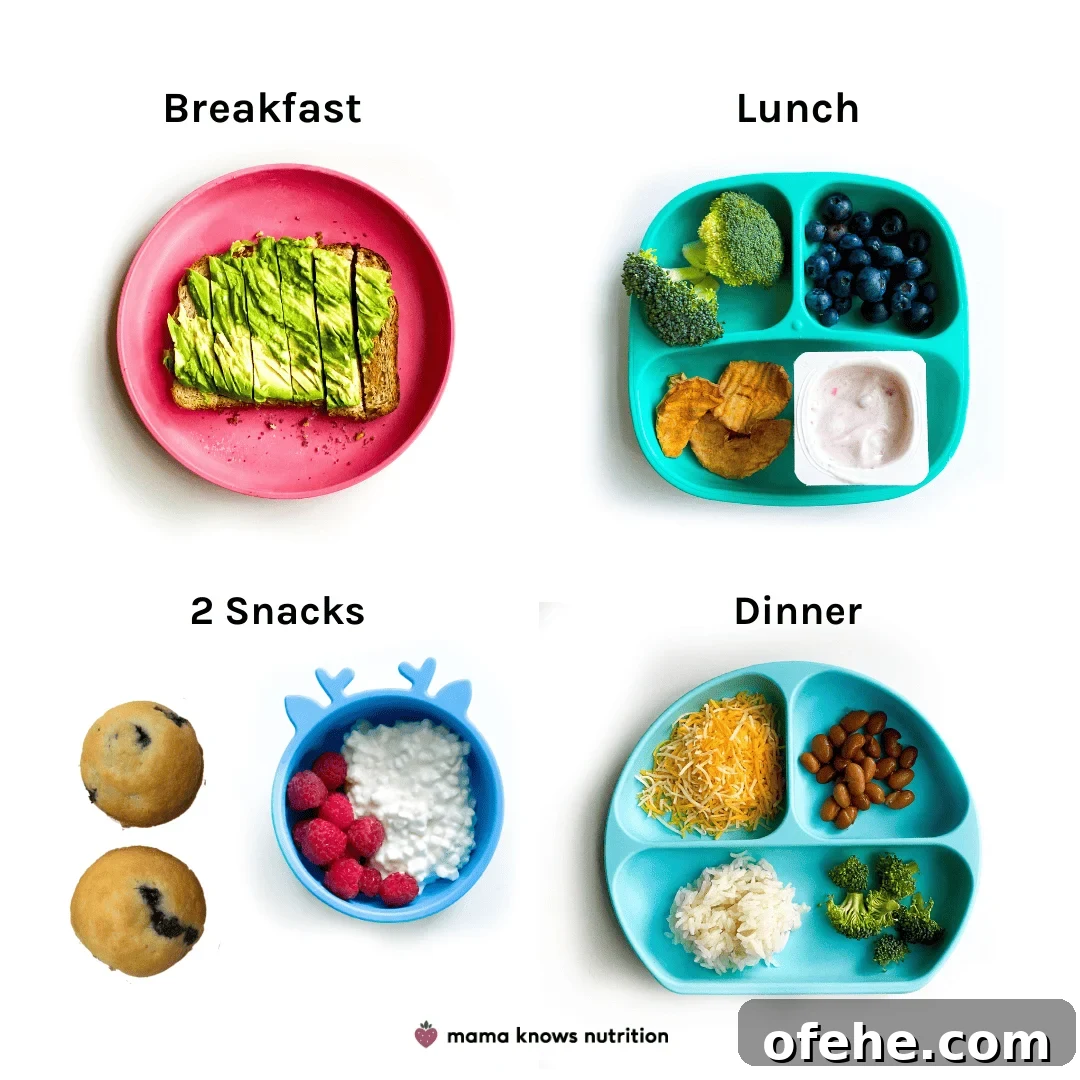
BREAKFAST: Avocado toast with hemp seeds.
AM SNACK: Homemade blueberry muffins.
LUNCH: Broccoli, blueberries, apple chips and yogurt.
PM SNACK: Cottage cheese with raspberries.
DINNER: Taco bowls — rice, cheese, beans and broccoli for the kids.
Day 6: Dairy-free day of eats
You can create balanced dairy-free menus for picky eaters or those with allergies. On vegan diets, consider supplements for B12, iron and calcium as needed.
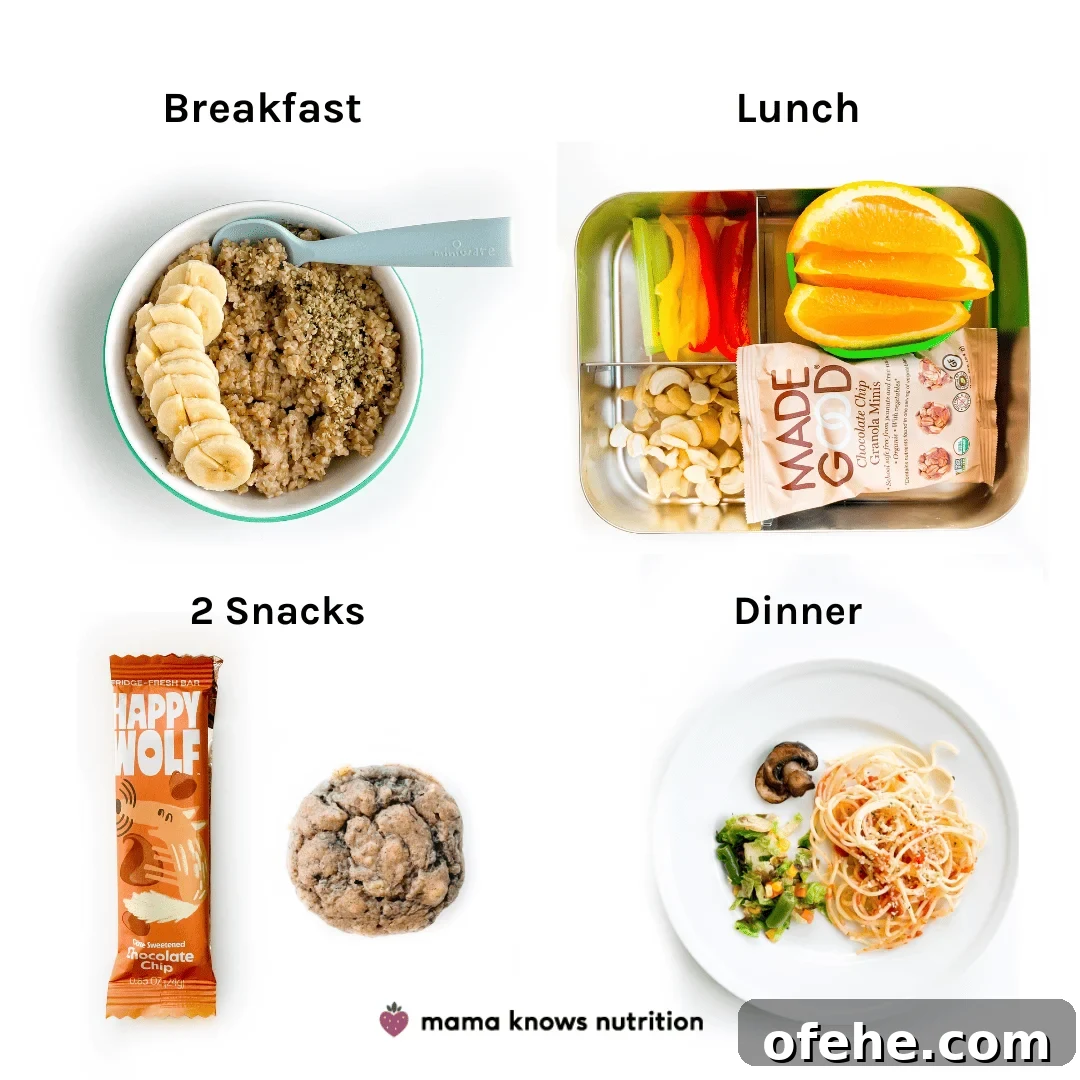
BREAKFAST: Oatmeal with sunflower seed butter, hemp seeds and banana.
AM SNACK: Nut-free snack bar.
LUNCH: Raw veggies with hummus, orange slices, cashew pieces and granola minis.
PM SNACK: Blueberry muffin.
DINNER: Spaghetti with a veggie-packed tomato sauce and hemp seeds, plus sautéed mushrooms and mixed veggies.
Day 7: Feeding the whole family
Busy families often rely on one main cooked item with simple sides like fresh fruit, raw veggies and easy proteins. Including at least one familiar food improves mealtime success.
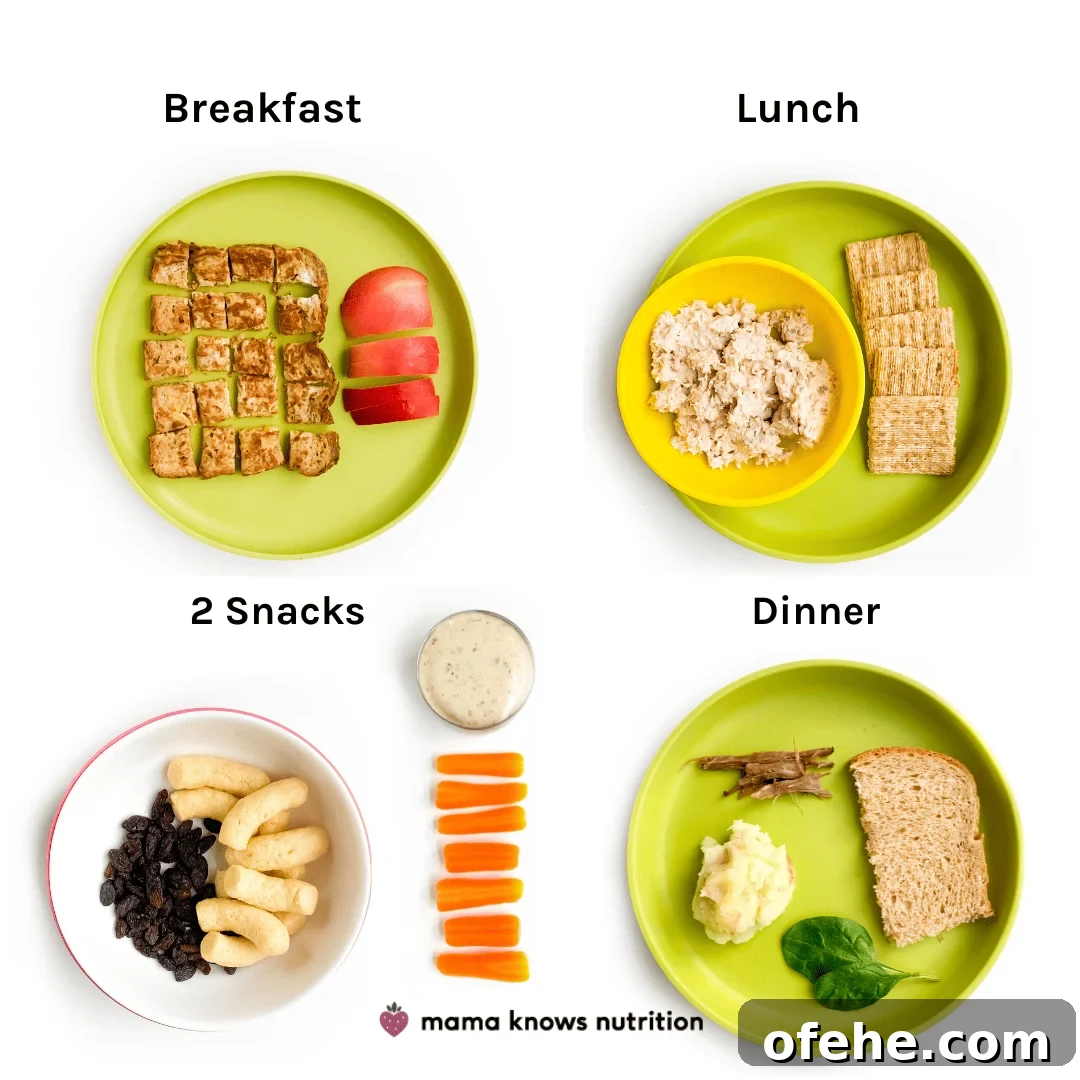
BREAKFAST: Whole wheat French toast with sliced apple and milk (or plant-based milk).
AM SNACK: Crispy chickpea snacks and raisins.
LUNCH: Canned salmon salad and crackers.
PM SNACK: Carrots with ranch and pretzels.
DINNER: Pot roast, mashed potatoes, bread and spinach leaves.
BEDTIME SNACK: Yogurt or peanut butter on banana when needed.
Day 8: Introducing sweet potatoes
Children’s appetites vary widely; some days they eat a lot, other days very little. For kids who dislike mushy textures, try sweet potato chips as an introduction.
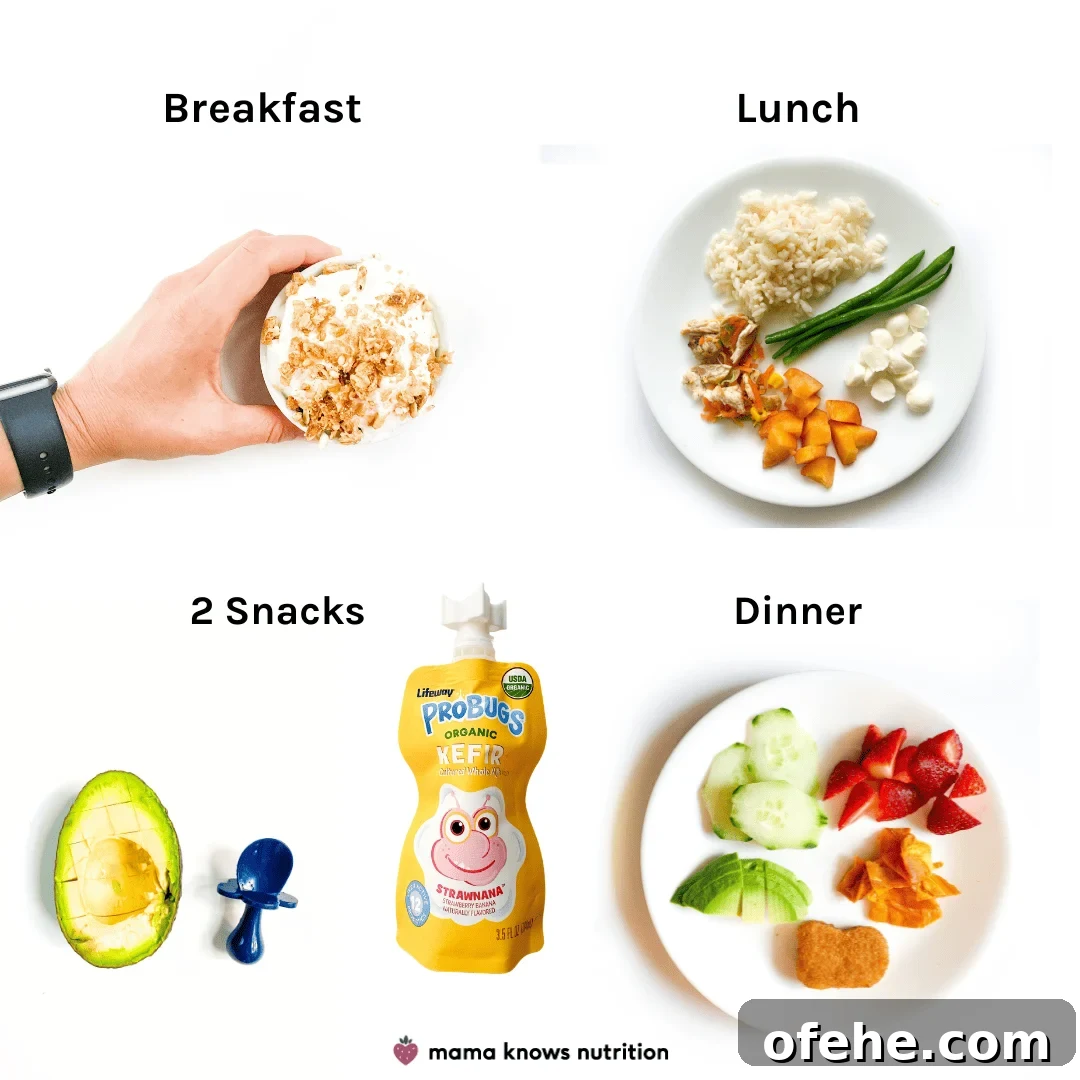
BREAKFAST: Whole milk yogurt topped with granola.
AM SNACK: Avocado served in the skin (“avocado boat”).
LUNCH: Leftovers: rice, green beans, chicken with shredded carrot, peach and fresh mozzarella.
PM SNACK: Kefir pouch.
DINNER: Chicken nuggets, avocado, cucumber, strawberries and sweet potato chips.
Day 9: Quick meals
When time is tight, use tools like an Instant Pot for fast, nutritious dinners.
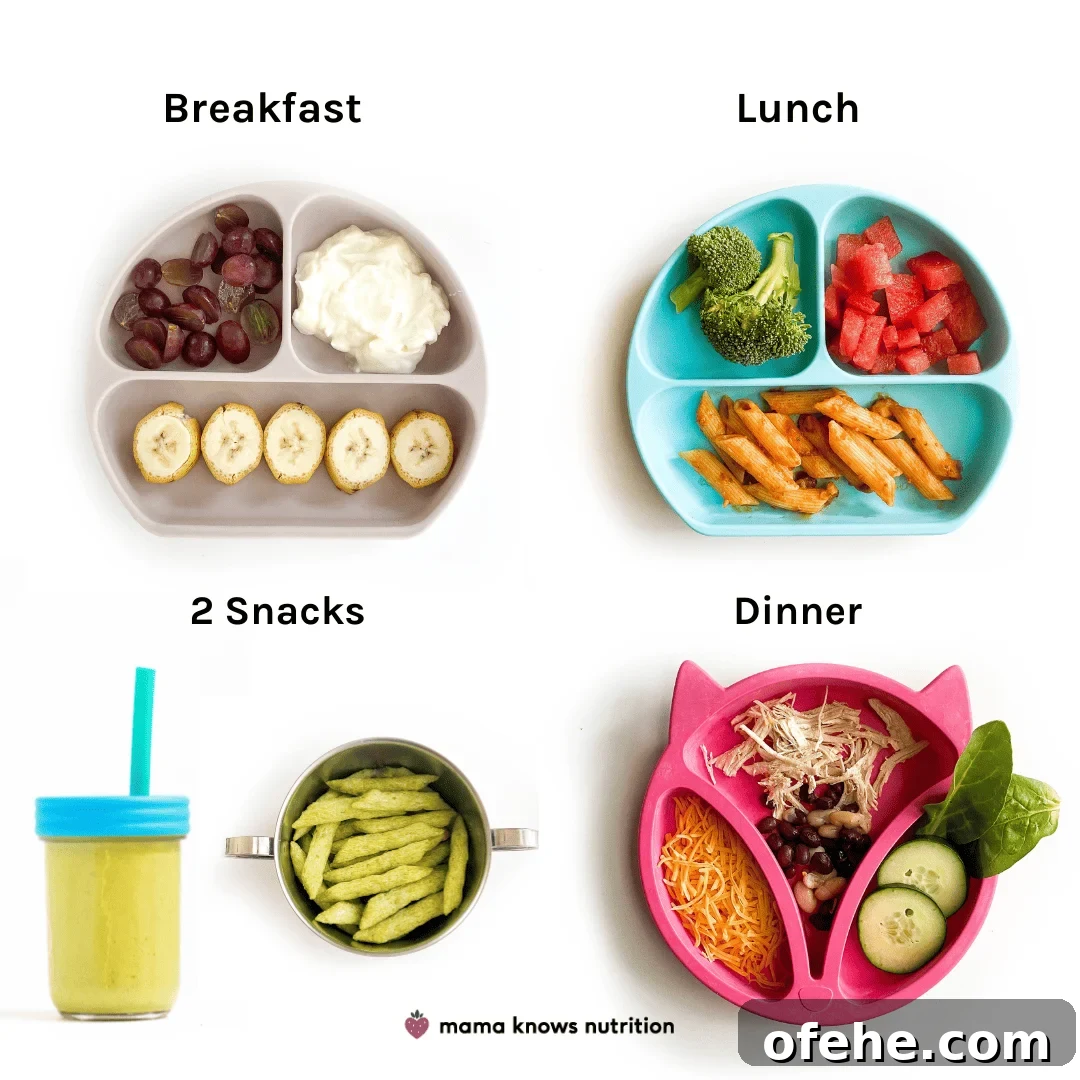
BREAKFAST: Plain Greek whole milk yogurt with bananas and grapes; encourage banana-peeling skills.
AM SNACK: Zucchini bread smoothie.
LUNCH: Protein pasta with a bit of sauce, broccoli and watermelon.
PM SNACK: Pea crisps.
DINNER: White chicken chili from the Instant Pot, with shredded cheddar, cucumbers and spinach on the side.
Day 10: We love food picks
Small touches like cute food picks can make meals more fun and encourage curiosity.
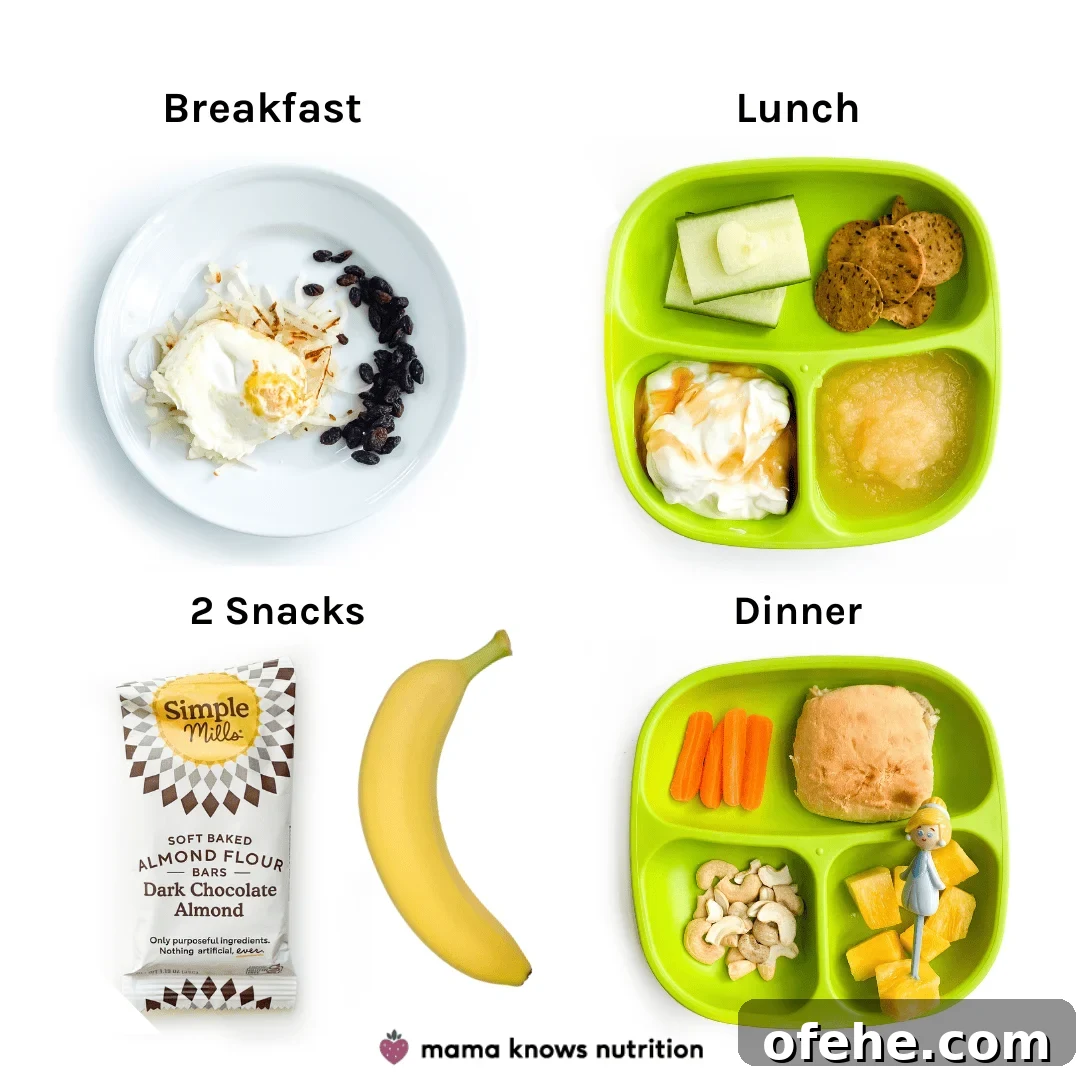
BREAKFAST: Over-easy egg, sautéed shredded potatoes and raisins.
AM SNACK: Soft baked snack bar.
LUNCH: Plain whole milk Greek yogurt with honey, cucumber, sweet potato crackers and unsweetened applesauce.
PM SNACK: Banana with peanut butter.
DINNER: Avocado rolls, carrots, cashew pieces and pineapple. For younger toddlers, substitute hemp seeds for whole nuts.
Day 11: 5-minute meals
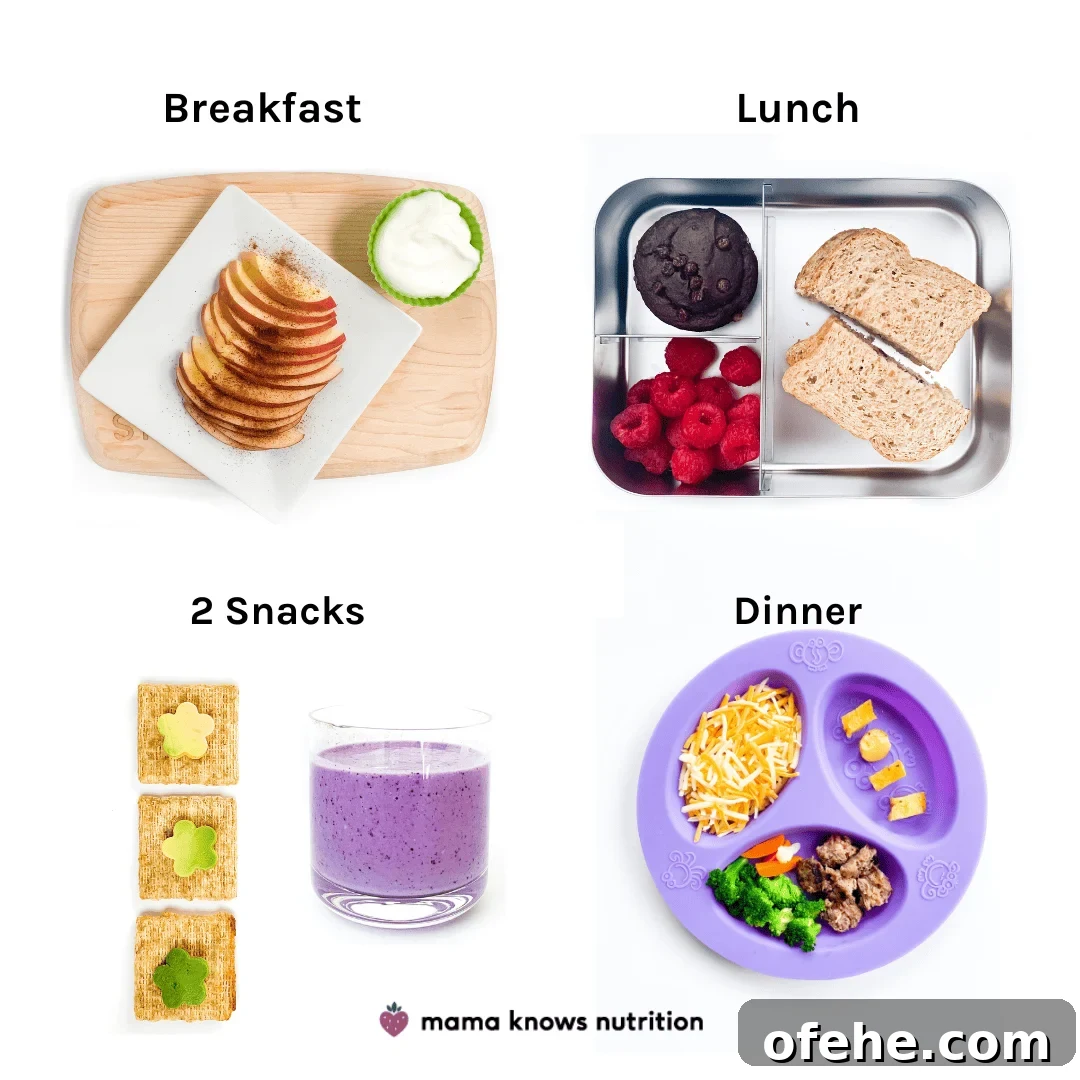
BREAKFAST: Sliced cinnamon apples with plain yogurt for dipping.
AM SNACK: Avocado on thin crackers.
LUNCH: Almond butter on whole wheat with fruit spread, raspberries and a small muffin.
PM SNACK: Blueberry yogurt and kale smoothie.
DINNER: Mini meatloaf, steamed frozen veggies, air-fried potatoes and shredded cheese.
Day 12: Deli meat
Deli turkey breast is a convenient protein; limit deli meats to a few times per week and choose the freshest option available.
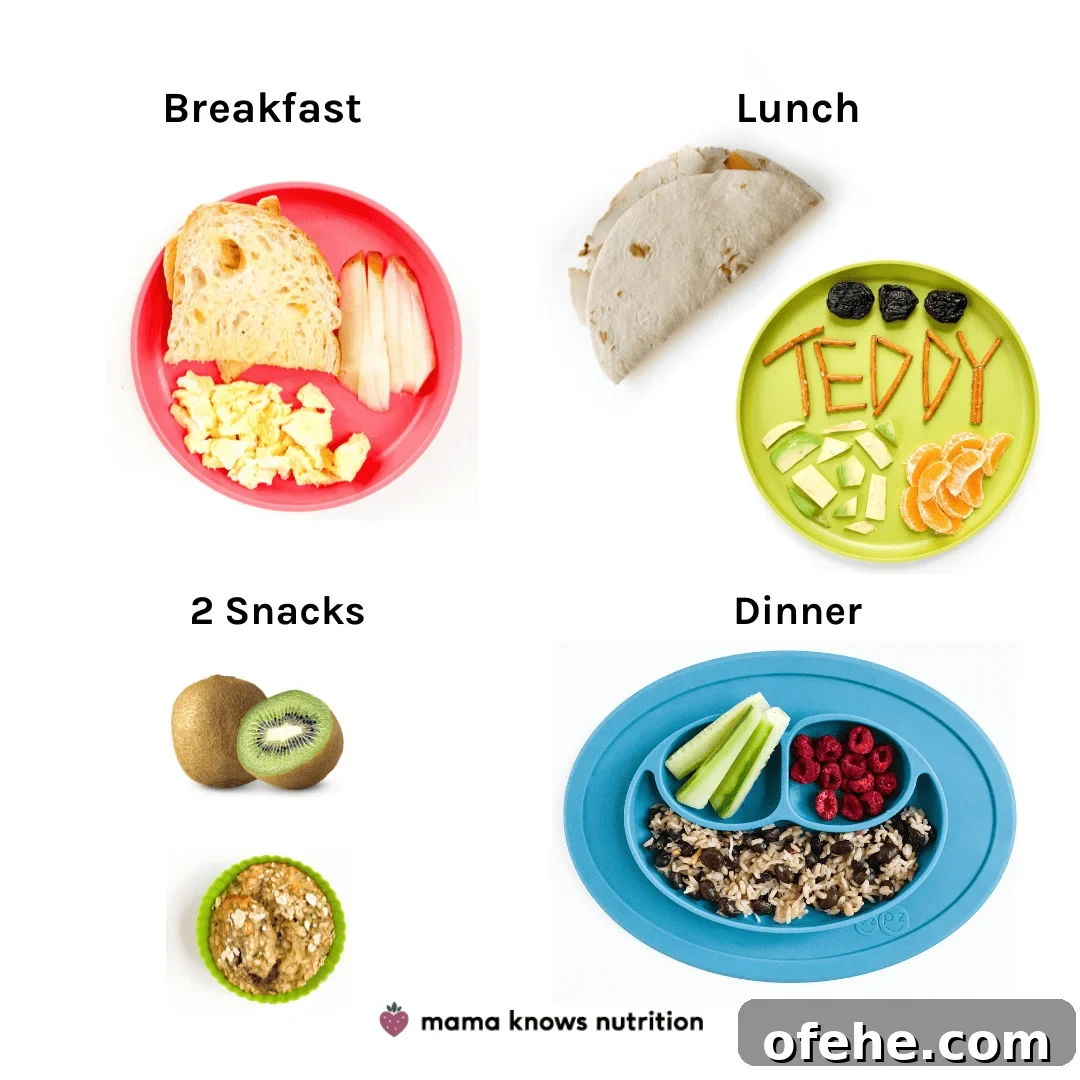
BREAKFAST: Sourdough toast with butter, scrambled eggs and pear slices.
AM SNACK: Kiwi and milk.
LUNCH: Turkey and cheddar tortilla plus a snack plate with pretzel sticks, prunes, avocado and clementines.
PM SNACK: Banana bread muffin.
DINNER: Rice and beans, cucumber sticks and freeze-dried raspberries.
Day 13: Introducing new foods
Offer small tasting portions of new foods so they feel manageable — a single piece of pasta or a few edamame beans can be just right.
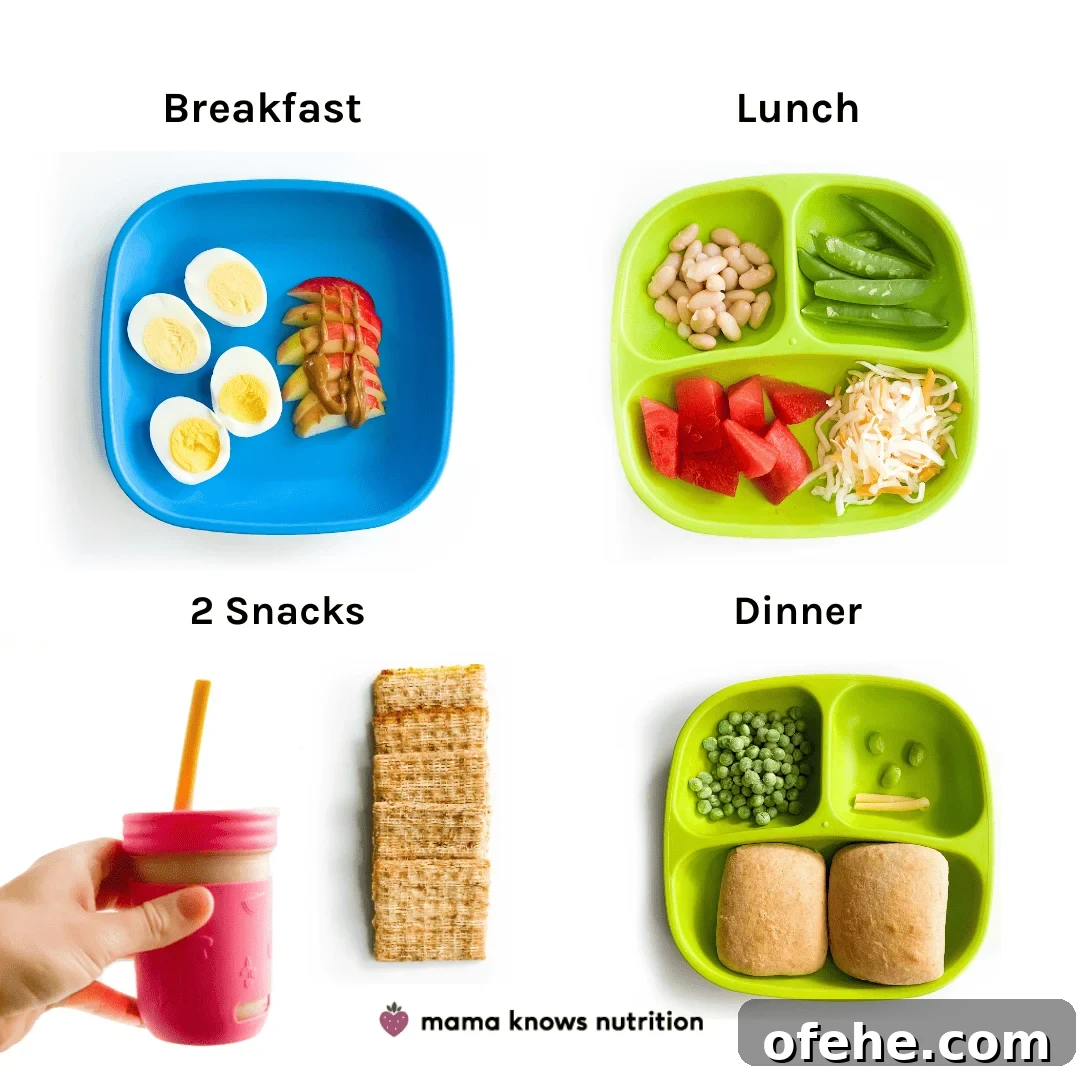
BREAKFAST: Hard-boiled eggs and apples with peanut butter.
AM SNACK: Smoothie with milk, frozen mango, frozen cauliflower, a date and cashew butter.
LUNCH: White beans, snap peas, watermelon and shredded cheese.
PM SNACK: Crackers for the road.
DINNER: Toasted rolls with cream cheese, peas and small tastes of edamame and pasta.
Day 14: Pizza day
Real-life families eat a variety of foods — sometimes simple or convenience-based — and that’s okay. Aim for balance over time rather than perfection every meal.
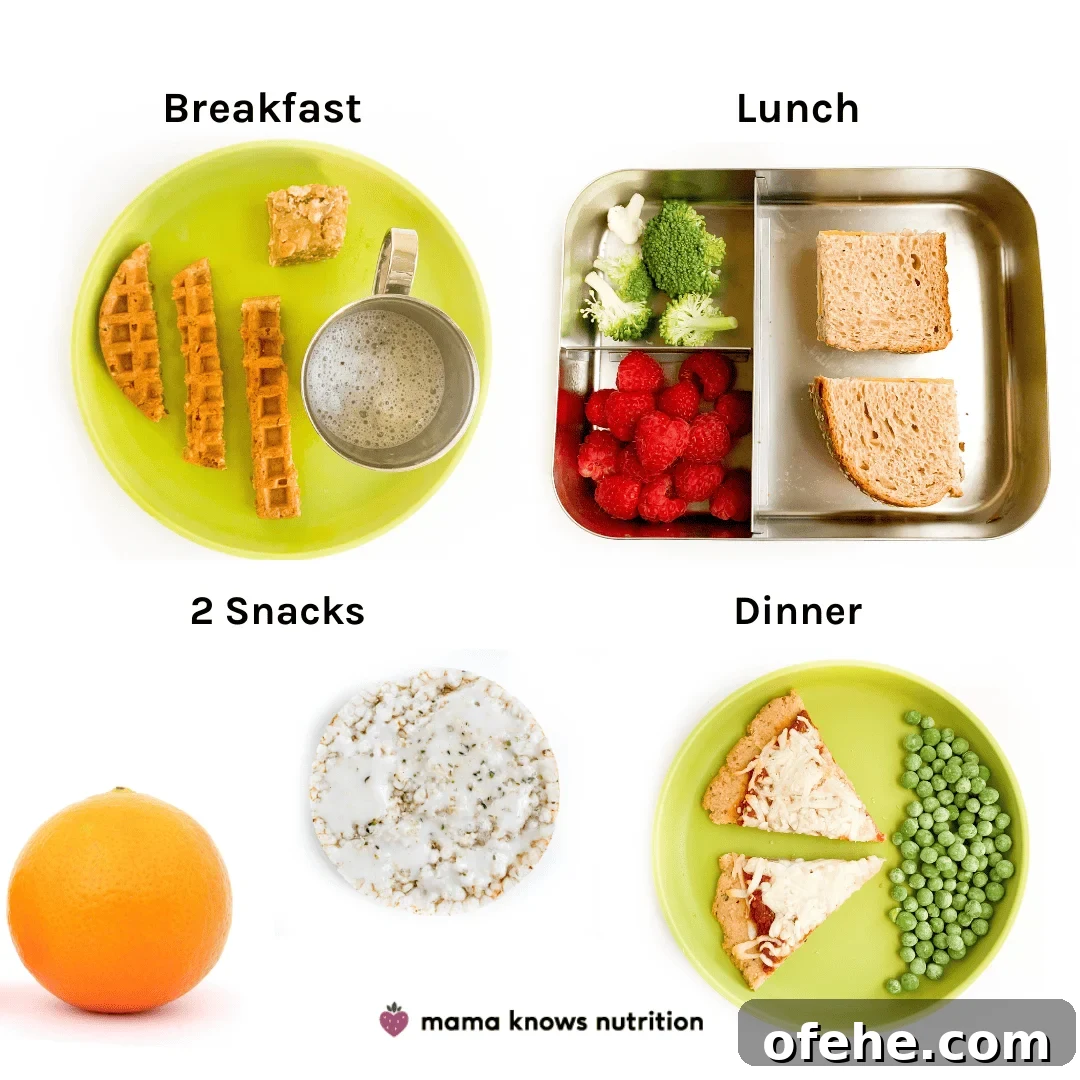
BREAKFAST: Waffle, a no-bake nut butter bar and a few sips of a parent smoothie.
AM SNACK: Orange and milk.
LUNCH: Cream cheese and jelly on whole wheat, raspberries and broccoli.
PM SNACK: Rice cake with coconut butter and hemp seeds.
DINNER: Pizza on a whole grain crust served with peas.
Day 15: Yogurt cupcakes!
Small treats like sprinkles can make meals more exciting for picky eaters and encourage them to try new items.
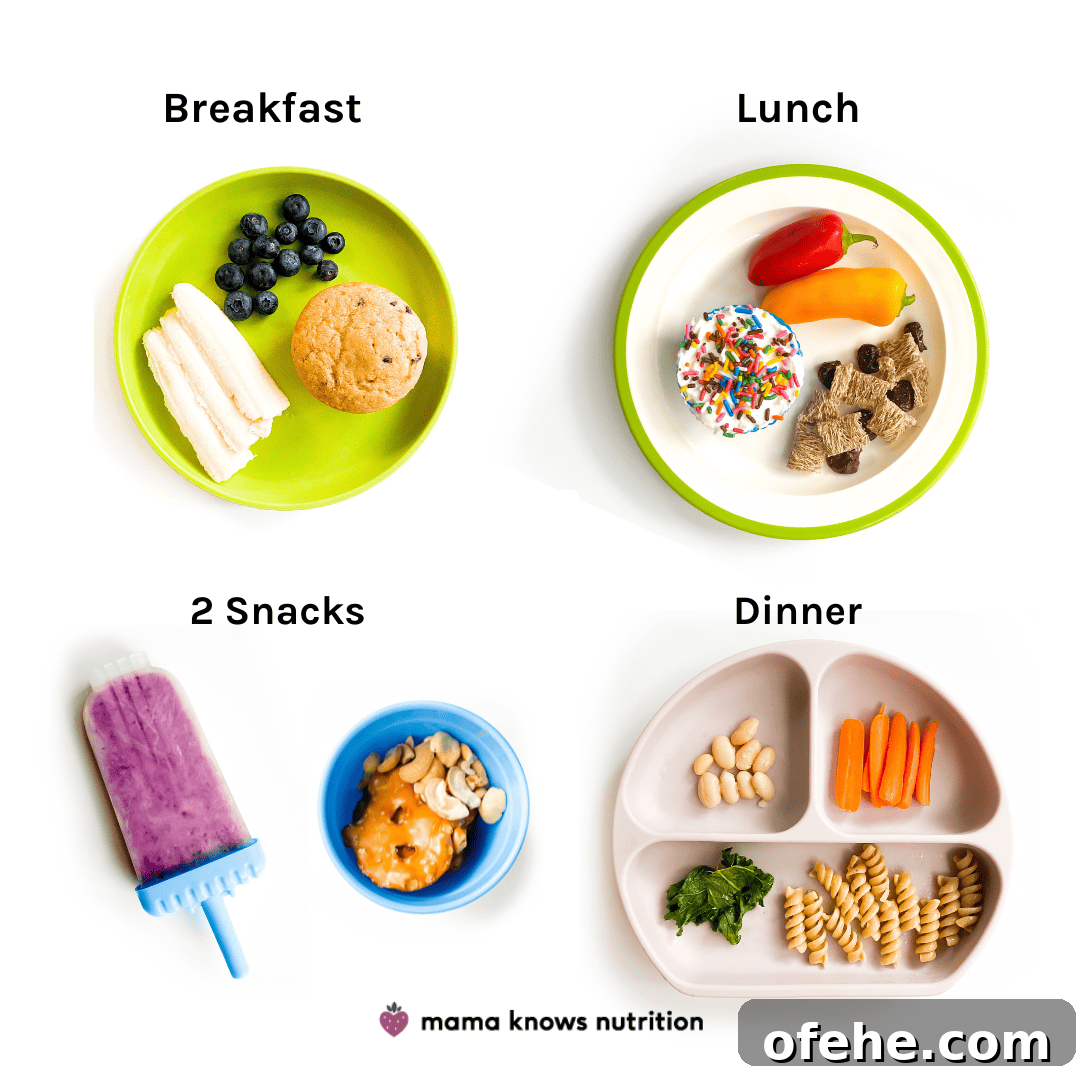
BREAKFAST: Banana bread muffins with mini chocolate chips, banana and blueberries.
AM SNACK: Leftover smoothie popsicle.
LUNCH: Plain whole milk Greek yogurt in a silicone liner, mini bell peppers, shredded wheat and dried cherries.
PM SNACK: Pretzel thins and cashew pieces.
DINNER: Pasta with white beans and kale served deconstructed, plus carrot slices.
Day 16: Freezer friendly
Keep frozen staples on hand — fruit for smoothies, waffles, muffins and cornbread freeze well and save time.
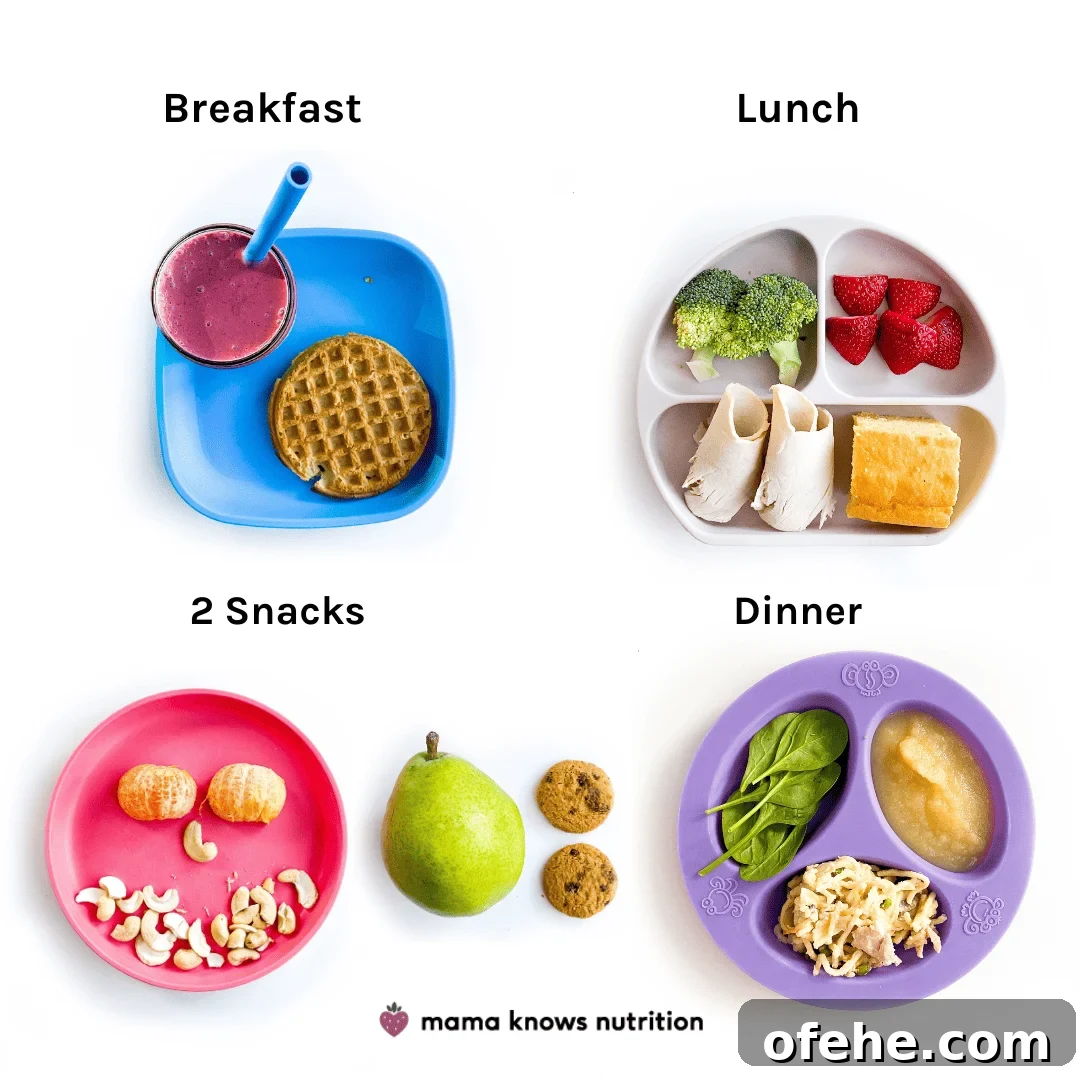
BREAKFAST: Mixed berry smoothie and a whole-grain waffle.
AM SNACK: Clementines and cashew pieces.
LUNCH: Leftover cornbread, turkey slices, broccoli and strawberries.
PM SNACK: Pear and a simple cookie.
DINNER: Chicken tetrazzini served with spinach and unsweetened applesauce; a child-friendly side of chicken nuggets if pasta isn’t accepted.
Day 17: Super low effort day
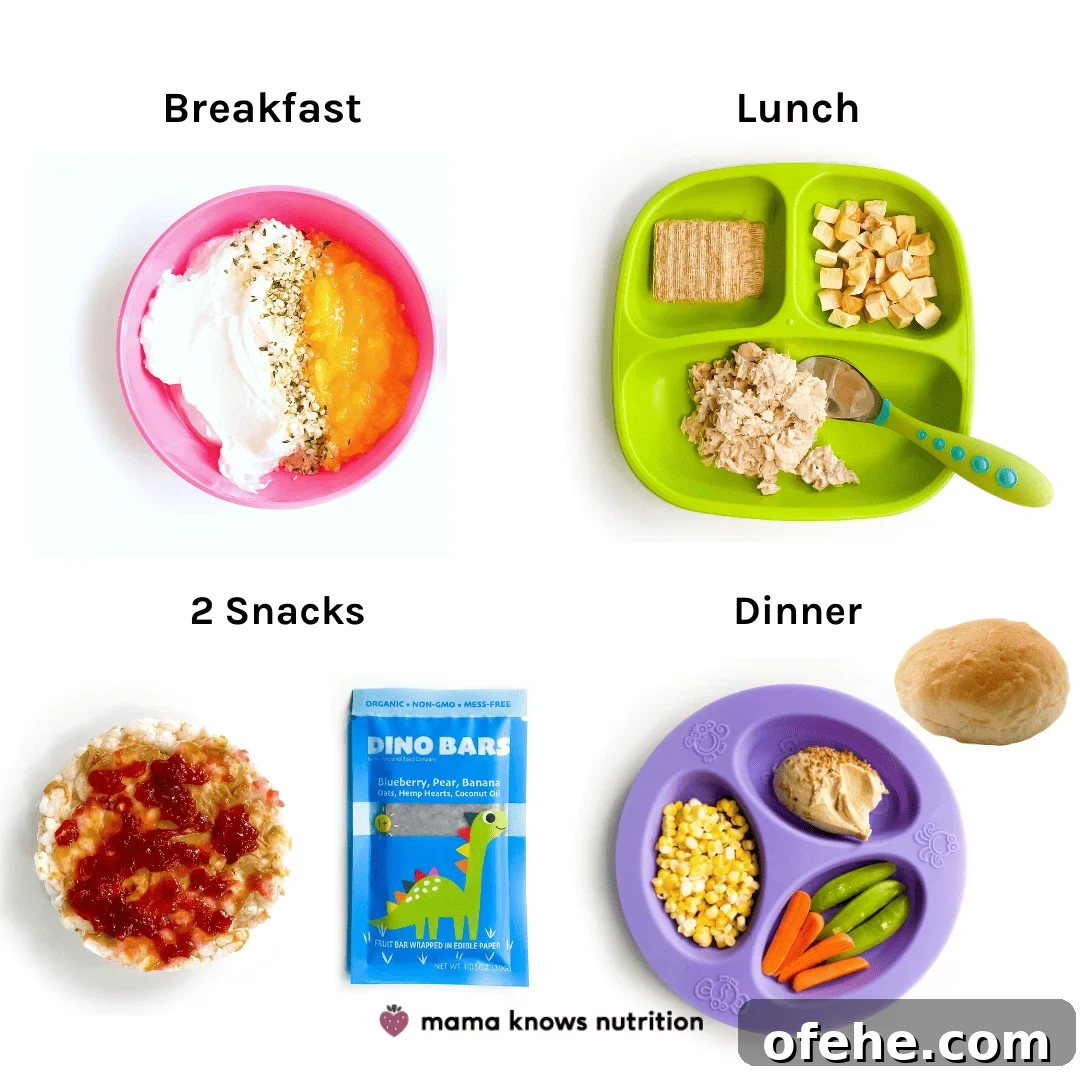
BREAKFAST: Plain Greek yogurt with mashed mango and hemp seeds.
AM SNACK: Rice cake with cashew butter and fruit spread.
LUNCH: Low-mercury tuna salad with crackers and freeze-dried mango.
PM SNACK: Nutritious snack bar.
DINNER: Chicken and wild rice soup, veggies with hummus, buttered corn and rolls.
Day 18: Typical staples
Keep offering foods you want your children to try even if they initially refuse. Serving a small portion alongside familiar favorites builds exposure and comfort over time.
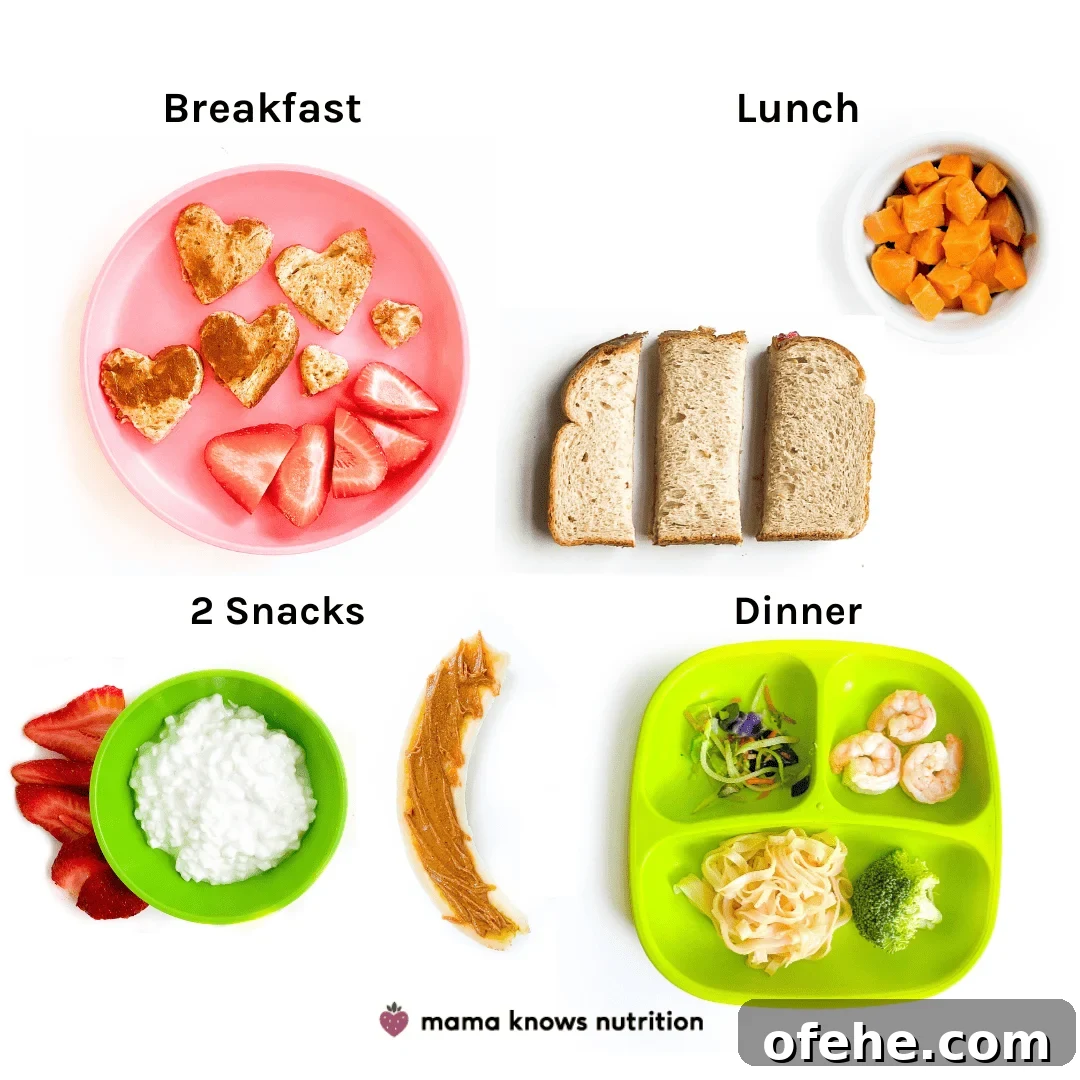
BREAKFAST: French toast with ground flax in the batter and strawberries.
AM SNACK: Strawberries and cottage cheese.
LUNCH: Granola butter sandwich with roasted sweet potato cubes.
PM SNACK: Banana with almond butter.
DINNER: Broiled shrimp, pasta with a vegetable-forward sauce, broccoli and sautéed slaw mix.
Day 19: FAST Prep Meal Ideas
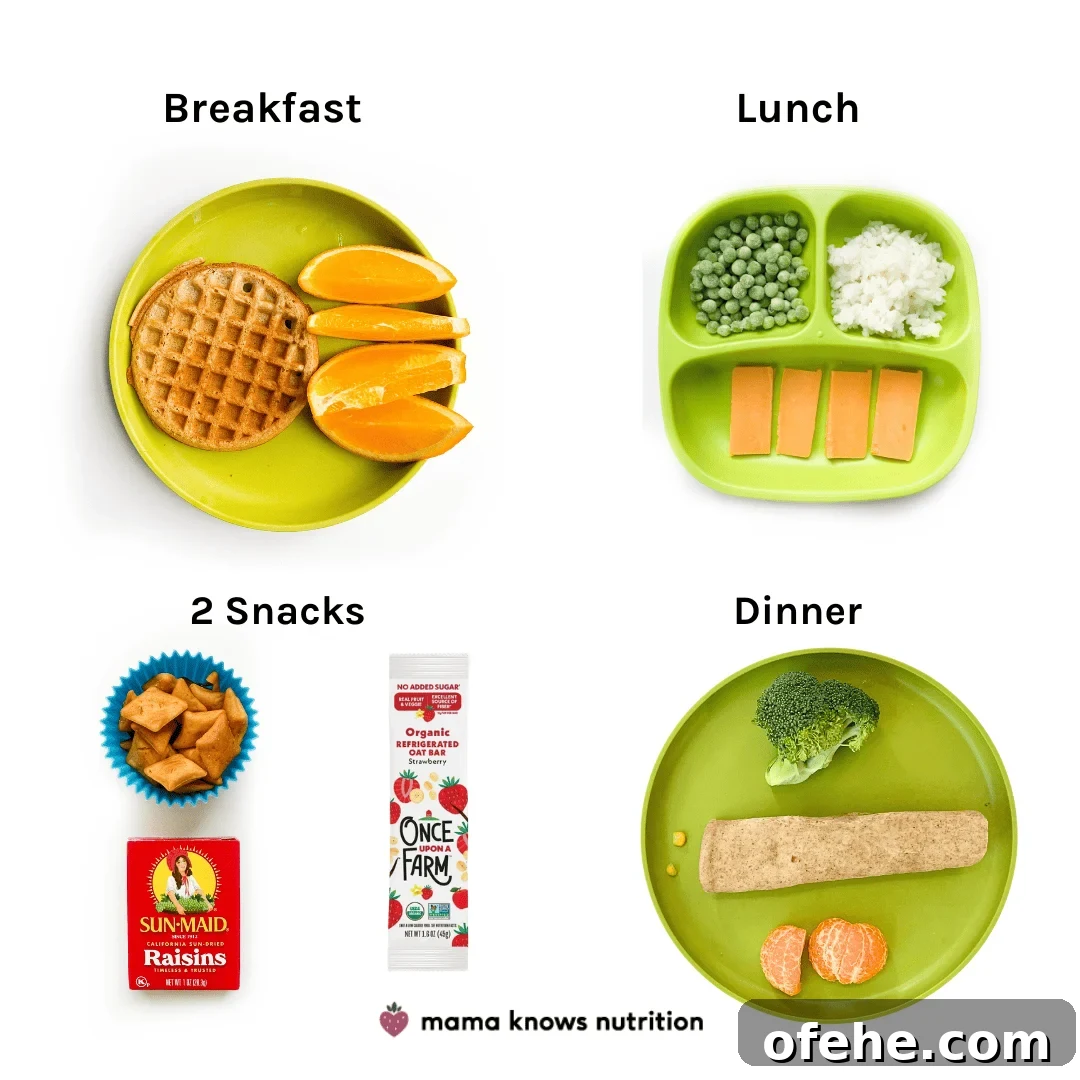
BREAKFAST: Whole-grain waffle with butter, orange slices and whole milk.
AM SNACK: Raisins and squash-based crackers.
LUNCH: Frozen peas (kids may enjoy them cold), buttered rice with cheddar.
PM SNACK: No-added-sugar oat bar.
DINNER: Shredded chicken and avocado tortilla with broccoli and clementines.
Did you get some ideas?
Toddlers often become picky after a period of broad acceptance, and that’s a normal development phase. I avoid only showing extreme convenience foods or complex, highly mixed dishes; instead I aim for quick, nutrient-dense meals that are realistic for busy families. If your child resists a new food, keep offering small portions alongside familiar favorites — over time, exposure and patience can help expand their diet.
Offer a balance of proteins, healthy fats, whole grains and fruits and vegetables across the day. Serve the same family meal when possible, but don’t stress if a child prefers plain foods or only eats a few items; you control what’s on the plate, not what they choose to eat. Consistency, variety and small, repeated exposures are the most effective strategies for expanding a toddler’s diet.