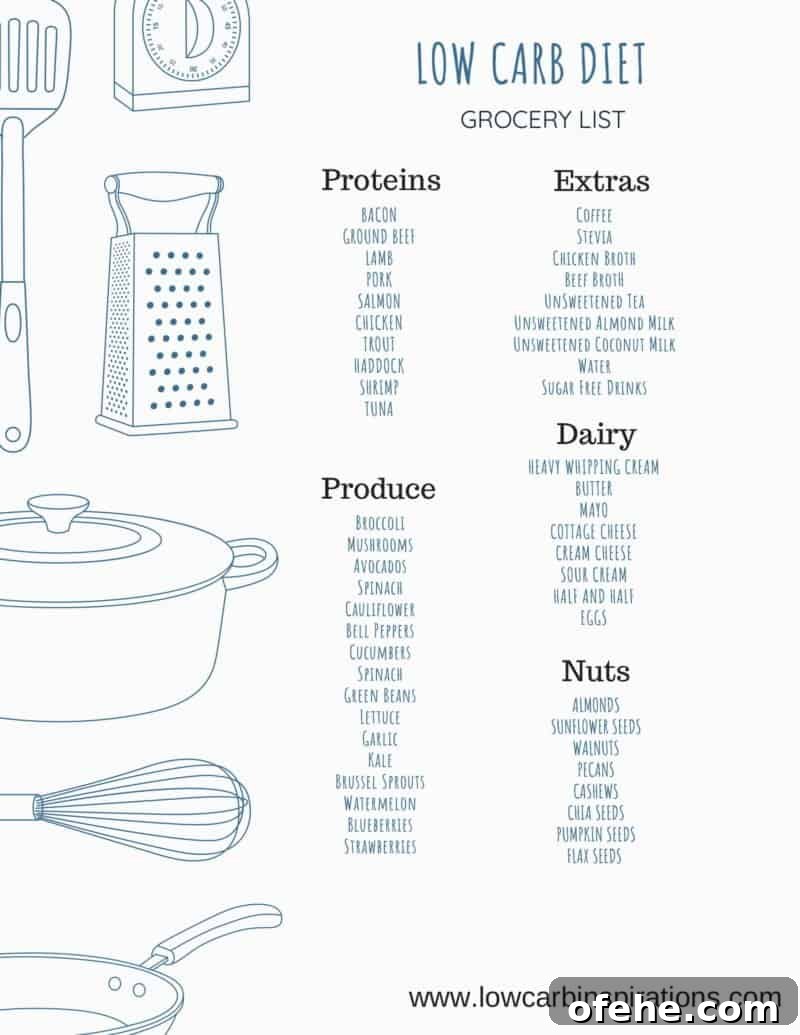
The low-carb approach isn’t meant to be restrictive or joyless. There are plenty of satisfying, flavorful foods you can enjoy while following a low-carb lifestyle. Many people describe it as a diet, but for most it becomes a sustainable way of eating. If you’re wondering which foods fit well into a low-carb plan, this guide will point you to a wide variety of options.

Proteins
Protein is a cornerstone of low-carb eating. Including a variety of protein sources helps keep you full, supports muscle maintenance, and makes meals satisfying. Popular protein choices for a low-carb plan include:
- Lamb
- Chicken
- Pork
- Bacon
- Jerky (choose low-sugar varieties)
- Eggs
Full-Fat Foods
Contrary to older diet advice, healthy full-fat foods are commonly included in low-carb approaches and can be part of sustainable weight loss when balanced with total calorie needs. Examples of full-fat foods that are frequently enjoyed on low-carb plans include:
- Coconut oil
- Avocado oil
- MCT oil
- Butter
- Olive oil
- Cream cheese
- Avocado
- Full-fat cheeses
- Whole eggs
- Heavy whipping cream
- Heavy cream
- Whipped cream alternatives
- Sour cream
Low-Carb Flours
Traditional white flour is high in carbohydrates, but there are lower-carb alternatives that work well for baking and cooking. While the selection is smaller than conventional flours, these options provide texture and structure for many recipes:
- Coconut flour
- Psyllium husk flour
- Almond flour
- Ground flaxseed
- Oat fiber
- Cricket flour
Vegetables
Not all vegetables are equally low in carbohydrates, but there are many non-starchy vegetables that fit perfectly into a low-carb menu. Focusing on these options gives volume, nutrients, and fiber without excessive carbs:
- Mushrooms
- Avocados
- Cauliflower
- Asparagus
- Broccoli
- Bell peppers
- Zucchini
- Spinach
- Lettuce
- Green beans
- Kale
- Cucumbers
- Celery
- Tomatoes (in moderation)
- Onions (use sparingly for flavor)
- Radishes
- Cabbage
- Artichokes
With this many vegetable choices, it’s easy to build varied, nutrient-dense meals on a low-carb plan.
Understanding Macros
Macros, short for macronutrients, refer to the three primary nutrient groups that provide energy: proteins, fats, and carbohydrates. Tracking macronutrient distribution can help you tailor a low-carb plan to your goals, whether that’s weight loss, improved blood sugar control, or better satiety. Individual macro needs vary based on factors such as age, sex, activity level, and health goals, so what works for one person may differ for another.
On a low-carb approach, the carbohydrate allowance is reduced while protein and fat proportions are generally higher to provide energy and keep you full. To determine personalized macro targets, many people use online calculators or consult a registered dietitian to set appropriate ranges. Adjustments over time help you find a balance that supports your goals and lifestyle.
If you’d like a printable summary of low-carb foods for quick reference, a downloadable food list can make meal planning simpler and help you stock your kitchen with suitable ingredients.