

Cleaning is becoming far more transparent.
When it comes to food, ingredient lists are familiar: nutrition facts, added sugars, allergens and specific additives are typically printed on the package. That clarity lets consumers make informed choices. Cleaning products, by contrast, have historically offered little real information. Manufacturers often chose whether to disclose ingredients, and many provided vague labels — terms like “surfactant,” “enzyme” or “preservative” that reveal almost nothing about what’s inside. That has begun to change.
In 2017 California passed the Cleaning Product Right to Know Act, a major step forward for consumer awareness. The law requires manufacturers to disclose far more information about household and institutional cleaning products. Although the bill passed in 2017, key provisions took effect starting January 1, 2020, with additional label requirements phased in by January 1, 2021.
Key Provisions of the Law
1. Ingredient Disclosure Timetable
- Website disclosure required by January 1, 2020
- Product label disclosure required by January 1, 2021 (with allowance to sell through existing on‑hand inventory)
2. Product Label Disclosure Requirements
- All intentionally added ingredients
- All fragrance ingredients present at or above 100 ppm
- All fragrance ingredients identified as Chemicals of Concern on either California’s Department of Toxic Substances Control (DTSC) Candidate Chemical list or the EU list of fragrance allergens, regardless of concentration
The DTSC Candidate Chemical list compiles authoritative lists that identify chemicals linked to cancer, reproductive harm, respiratory problems and endocrine disruption. When a fragrance ingredient appears on those lists, it can no longer be hidden under vague labeling or trade secret claims.
3. Website Disclosure Requirements
Manufacturers must provide everything listed on packaging plus additional details online:
- The purpose of each ingredient
- The Chemical Abstracts Service (CAS) number for each ingredient
- A link to the product’s safety data sheet (SDS)
- Consumer-friendly explanations of ingredients
- Disclosure of 34 common contaminants if present at or above 100 ppm; 1,4-dioxane, a probable human carcinogen, must be disclosed at or above 10 ppm
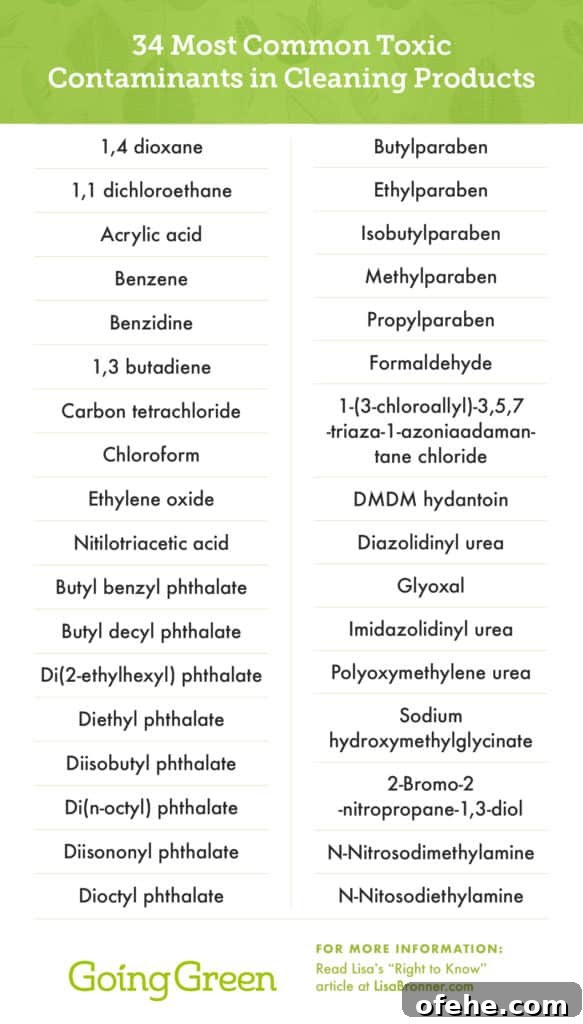
Because companies are permitted to sell existing inventory, full ingredient lists will not appear on all products on store shelves immediately. Any product manufactured after January 1, 2021 must comply with on-package labeling. The law also requires disclosure to update along with future revisions to the DTSC and EU lists, so when an ingredient is newly identified as hazardous, it must be disclosed accordingly.
There are limited exceptions and conditions:
- Disinfectants: ingredient disclosure is required online only. Disinfectants are regulated as pesticides under federal law, and on‑label changes involve additional regulatory review; the compromise keeps disclosure on manufacturer websites.
- Trade secrets: companies may claim Confidential Business Information (CBI) protection for non‑hazardous ingredients, but only after a state registration process and documentation that can withstand state audits.
- Prop 65 ingredients: disclosure for ingredients on California’s Proposition 65 list is delayed until January 1, 2023, giving companies time to reformulate.
- Trial or sample sizes: such packages must direct consumers to the website for ingredient information.
Required transparency for fragrances and contaminants is especially significant. Fragrance ingredients have been linked in studies to hormone disruption, allergy development, respiratory problems and reproductive harm. Contaminants can form as byproducts of manufacturing or common processes, and some are known to be particularly hazardous. The law ensures these substances are no longer hidden from consumers when they meet the specified thresholds.
It’s important to note that the law does not force manufacturers to change formulations; it requires that they disclose what is in their products. That transparency puts information into consumers’ hands and enables them to pressure companies to remove ingredients of concern.
For now, consumers must do some of the work: visit manufacturers’ websites to view ingredient lists and learn what the listed substances mean for health and safety. Resources like independent ingredient guides can help interpret ingredient functions and risks.
California’s law advances cleaning product disclosure beyond the level required for many cosmetics, especially regarding fragrance and contaminant reporting. While the law applies directly only in California, it creates momentum that may influence national changes and encourages advocacy for safer products across categories.
Some companies already list all ingredients clearly on packaging; for them, the law changes little. For others, it marks a meaningful shift toward accountability. Ultimately, consumer awareness and advocacy are what drive safer product decisions. With this law, the information needed to evaluate cleaning products is now more accessible, and that transparency is a necessary step toward healthier choices.
Further reading
- 13 Essential Green Cleaning Ingredients
- GIY All-Purpose Cleaning Spray
- 12 Personal Care Ingredients to Avoid