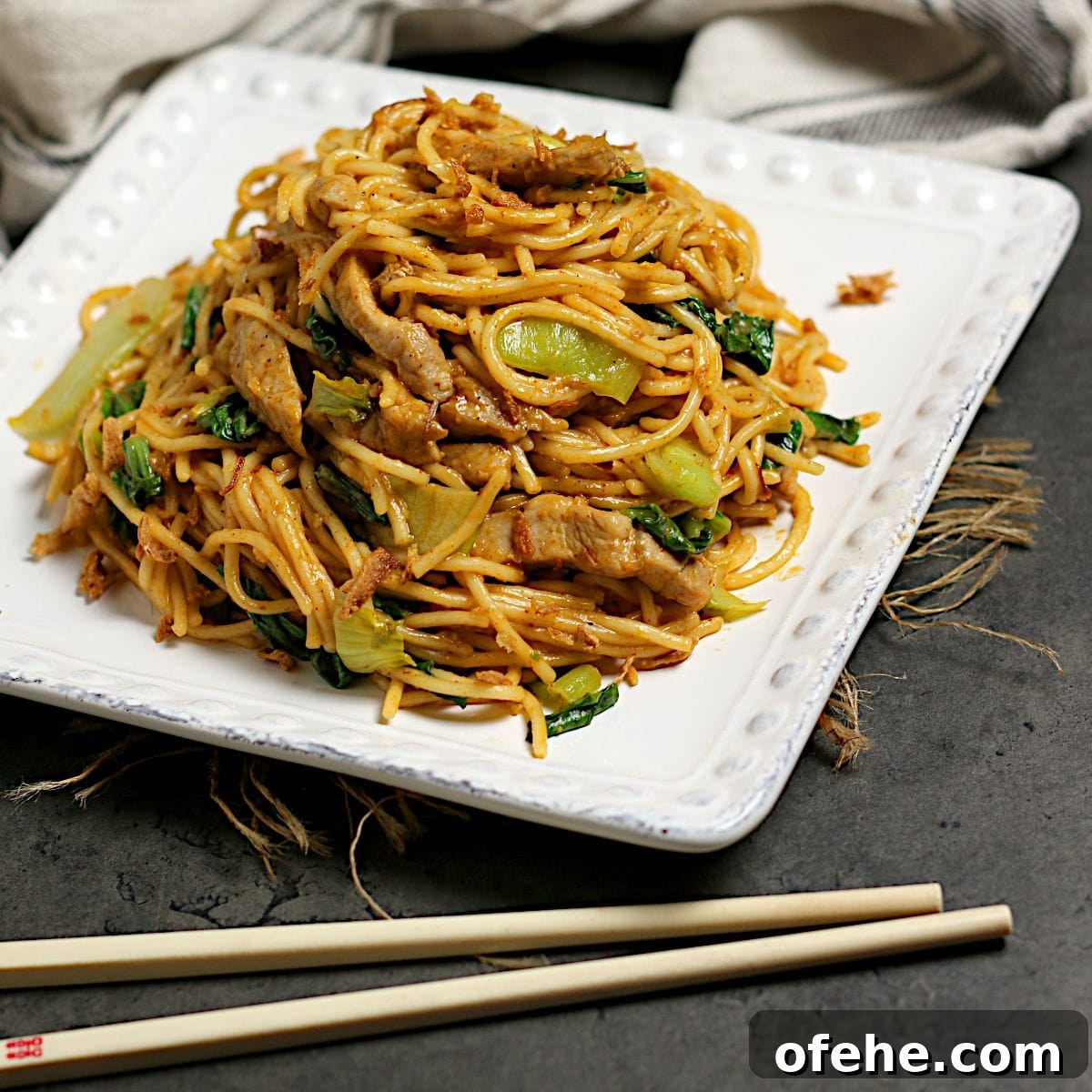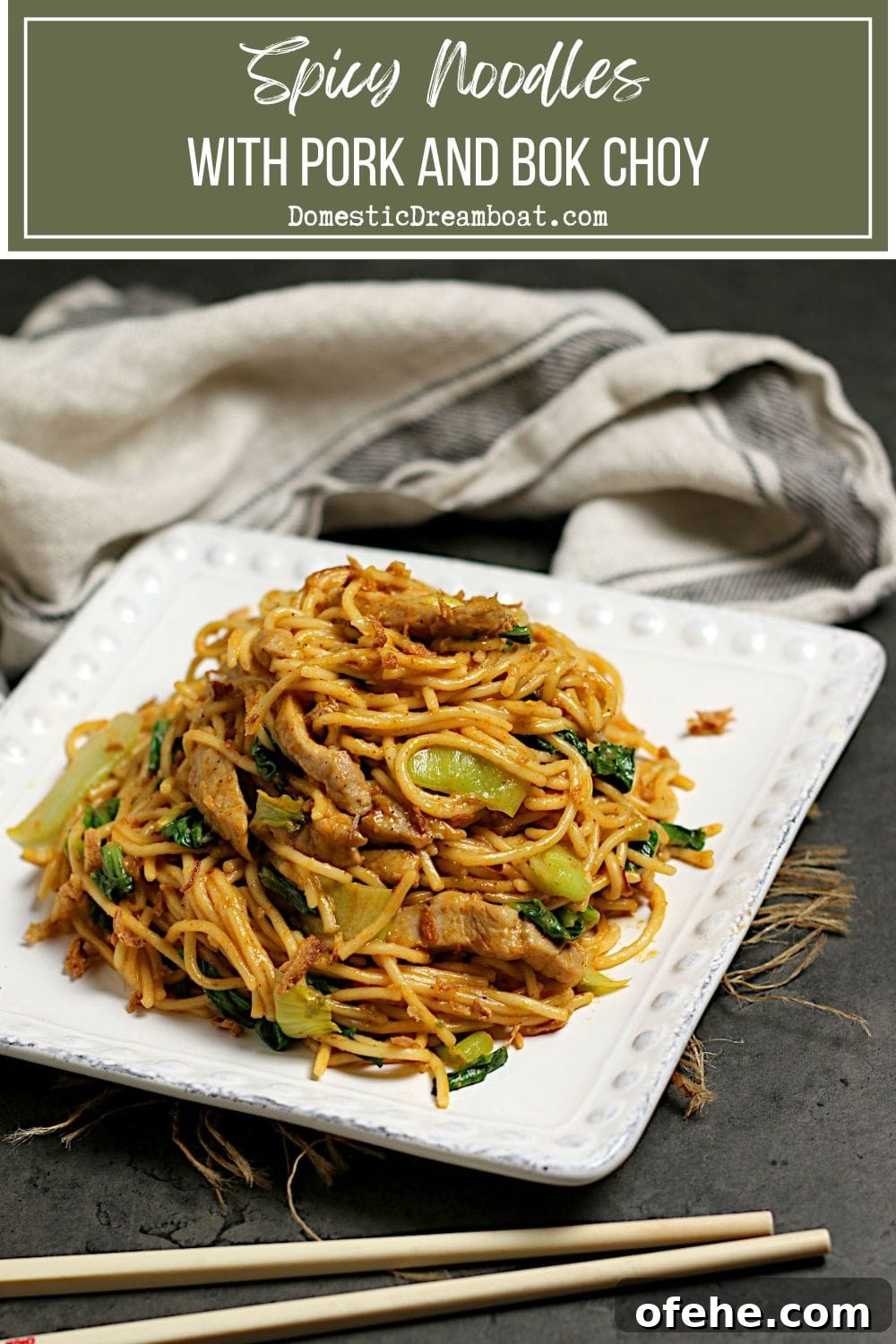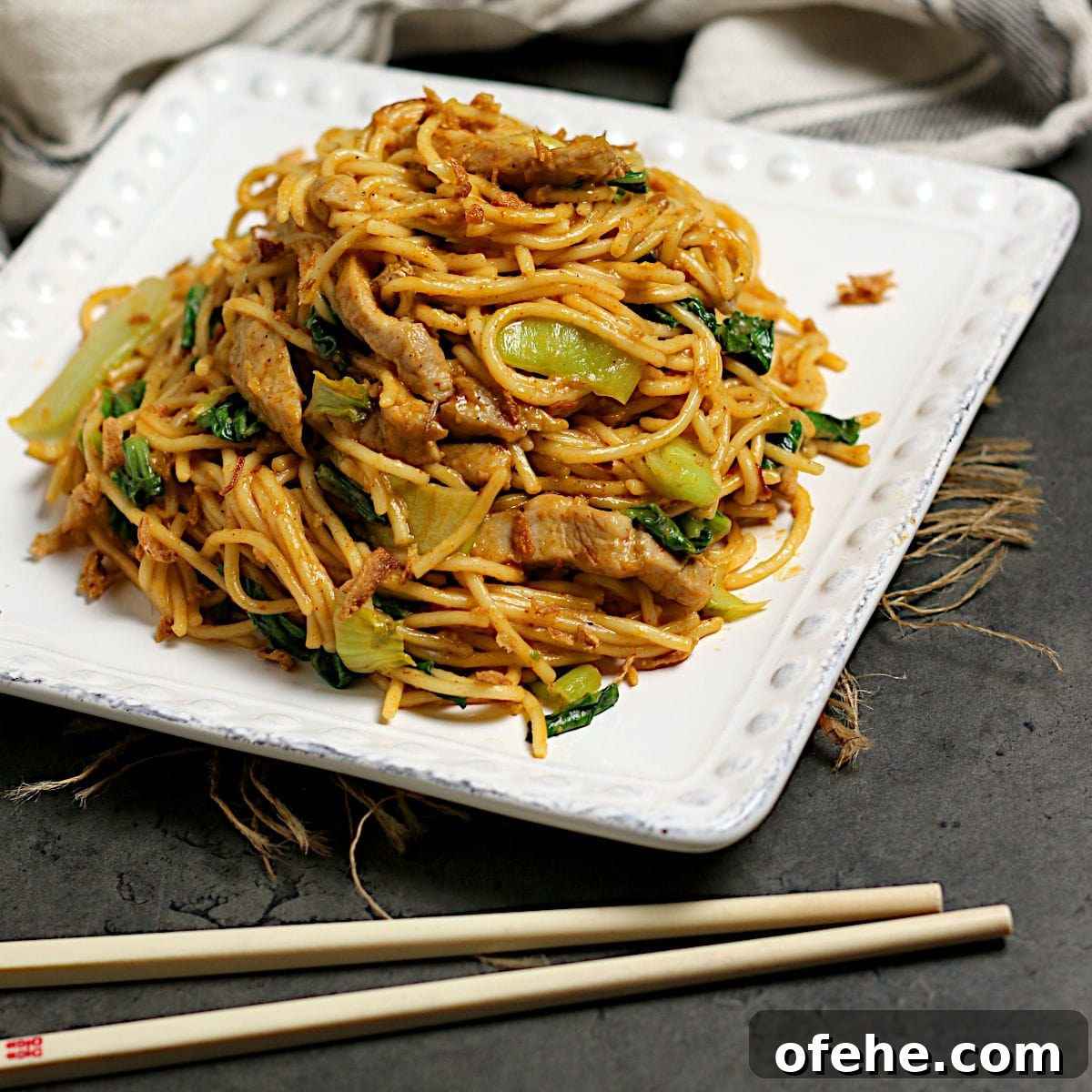
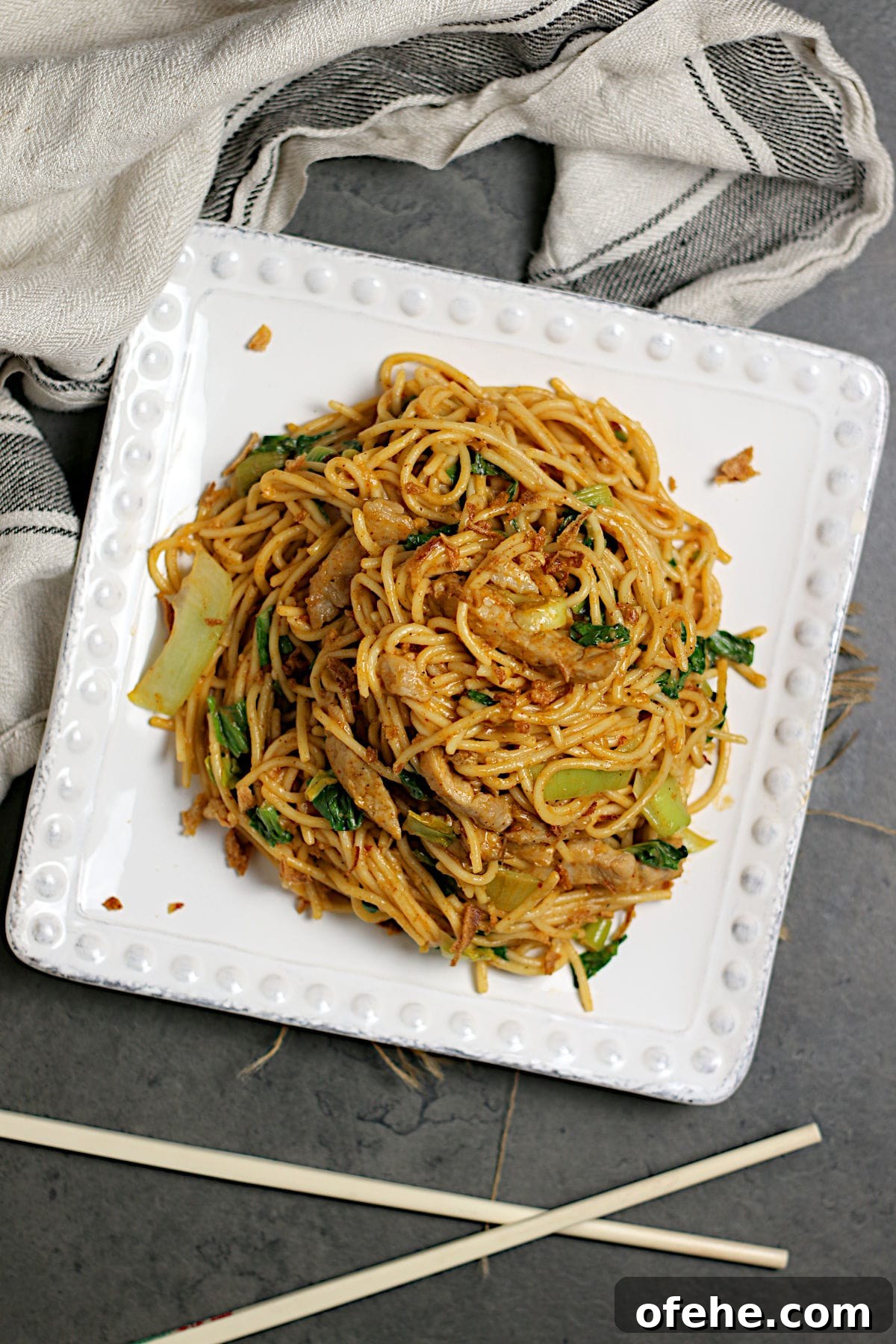
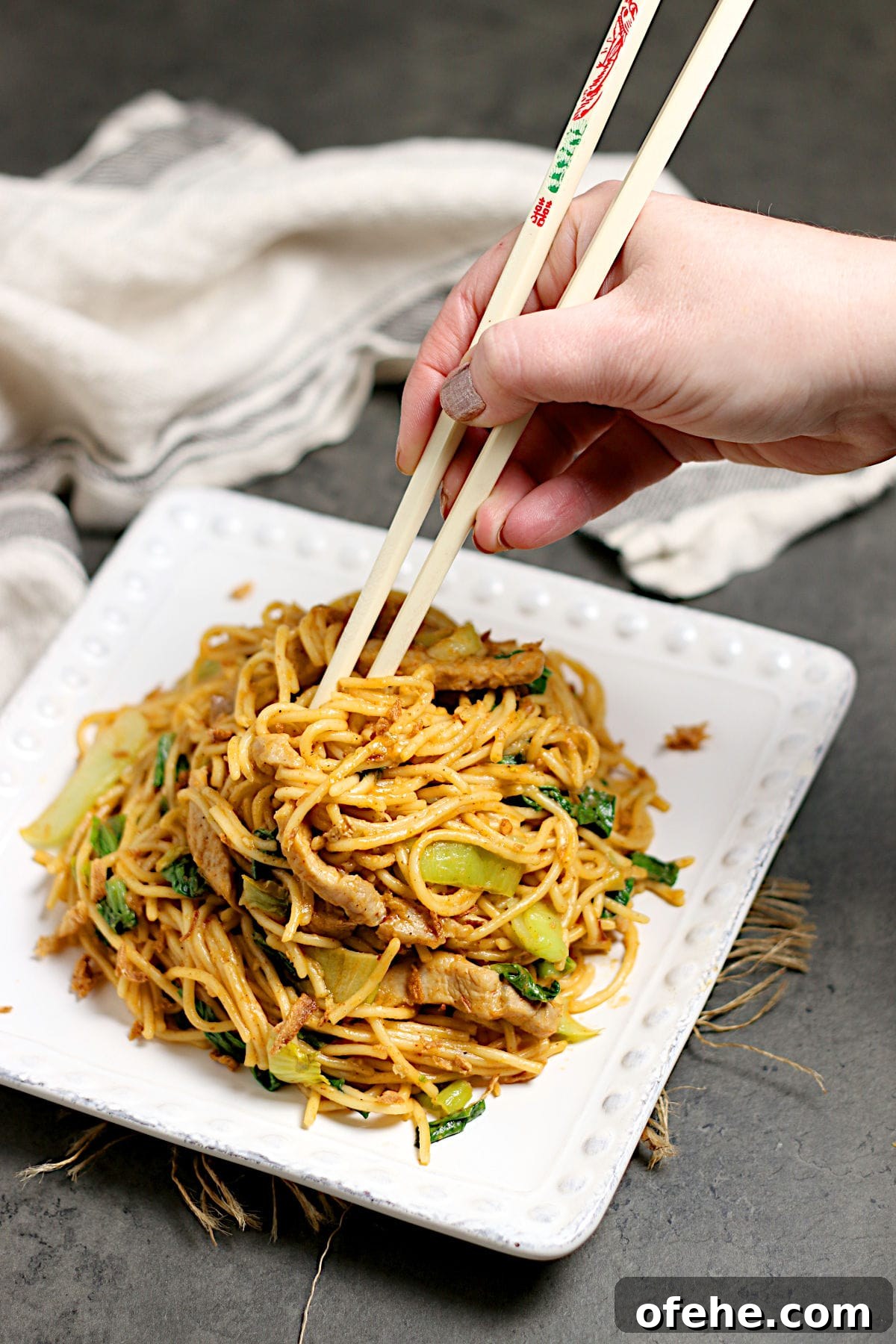
These Spicy Noodles with Pork and Bok Choy are a quick, flavor-packed meal the whole family will enjoy.
Noodles are a reliable weeknight go-to: familiar, fast, and easy to customize. This version combines tender pork, crisp bok choy, and a savory garlicky peanut sauce with a touch of heat. Adjust the red pepper flakes to control the spice level — the peanut-sauce base is flavorful even when kept mild.
Plan on about 30 minutes from start to finish. You’ll use a pot for the noodles and a skillet for the stir-fry, which is standard for most noodle dishes.
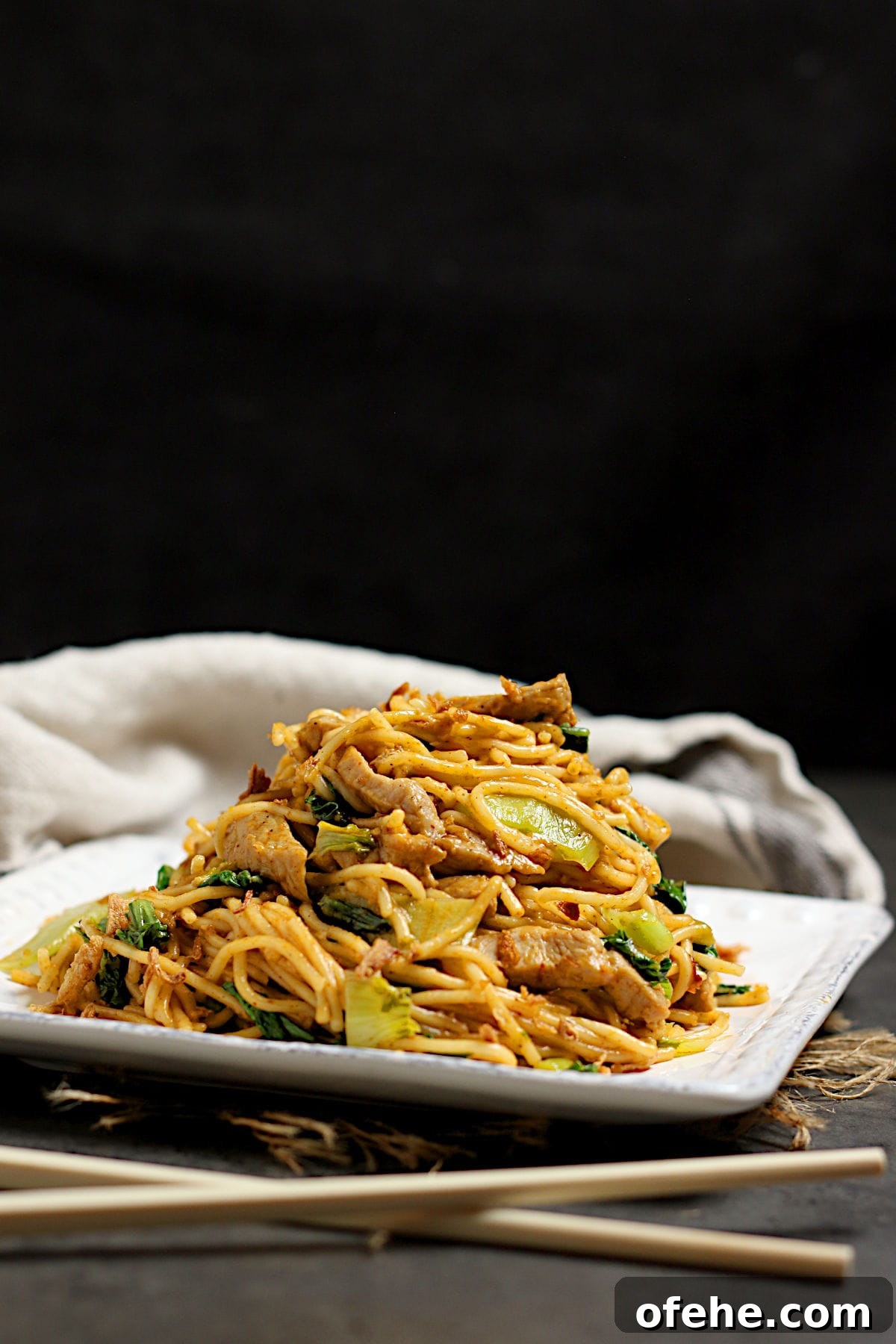
How to Make Spicy Noodles with Pork and Bok Choy
Start by washing and drying the bok choy, then slice it. Separate the thicker, pale stems from the dark green leaves because the stems need a bit more cooking time. If you have a salad spinner, it’s the easiest way to dry greens; otherwise rinse in a colander and pat dry on a clean towel.
Whisk the sauce by combining soy sauce, peanut butter, brown sugar, and rice vinegar in a small bowl or measuring cup. Set it aside.
Bring a large pot of water to a boil and cook the dried wheat noodles to al dente according to package directions (cook for a minute or two less than the package time if you like them firmer, since they’ll finish cooking in the skillet). Reserve about 1/2 cup of the noodle cooking water before draining, then rinse the noodles under cold water and set aside.
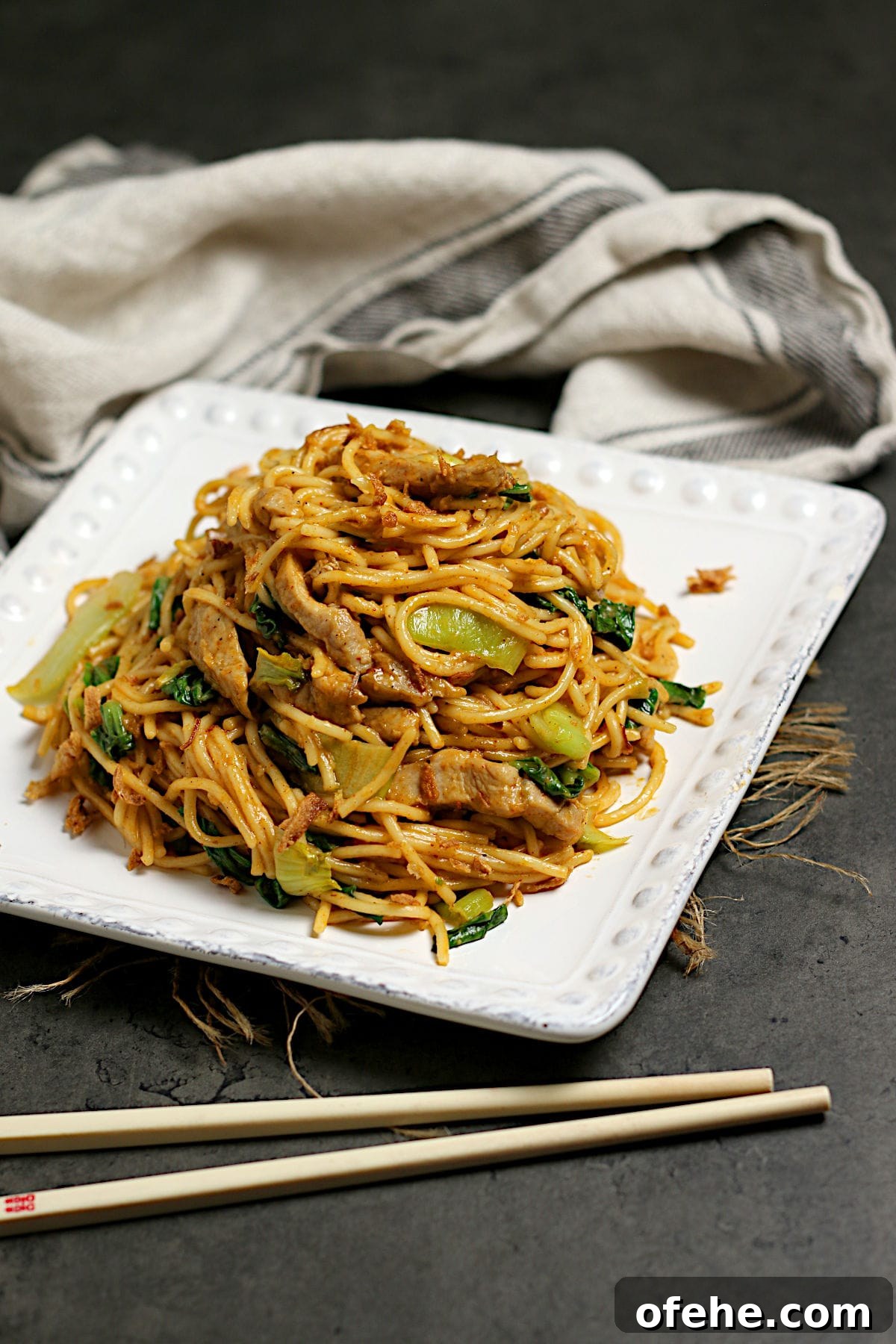
Heat canola oil in a large nonstick skillet or wok over medium-high heat. Add thinly sliced pork and cook until no longer pink, about 3 minutes while stirring. Add the bok choy stems, minced garlic, paprika, red pepper flakes, and black pepper. Cook until the garlic begins to brown, about 2 minutes.
Stir in the noodles and the bok choy leaves, then pour in the peanut-soy sauce and 1/4 cup of the reserved noodle water. Toss everything together over the heat until the noodles are evenly coated and heated through and the bok choy has wilted. Add more reserved cooking water a tablespoon at a time if the noodles look dry.
Remove from heat, fold in the fried shallots, and divide among bowls. Garnish with extra fried shallots if desired and serve immediately. Store leftovers in an airtight container in the fridge and reheat gently in a skillet or microwave.
Ingredients
- 12 ounces baby or Shanghai bok choy
- 3 Tablespoons soy sauce (use reduced-sodium if you want less salt)
- 3 Tablespoons peanut butter (natural or no-stir creamy peanut butter works)
- 3 Tablespoons light brown sugar
- 2 Tablespoons rice vinegar
- 12 ounces dried Chinese wheat noodles (any thin dried wheat noodle, or substitute spaghetti/spaghettini)
- 2 Tablespoons canola or neutral oil
- 8 ounces lean pork, thinly sliced (pork loin, chop, or tenderloin); chicken or fried tofu can be substituted
- 4 cloves garlic, minced
- 1 1/2 teaspoons sweet paprika
- 1 teaspoon red pepper flakes (reduce to 1/4–1/2 teaspoon for milder heat)
- 1/2 teaspoon freshly ground black pepper
- 2 Tablespoons fried shallots, plus more to garnish (or use crispy fried onions or thinly sliced fresh shallots fried in step)
Instructions (summary)
- Wash, dry, and slice bok choy, keeping stems and leaves separate.
- Mix soy sauce, peanut butter, brown sugar, and rice vinegar to make the sauce; set aside.
- Cook noodles to al dente, reserving 1/2 cup cooking water; drain and rinse.
- Heat oil, cook pork until no longer pink, then add bok choy stems, garlic, paprika, red pepper flakes, and black pepper; cook until garlic browns slightly.
- Add noodles and bok choy leaves, pour in sauce and 1/4 cup reserved water, toss to coat. Add more water if needed.
- Stir in fried shallots, divide into bowls, garnish, and serve.
Notes
- To reduce spice, cut the red pepper flakes to 1/4–1/2 teaspoon.
- If you don’t have fried shallots, thinly slice two medium shallots and add them with the garlic, or substitute crispy fried onions.
- This recipe is dairy-free. Make it vegetarian/vegan by replacing pork with fried tofu and confirming the noodles contain no eggs.
Nutrition Notes
Nutritional values below are for one quarter of the recipe. The dish is relatively high in sodium from the soy sauce; choose reduced-sodium soy sauce to lower the sodium content. Per serving (approximate): 558 kcal, 77 g carbs, 25 g protein, 17 g fat.