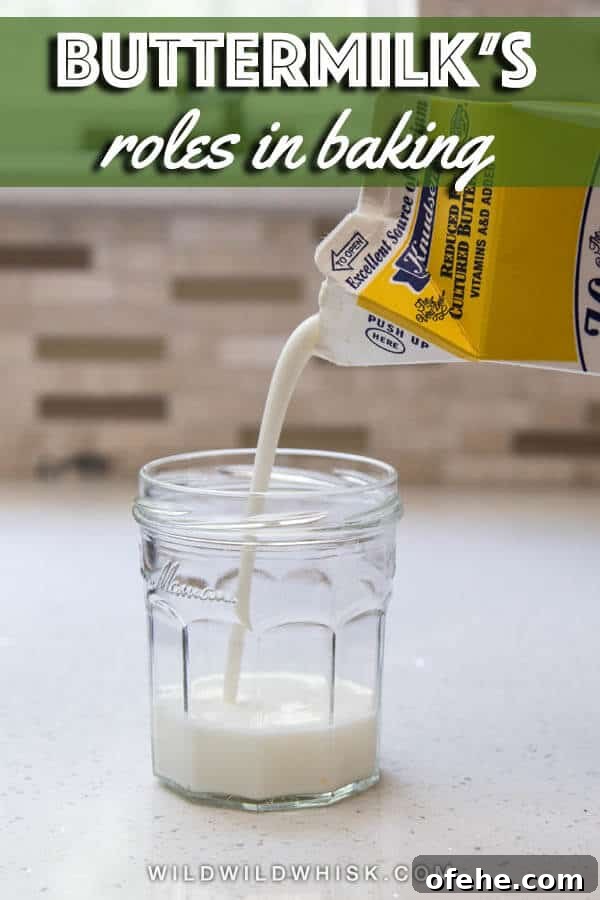
Buttermilk is the baker’s secret to tender baked goods. Below I explain what it is, why recipes call for it, and easy ways to make a substitute when you don’t have any on hand.
Table of Contents
- What is buttermilk?
- What does buttermilk taste like?
- What are buttermilk’s role in baking?
- Buttermilk Substitutes
- How to store leftover buttermilk
- Test out the power of buttermilk in these recipes
- How to Make Buttermilk
What is buttermilk?
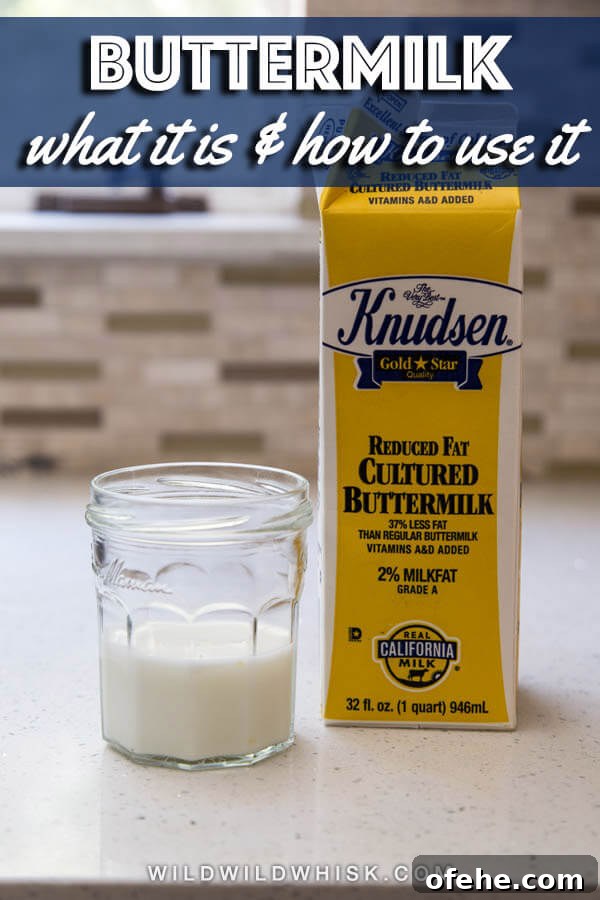
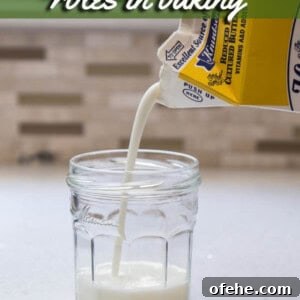
Historically, buttermilk was the thin liquid left after cream was churned into butter and was enjoyed as a refreshing, slightly tangy drink. Most commercial buttermilk today is cultured milk: low-fat or nonfat milk inoculated with bacterial cultures. The bacteria convert lactose into lactic acid, raising acidity and giving buttermilk its characteristic thickness and tang.
Some producers add tiny yellow flecks to mimic the leftover butter bits of the traditional product, but the key attributes are the tangy flavor and increased acidity compared with regular milk.
What does buttermilk taste like?
Cultured buttermilk is noticeably tart and thicker than plain milk. While I don’t usually drink it straight, I love the texture and flavor it brings to baked goods.
What are buttermilk’s role in baking?
Buttermilk moderates gluten
Baking is chemistry. Gluten—the protein network that gives structure to bread, cookies and cakes—responds to acidity. Acid increases charged amino acids along protein chains, which increases repulsion between those chains and weakens the gluten network. In practical terms:
- More gluten = chewier texture (common in yeasted breads).
- Less gluten = more tender results (ideal for cakes, muffins and many quick breads).
Because buttermilk is acidic, it helps limit gluten development, producing a finer, more tender crumb in cakes, muffins and biscuits.
Leavening support
Buttermilk’s acidity also affects leavening. Recipes that use buttermilk typically pair it with baking soda. Sodium bicarbonate reacts with lactic acid to release carbon dioxide, helping batters rise and producing lighter textures.
Buttermilk Substitutes
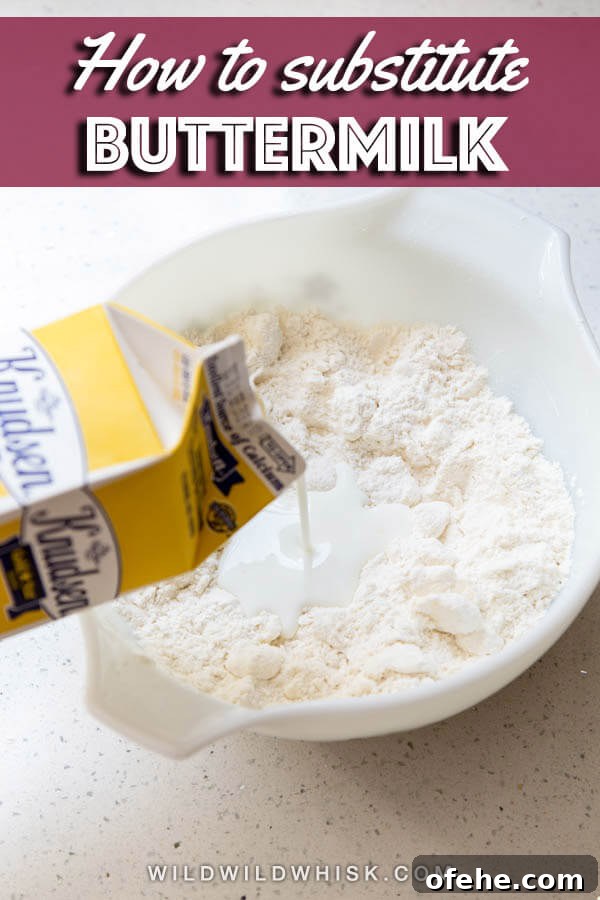
If you don’t have cultured buttermilk, you can easily make a substitute with common pantry ingredients. Use any of the following to replace 1 cup of buttermilk:
- 1 tablespoon lemon juice + 7.5 oz milk (stir and let sit 5–10 minutes)
- 1 tablespoon white vinegar + 7.5 oz milk (stir and let sit 5–10 minutes)
- 1/2 cup sour cream + 1/2 cup milk (whisk until smooth)
- 1/2 cup plain yogurt + 1/2 cup milk (whisk until smooth)
My preferred option is lemon juice plus milk. After a few minutes the mixture thickens and resembles buttermilk. Any substitute will slightly alter flavor compared to store-bought cultured buttermilk, but in most baked goods the difference is minor.
How to store leftover buttermilk
Many recipes call for only a cup of buttermilk, so you may end up with leftovers. Thanks to its acidity, buttermilk keeps well in the refrigerator—typically 3–4 weeks. Always inspect the texture: if it becomes grainy, slimy or clumpy, discard it. When in doubt, toss it.
Can I freeze buttermilk?
Yes. Portion buttermilk before freezing. Separation is normal after thawing—just whisk it back together. Freeze in 1-cup portions for recipe use or in smaller 1-oz measures (ice cube trays work well) for single-serving needs. Airtight jars or small containers keep portions easy to defrost and use.
Test out the power of buttermilk in these recipes
- Buttermilk Biscuits
- Buttermilk Coffee Cake
- Cinnamon Streusel Scones
- Strawberry Cake
- Jalapeño Cheddar Cornbread
- Pinata Cupcakes
Hungry for more?
Join the free newsletter for weekly recipe ideas, inspiration, and occasional subscriber-only giveaways.
How to Make Buttermilk
Pin
Comment
Ingredients
Use lemon juice or vinegar
- 1 tablespoon lemon juice or vinegar
- 7.5 oz milk, whole milk or 2%
Use yogurt or sour cream
- ½ cup plain yogurt or sour cream
- ½ cup milk, whole milk or 2%
Instructions
Make buttermilk using lemon juice or vinegar
-
Add 1 tablespoon lemon juice or vinegar to 7.5 oz milk to make 1 cup. Stir and let rest 5–10 minutes until slightly thickened.
Make buttermilk using yogurt or sour cream
-
Whisk ½ cup plain yogurt or sour cream with ½ cup milk until smooth to make 1 cup of substitute buttermilk.
-
Use any of these substitutes in recipes that call for buttermilk.
 Like this guide? Rate & comment below!
This post may contain affiliate links. For more details on how we utilize affiliates, ads, and sponsored content, see our full disclosure policy. Thank you for your continued support, which enables us to keep bringing you delicious recipes, at no extra cost to you.