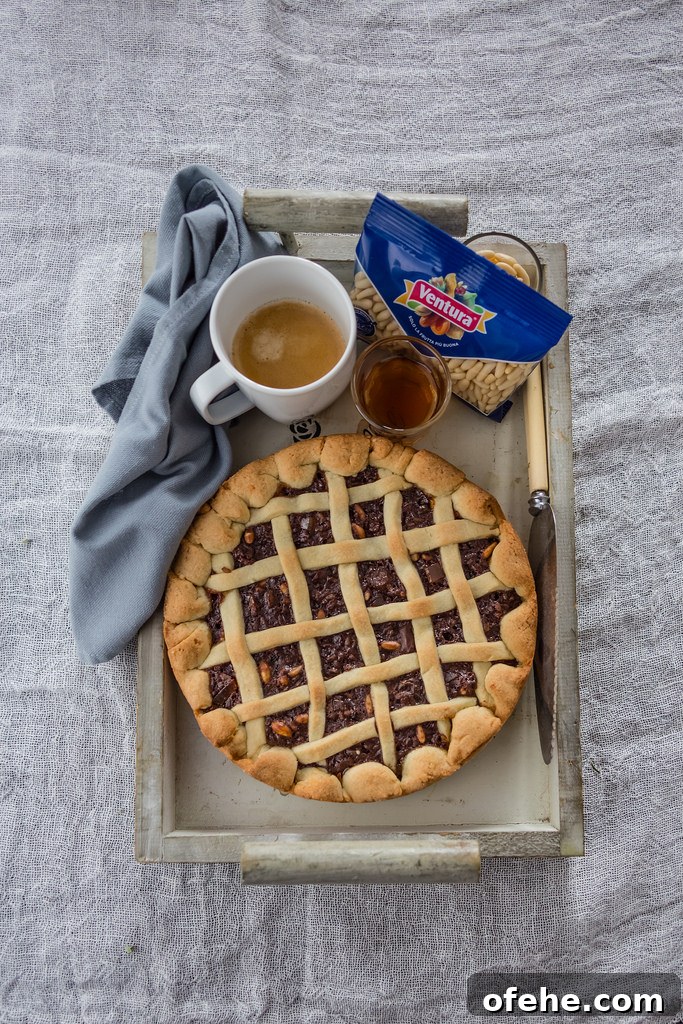
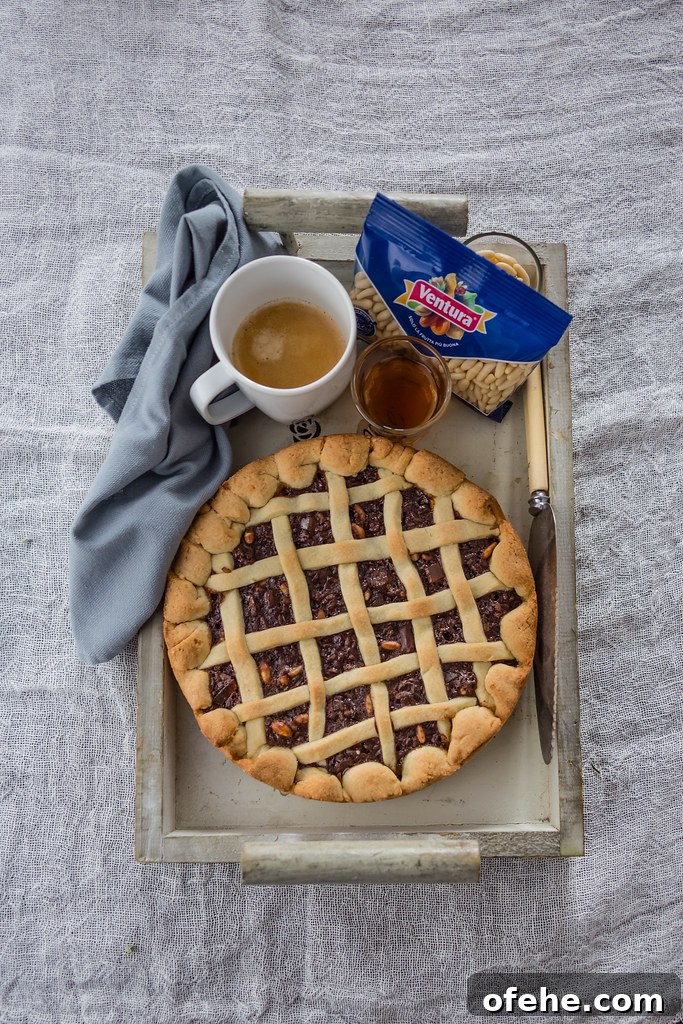
February is over, and the extra day gave me a welcome 24 hours to catch up. March, the month of spring, arrives with bright prospects and the third stop of the Tuscany tour with Ventura to explore local traditional recipes built around dried fruits.
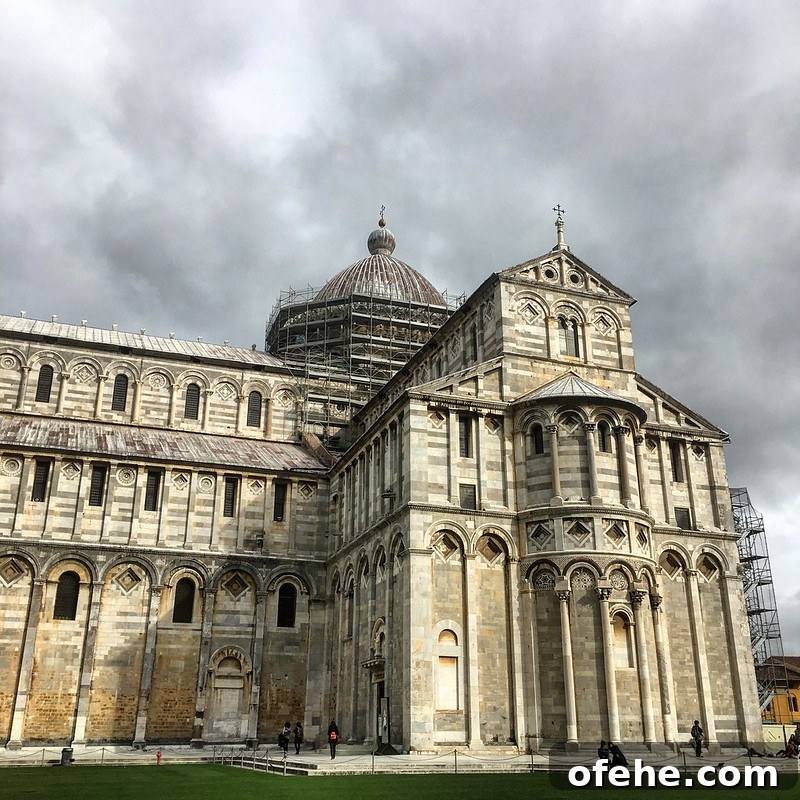
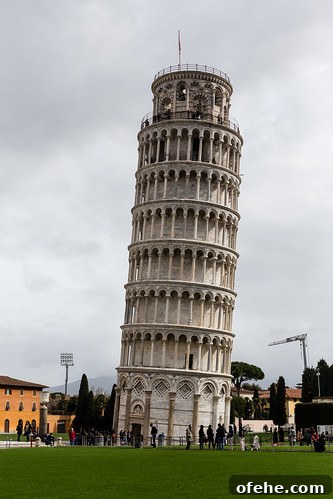
This time we’re in Pisa, the first city many visitors see because flights often land nearby. Most people associate Pisa with the Piazza dei Miracoli—a UNESCO World Heritage site since 1987 that includes the Cathedral, Baptistery, Campo Santo and the famous leaning tower—but the city has much more to offer.
Pisa is the only city outside my home area where I lived for about five weeks, roughly ten years ago, while I tutored a course. It was there that I first discovered cecina (a chickpea flatbread), later rediscovered in Livorno under another name. I’ll write more about Pisa next week; today I want to focus on a typical local cake: the torta coi bischeri, also called the Pilgrim cake.
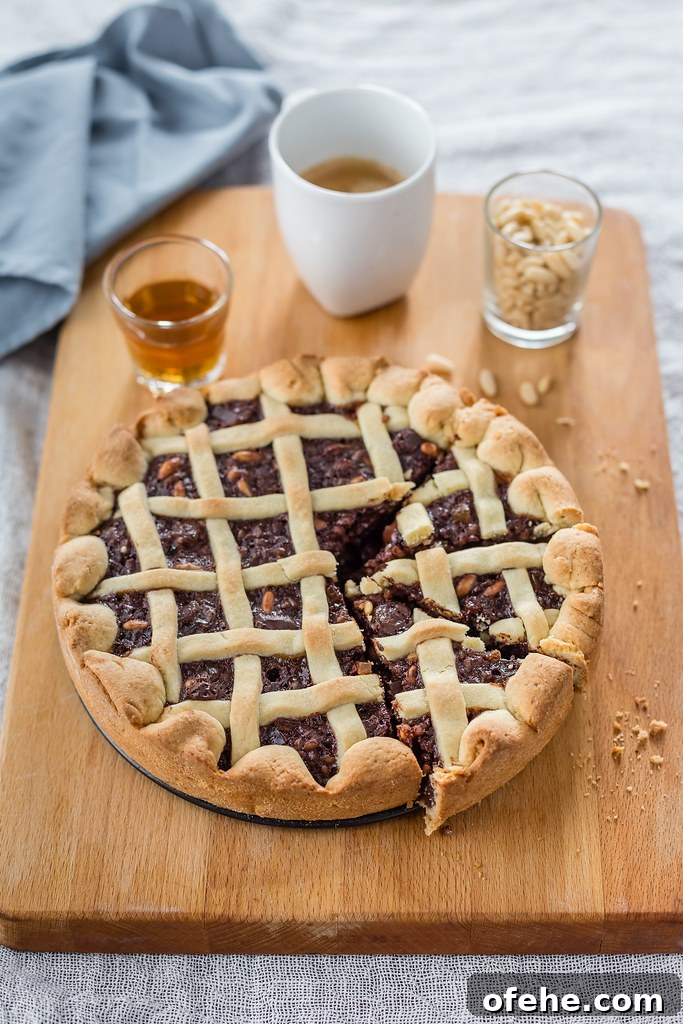
The torta coi bischeri is a home-made holiday cake that also appears in bakeries and pastry shops across Pisa. The name will amuse Italian speakers: in Tuscan dialect, bischero can mean a simple or gullible person, but that isn’t the origin here. In the cake, the bischeri are the decorative outer pastry sections resembling guitar or violin tuning heads. Similar decorative edges appear in other local cakes, such as Lucca’s torta coi becchi, which has a different filling.
Traditionally the filling is a combination of creamy rice and dark chocolate, enriched with raisins, candied fruit and pine nuts. Regional variations exist—rice with custard, ricotta with custard, and even sugar beet with raisins—but the chocolate-and-rice version remains a classic.
Geographically, the cake originates from the towns of San Giuliano Terme and Pontasserchio. It is traditionally prepared for the Ascension and the Feast of the SS. Crucifix of the Miracle on April 28. The torta coi bischeri likely dates back to the sixteenth century, created to welcome pilgrims arriving via the ancient Via Francigena, which explains the alternate name, the pilgrim cake.
Over time the recipe spread across the Pisa area and gained formal recognition in 2007, when a quality brand and specific preparation standards were established. The rules specify that ingredients must be of Italian origin and that local pine nuts should be used—the small pine nuts harvested from the Migliarino Regional Park are the ones traditionally called for.
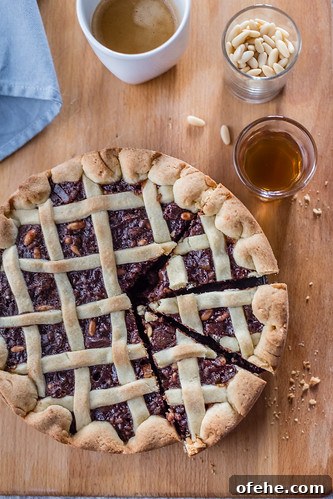
La torta coi bischeri – Pilgrim cake
Below is a clear, faithful version of the classic recipe, inspired by Paolo Petroni’s instructions. Rice cakes have long been a family favorite for birthdays and special occasions: simple to prepare, with a moist, creamy filling that appeals to everyone. This one is quick to make and pairs beautifully with coffee or a glass of vinsanto after a leisurely family lunch.
Ingredients (serves 6)
For the pastry
- 250 g all-purpose flour
- 1 egg
- 100 g sugar
- 100 g butter at room temperature
- A pinch of salt
For the filling
- 100 g rice (Originario or a variety suitable for puddings)
- 1 egg
- 100 g sugar
- 150 g dark chocolate, grated
- 50 g raisins (soaked and drained)
- 50 g pine nuts
- 50 g candied citrus peel, cut into thin strips
- 2 spoonfuls vinsanto
- Seeds from half a vanilla pod
- A pinch of cinnamon
Times & notes
Prep time: about 3 hours (including chilling). Cook time: 30–35 minutes. Total: approximately 3 hours 35 minutes.
Instructions
- Prepare the pastry: rub the butter with the sugar and add the egg. Mix in the flour and knead briefly to form a smooth ball. Wrap in plastic and chill in the refrigerator for a few hours.
- Cook the rice in plenty of boiling, salted water until tender (about 12 minutes or according to package directions). Drain and let cool slightly.
- In a bowl combine the drained rice with the grated chocolate, sugar, vinsanto and a beaten egg. Stir in the soaked, drained raisins, the candied citrus strips and the pine nuts. Finish with vanilla seeds and a pinch of cinnamon.
- Grease and flour a 20 cm (7.9 in) round springform tin.
- Roll out the chilled dough on a lightly floured surface. Line the base of the tin, leaving at least 4 cm (1.5 in) of pastry up the sides.
- Fill the pastry shell with the rice-and-chocolate mixture. Create the characteristic “bischeri” edge by cutting strips diagonally and folding them over so they resemble tuning heads. Use leftover dough to form a lattice or diamond pattern across the top.
- Bake in a preheated oven at 180°C (350°F, gas mark 4) for 30–35 minutes, until the crust is golden.
- Allow the cake to cool completely before removing from the tin and slicing.
Now tell me: which is your favorite rice cake—sweet or savory? And have you ever heard the word bischero?
Link Love
- I’ve often written about my love for pine nuts, which evoke childhood memories and afternoons in San Gimignano with my grandfather. Pine nuts star in desserts such as pinolata (a classic Sienese cake) and castagnaccio (a chestnut flour cake) and appear in almond-paste sweets and savory fillings for meat and fish.
- The decorative bischeri edge takes practice; there are helpful demonstrations from experienced bakers if you want to perfect the technique.
- There are many resources and regional write-ups about the pilgrim cake and its history across the Pisa area if you’d like to read more about local traditions and variations.