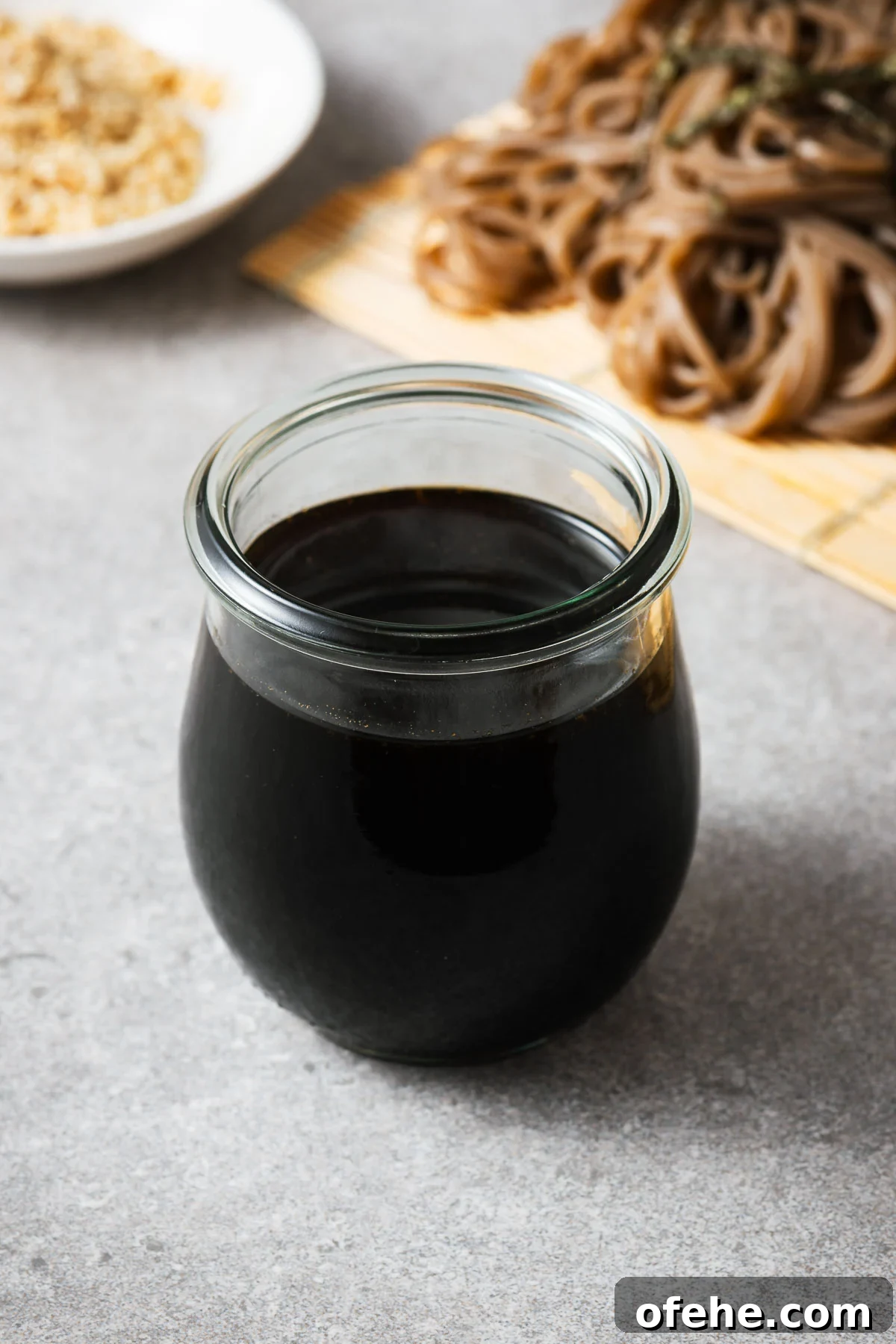
Mentsuyu is a versatile Japanese noodle sauce that brings deep umami, a touch of sweetness, and a savory finish to many dishes. This homemade mentsuyu recipe is simple to prepare and stores well, making it a useful addition to any pantry. Concentrated mentsuyu can be diluted to become a quick soup base, a cold dipping sauce, or a tempura dip, and it keeps in the refrigerator for up to four weeks.
In this post:
- What is mentsuyu?
- Ingredients and substitutes
- How to make mentsuyu
- How to use mentsuyu
- Frequently asked questions
- Mentsuyu sauce recipe
What is mentsuyu?
Mentsuyu is a Japanese soup base commonly used for noodle dishes. Traditional mentsuyu is built from awase dashi — a stock made with kombu (dried kelp) and katsuobushi (dried bonito flakes) — then seasoned with soy sauce, mirin (sweet rice wine), and sake. Because it is concentrated, mentsuyu is usually diluted before serving.
Common uses include a warm noodle broth for udon or soba, a dipping sauce for chilled noodles such as zaru soba, and a dipping sauce for tempura (often called tentsuyu when used specifically for tempura). Making mentsuyu at home is quick and allows you to tailor the balance of salt, sweetness, and umami to your taste.
Ingredients and substitutes
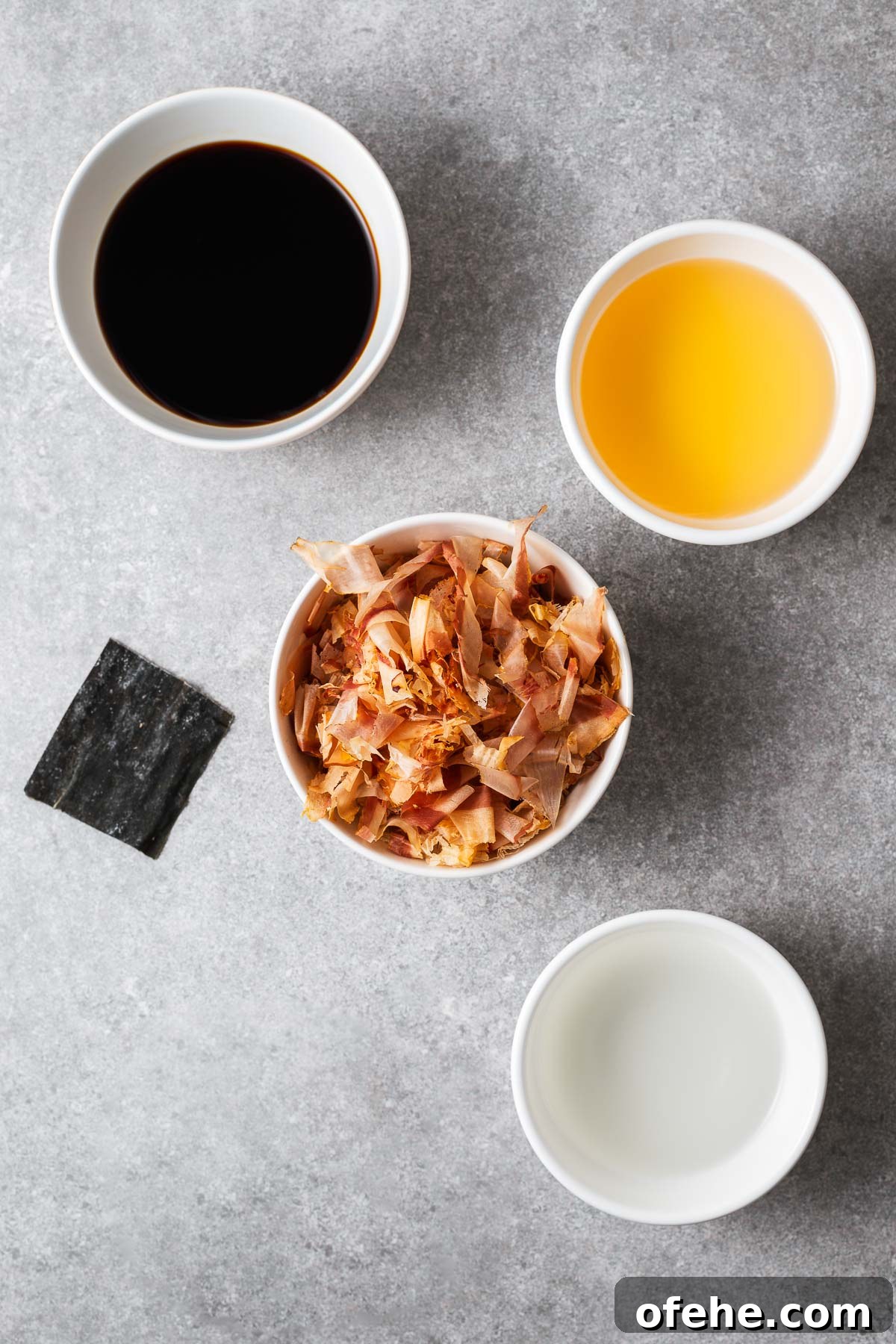
This homemade mentsuyu needs only a few pantry items:
- Sake — adds depth and a subtle aroma. You can use cooking sake or drinking sake; in a pinch, Chinese rice wine or dry sherry can substitute.
- Mirin — a sweet rice wine that balances the saltiness. If mirin is unavailable, add a little sugar to more sake or a mild sweetener to taste.
- Soy sauce — the primary seasoning that gives mentsuyu its savory backbone. Use regular or light soy sauce; tamari works as a gluten-free option.
- Kombu — dried kelp that contributes mineral-rich umami to the stock.
- Katsuobushi — dried bonito flakes that bring smoky, oceanic depth. For a vegetarian or vegan version, rehydrated dried shiitake mushrooms provide a satisfying umami alternative.
These ingredients are usually available at Asian grocery stores or in the international aisle at many supermarkets.
Quick option: Substitute kombu and katsuobushi with 1 teaspoon of dashi powder for an instant mentsuyu — no simmering or straining required. If you already have prepared dashi stock, you can use it in place of kombu and katsuobushi; because commercial dashi is often less concentrated, simply reduce the amount of water when diluting the mentsuyu for use.
How to make mentsuyu
Gather these ingredients:
- ¼ cup sake
- ½ cup mirin
- ½ cup soy sauce
- 1 piece kombu, about a 2-inch square
- 1 heaped cup katsuobushi (dried bonito flakes)
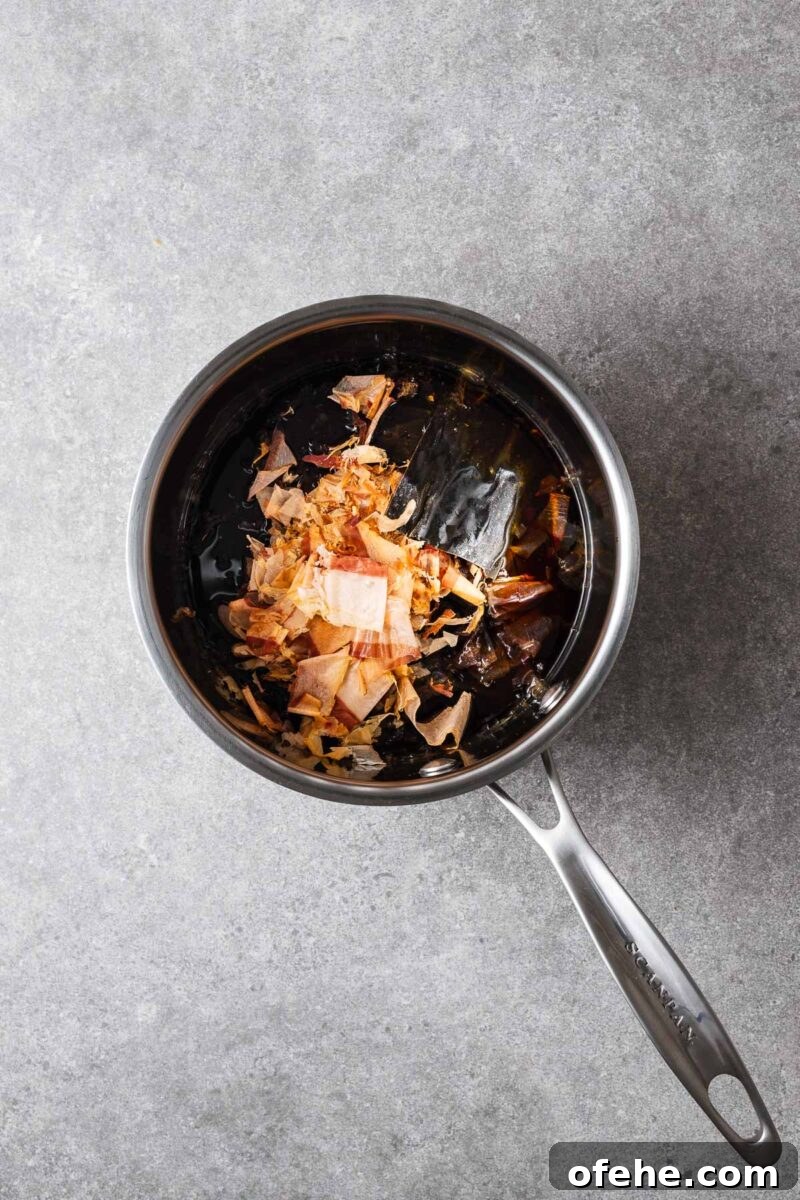
- Bring the sake to a boil in a small saucepan over medium heat and boil for a few seconds to allow some alcohol to evaporate.
- Add mirin, soy sauce, kombu, and katsuobushi and bring to a gentle simmer. Reduce the heat and maintain a gentle simmer for about 5 minutes.
- Remove from heat, cool, and strain. Let the mixture sit off the heat for at least 5 minutes, then strain through a fine-mesh sieve to remove the kombu and katsuobushi. Save the solids (see notes).
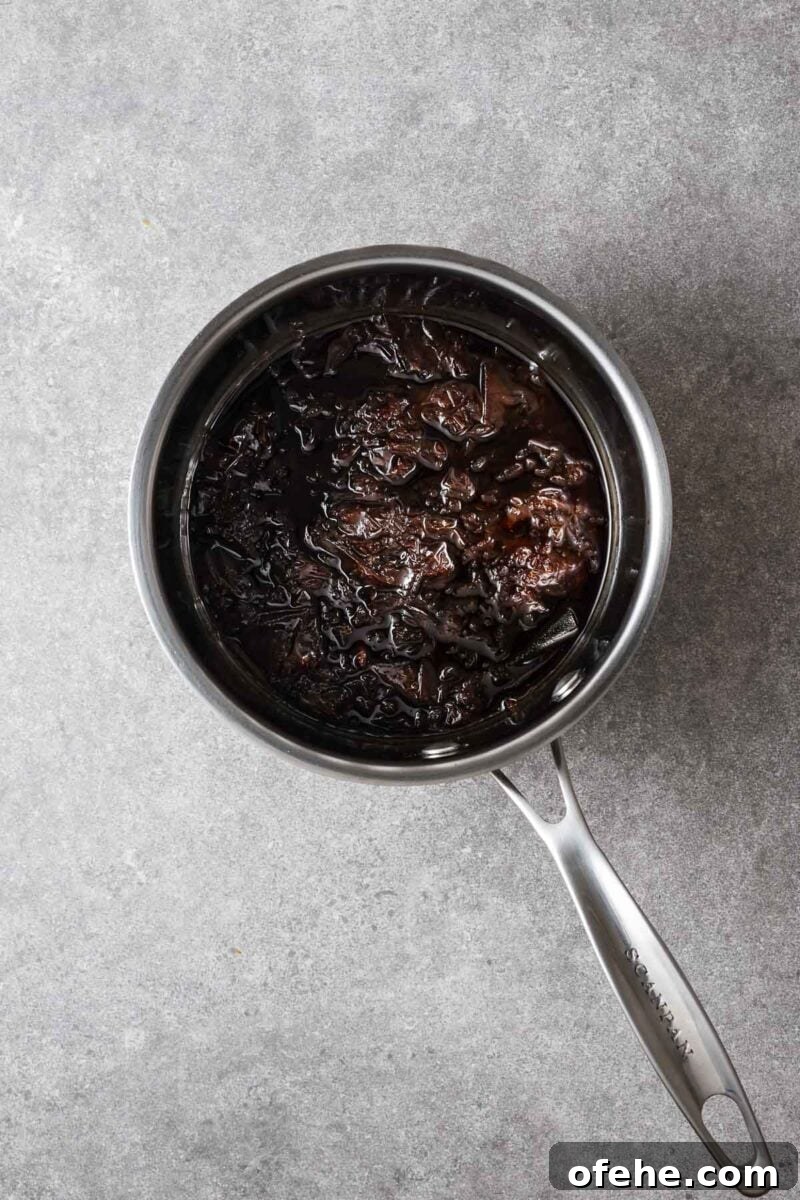
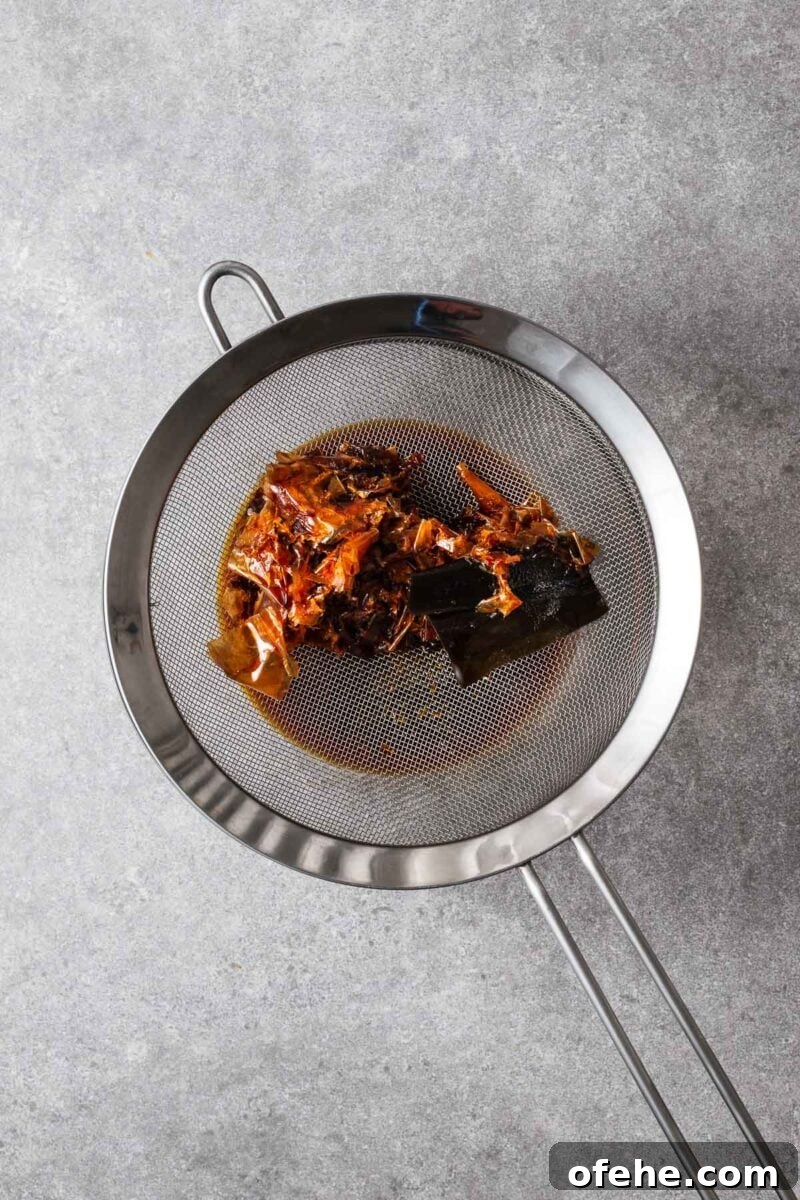
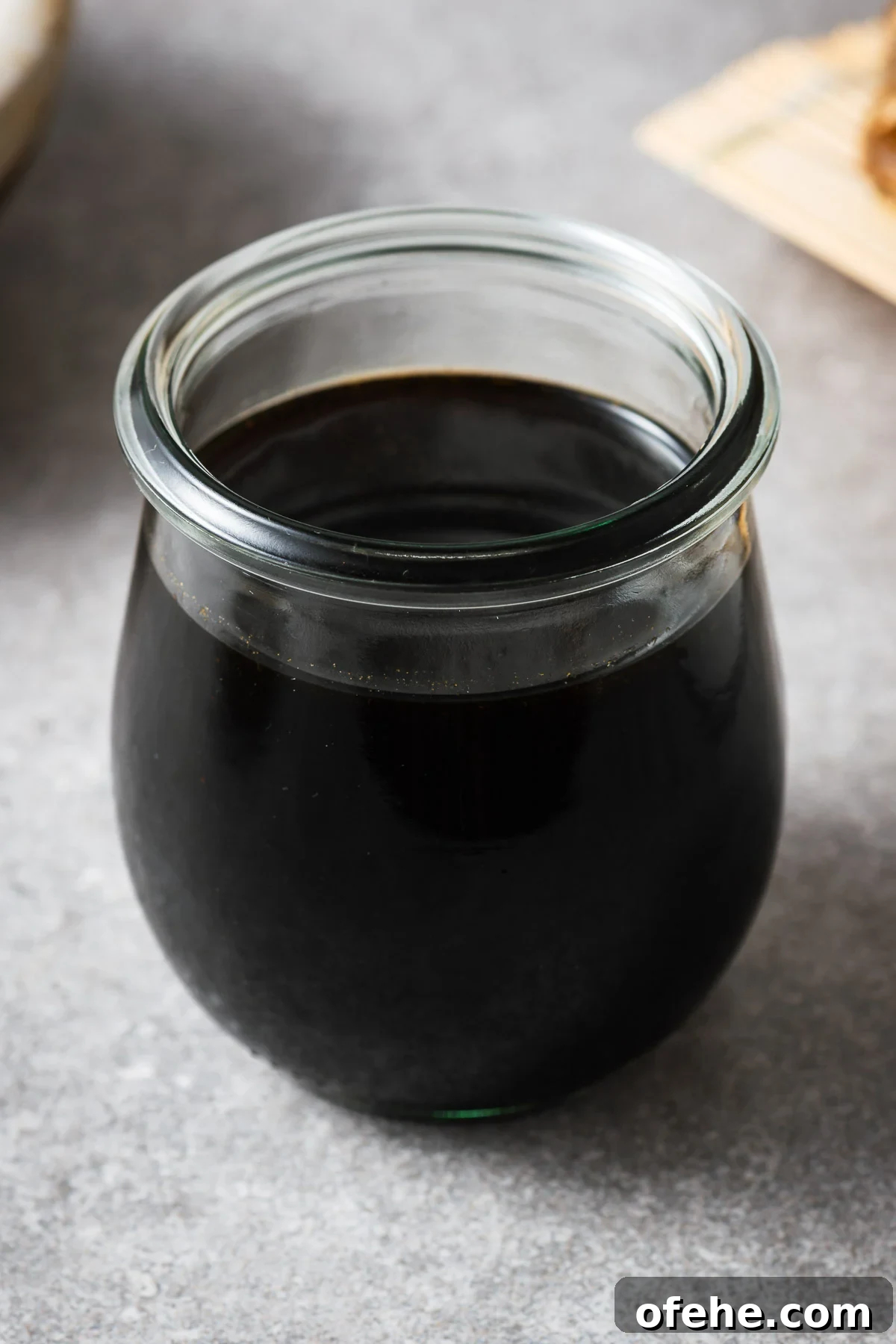
Transfer the strained mentsuyu to a clean airtight jar and refrigerate. It will keep for up to four weeks. This recipe yields just over 1 cup of concentrated mentsuyu — enough, once diluted, for several servings of noodle soup or dipping sauce.
How to use mentsuyu
Because this is a concentrate, you should dilute mentsuyu with water before serving. Ratios are flexible and depend on taste and application:
- Warm noodle broth: Start with 1 part mentsuyu to 3 parts hot water. Adjust to taste. Pour over cooked udon or soba and top with green onions, protein, or other garnishes.
- Cold dipping sauce: For chilled noodles, try 1 part mentsuyu to 2 parts ice-cold water, then taste and adjust. Serve the sauce chilled alongside cooled noodles for dipping.
- Tempura dipping sauce: Mix 1 part mentsuyu with 1 part water and a pinch of sugar for a balanced tempura dip.
- Hot pots and marinades: Diluted mentsuyu can serve as a base for hot pots or as an umami-rich marinade for meats, fish, and vegetables.
Frequently asked questions
What is mentsuyu made of?
Mentsuyu is typically made from dashi (kombu and bonito flakes), soy sauce, mirin, and sake, and sometimes a small amount of sugar. Variations exist by region and household.
What is the difference between tsuyu and mentsuyu?
Tsuyu is a general Japanese term for soup bases or dipping sauces. Mentsuyu specifically refers to a tsuyu used for noodles, commonly made with dashi, soy sauce, mirin, and sake.
How do you use mentsuyu?
Use it diluted as a noodle soup base, as a cold dipping sauce for soba or somen, for tempura dipping, or as a seasoning in stir-fries and marinades.
How does soy sauce differ from tsuyu?
Soy sauce is a single seasoning made from fermented soybeans. Tsuyu is a composed soup base that includes soy sauce plus dashi and sweetening agents, resulting in a more complex, savory flavor.
Mentsuyu (Japanese Noodle Soup Base) — Recipe
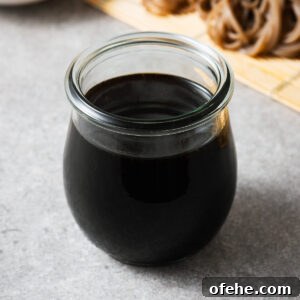
Mentsuyu (Japanese Noodle Soup Base)
Yield: about 1 cup (concentrated). Serves: 4 when diluted for soup.
Cook time: 5 minutes. Rest time: 5 minutes. Total: ~10 minutes.
Ingredients
- ¼ cup sake
- ½ cup mirin
- ½ cup soy sauce
- 1 piece kombu (about 2-inch square, dried kelp)
- 1 heaped cup katsuobushi (dried bonito flakes)
Instructions
- Bring the sake to a boil in a small saucepan over medium heat and boil for a few seconds to allow some alcohol to evaporate.
- Add mirin, soy sauce, kombu, and katsuobushi. Bring to a gentle simmer, then reduce the heat and maintain a gentle simmer for 5 minutes.
- Remove from heat and let cool for at least 5 minutes.
- Strain through a fine mesh sieve, discarding or saving the solids for other uses (see notes). Transfer the liquid to a clean jar and refrigerate for up to 4 weeks.
Notes
- Vegan option: Replace katsuobushi with 3 dried shiitake mushrooms rehydrated in water for about an hour. Use the mushrooms in place of bonito flakes when simmering.
- Quick version: Use 1 teaspoon dashi powder instead of kombu and katsuobushi; mix and use without simmering or straining.
- Storage and yield: The concentrated cup of mentsuyu will make roughly four cups of soup broth when diluted 1:3 (mentsuyu:water) or several servings of dipping sauce at a stronger dilution.
- Use the solids: Save the strained kombu and katsuobushi to make rice seasoning or chop finely and mix with sesame oil and chili flakes as a condiment.
Nutrition (per 4 tbsp)
Calories: 82 kcal; Carbohydrates: 15 g; Protein: 3 g; Fat: 0.03 g; Sodium: 1847 mg; Sugar: 7 g. Values are estimates and depend on brands and exact measurements.
More ideas
Use mentsuyu to make quick bowls of udon or soba, to dress cold noodle dishes, to season stir-fries, or as a base for simple hot pots. Once you have a jar in the fridge, building flavorful Japanese-style meals becomes much faster and more satisfying.