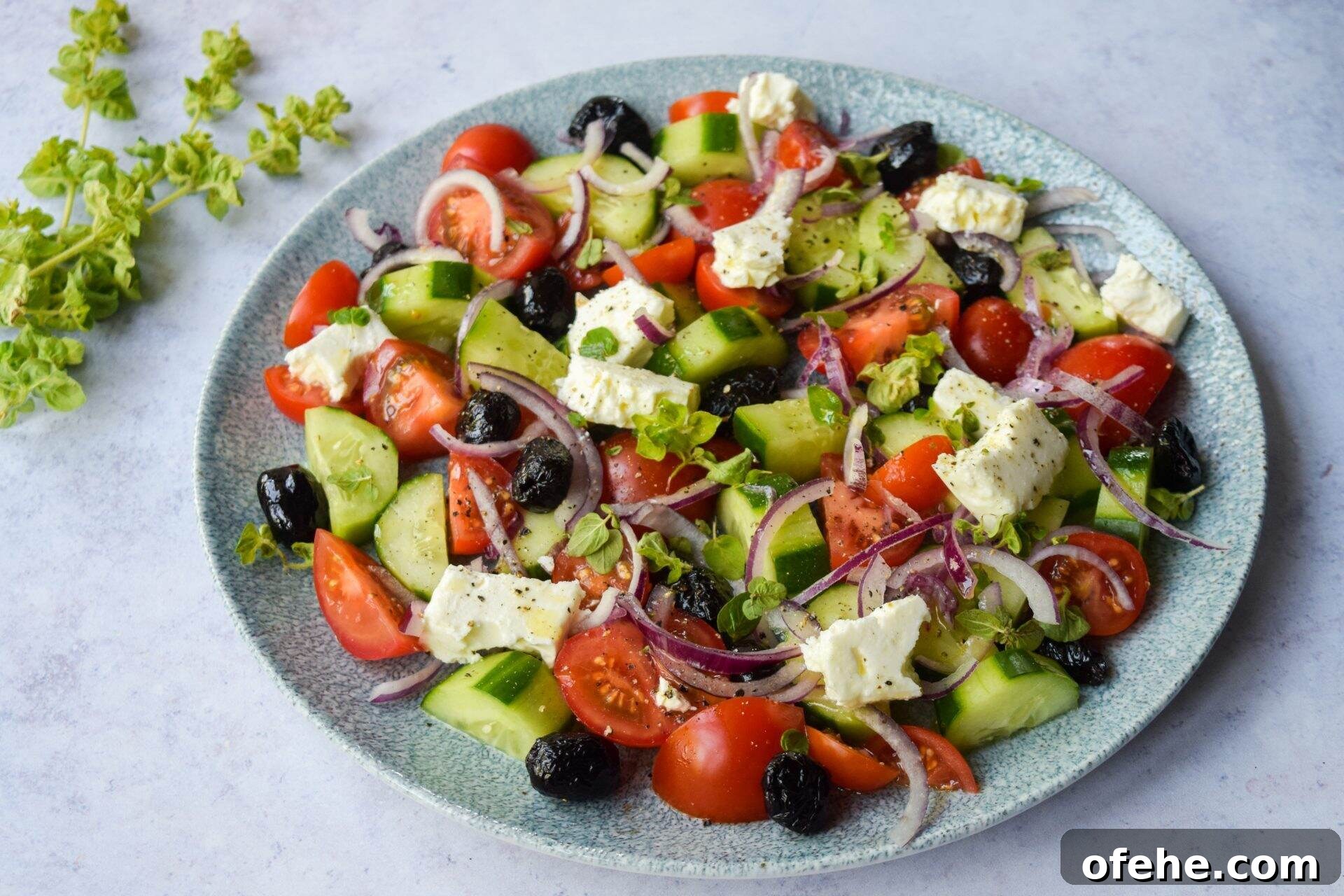
This refreshing Greek salad combines crisp cucumbers, ripe tomatoes, zesty red onion, briny Kalamata olives, and tangy crumbled feta. Dressed simply with extra virgin olive oil, red wine vinegar, dried oregano, salt, and pepper, it’s a light, flavorful dish that works perfectly as a side or a simple main course.
Some ingredients may be less common in every kitchen: Kalamata olives are dark, flavorful Greek olives usually sold pitted or unpitted, and feta is a tangy, crumbly cheese typically found in the specialty cheese or international aisle. Both are readily available at most supermarkets and add authentic Mediterranean character to the salad.
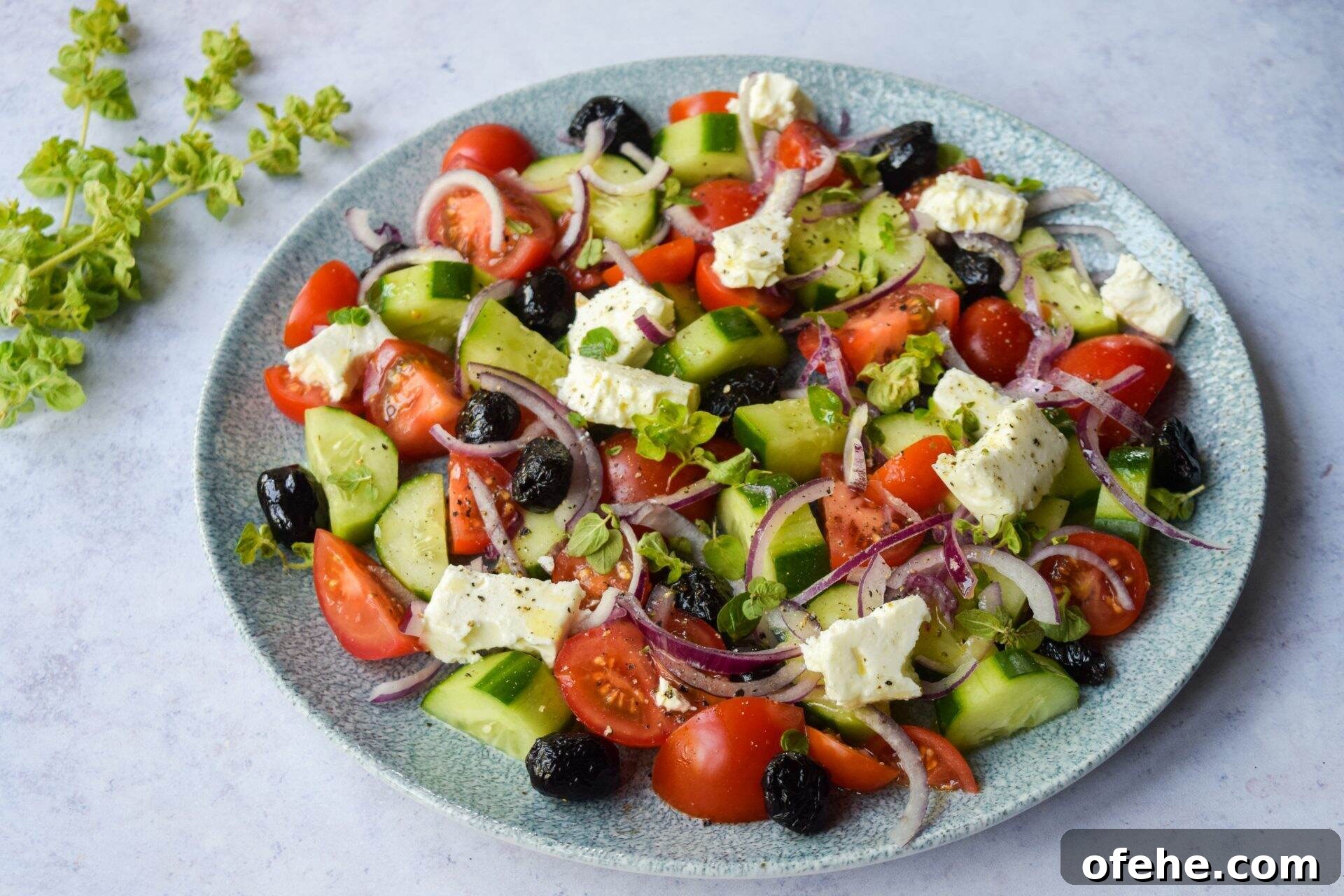
Ingredients For Greek Salad Recipe
Cucumbers: Fresh and crisp, they add a cool crunch.
Tomatoes: Juicy and ripe for sweetness and color.
Red onions: Thinly sliced for a bright, sharp bite.
Kalamata olives: Pitted if preferred, for a salty, savory note.
Feta cheese: Crumbled to bring creamy, tangy flavor.
Olive oil: Use good-quality extra virgin olive oil for the dressing.
Red wine vinegar: Adds bright acidity to balance the oil and cheese.
Dried oregano: A classic herb that complements the Mediterranean flavors.
Salt and pepper: To taste, for seasoning.
Technique Tip for This Recipe
For a milder, sweeter onion flavor, briefly marinate the sliced red onions in red wine vinegar with a pinch of sugar for 10 minutes before adding them to the salad. This softens their sharpness and harmonizes the dressing.
Suggested Side Dishes
Alternative Ingredients
-
Cucumbers — substitute with zucchini for a similar texture and mild flavor.
-
Tomatoes — cherry tomatoes work well if you prefer smaller, sweeter bites.
-
Red onions — shallots offer a milder, slightly sweeter alternative.
-
Kalamata olives — use black olives if you want a milder briny note.
-
Feta cheese — goat cheese is a good substitute with comparable tang and crumbly texture.
-
Olive oil — avocado oil can replace olive oil for a neutral, healthy fat.
-
Red wine vinegar — apple cider vinegar offers similar acidity and tang.
-
Dried oregano — dried basil can be used for a different but complementary herb profile.
-
Salt — sea salt provides a similar salty flavor with a slightly different mineral finish.
-
Pepper — white pepper adds milder heat without altering the salad’s look.
Alternative Recipes to Try
How to Store or Freeze Your Salad
- Store the salad in an airtight container in the refrigerator to help preserve crispness.
- Keep dressing separate in a small jar and add it just before serving to avoid soggy vegetables.
- Consume within 2–3 days for best texture and flavor; feta and olives can intensify over time.
- Freezing the whole salad is not recommended because cucumbers and tomatoes become mushy; freeze feta and olives separately if needed.
- Thaw frozen feta and olives in the refrigerator overnight and combine them with freshly chopped vegetables when ready to serve.
- Taste and adjust seasoning after storing; a little extra salt, pepper, or lemon juice can refresh the flavors.
- Finish with fresh herbs or a squeeze of lemon for added brightness before serving.
How to Reheat Leftovers
- Greek salad is best enjoyed cold. If you prefer it slightly warmed, separate the feta and olives first, as they do not reheat well.
- Warm the cucumber, tomato, and onion gently: microwave on low for 20–30 seconds, or toss briefly in a nonstick skillet over medium-low heat for 1–2 minutes.
- Return the feta and olives to the bowl, add a splash more olive oil or vinegar if needed, toss gently, and serve immediately.
Essential Tools for This Recipe
- Mixing bowl — large enough to combine all ingredients.
- Cutting board — for chopping vegetables.
- Chef’s knife — sharp for quick, even cuts.
- Measuring cups and spoons — for accurate dressing proportions.
- Salad tongs — to toss gently without breaking the ingredients.
- Serving bowl — to present the finished salad.
- Refrigerator — to chill or store the salad.
How to Save Time on This Recipe
Pre-chop cucumbers, tomatoes, and onions ahead of time and store them airtight in the refrigerator. Buy pre-pitted Kalamata olives and pre-crumbled feta to cut prep time. Mix the dressing in a jar in advance for quick assembly, or prepare a larger batch of salad to enjoy over a few days (adding fresh elements if needed before serving).
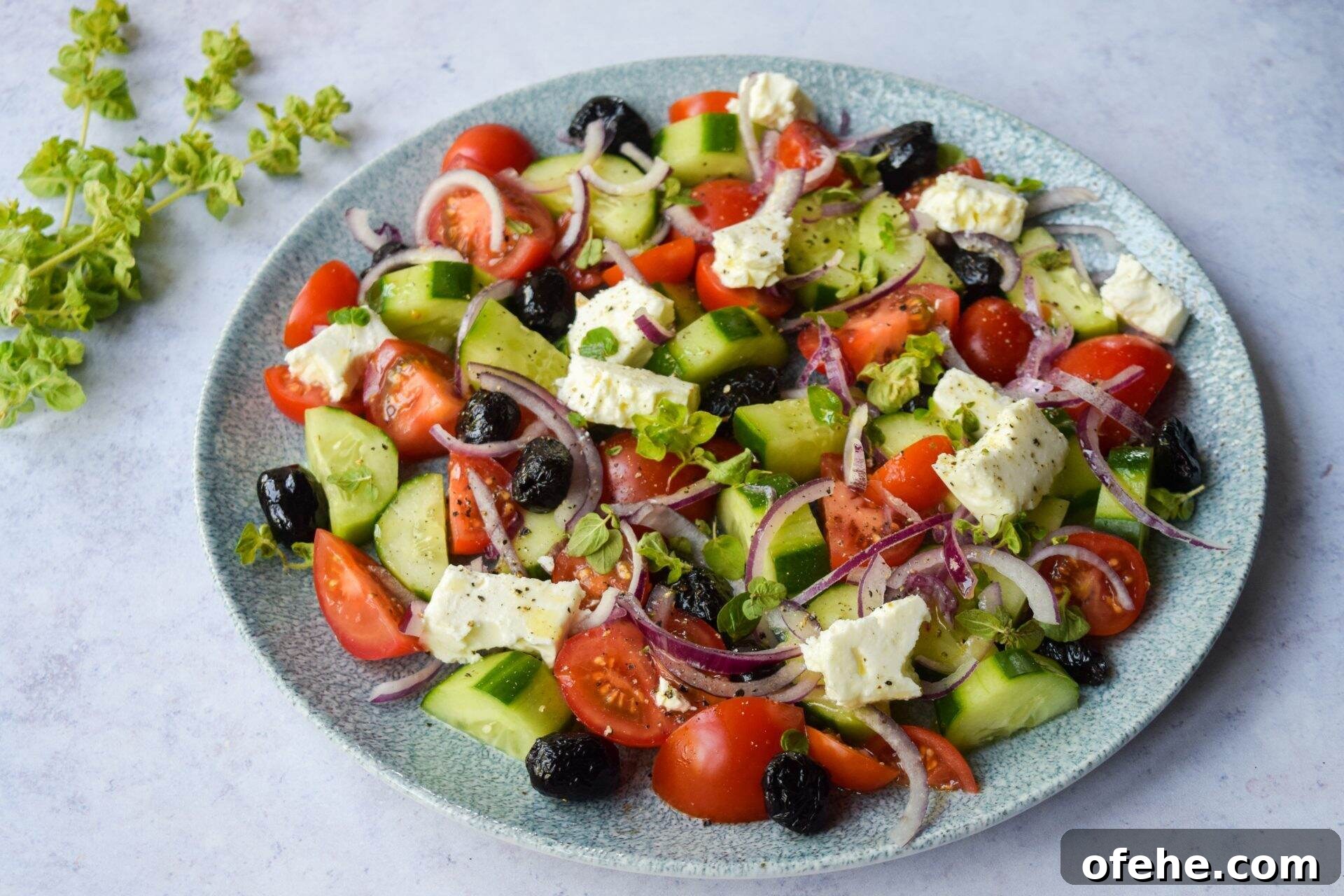
Greek Salad Recipe
Ingredients
Salad Ingredients
- 2 cups chopped cucumbers
- 2 cups chopped tomatoes
- 1 cup sliced red onions
- 1 cup kalamata olives pitted
- 1 cup feta cheese crumbled
- 2 tablespoon olive oil
- 1 tablespoon red wine vinegar
- 1 teaspoon dried oregano
- to taste salt and pepper
Instructions
-
1. In a large mixing bowl, combine cucumbers, tomatoes, red onions, olives, and feta cheese.
-
2. Drizzle olive oil and red wine vinegar over the salad.
-
3. Sprinkle dried oregano, salt, and pepper to taste.
-
4. Toss everything gently to combine.
-
5. Serve immediately or refrigerate for later.
Nutritional Value
Keywords
More Amazing Recipes to Try 🙂
- Banana Bread French Toast Recipe
25 Minutes
- Pea Pesto Recipe
10 Minutes
- Trout Amandine Recipe
30 Minutes
- Mint Syrup Recipe
15 Minutes