
If there’s one thing that trips up new Big Green Egg owners, it’s temperature control. That’s why I wrote this Big Green Egg Temperature Control Guide for Beginners.
Compared with a gas grill or traditional smoker, the Big Green Egg behaves differently. Its ceramic construction retains heat exceptionally well, airflow has a much bigger effect than you might expect, and tiny vent adjustments produce noticeable temperature changes.
The good news: once you understand how temperature control works on the Egg, it becomes one of the most reliable and versatile cookers you’ll own.
This guide explains how airflow controls heat, what the top and bottom vents do, how to stabilize temperatures, and common mistakes that frustrate new Egg owners. By the end, you’ll be ready to confidently manage the Egg for low-and-slow smoking, high-heat grilling, or anything in between.

How does a Big Green Egg work?
Before mastering temperature control, it helps to understand what makes the Big Green Egg different from other cookers.
The Big Green Egg is essentially a ceramic, charcoal-fueled convection cooker. That combination of materials and airflow creates its unique performance and versatility.
Ceramic Design
Thick ceramic walls are a major advantage. They insulate and hold heat extremely well, even during long cooks or when the lid is opened briefly. Once the Egg reaches temperature, it resists rapid changes.
This heat retention stabilizes cooking temperatures, reduces fuel use, and preserves moisture—one reason food stays juicy when cooked in the Egg.
Lump Charcoal Fuel
The Egg uses natural lump charcoal, not briquettes. Lump burns hotter and cleaner and creates less ash, which improves airflow and helps maintain consistent temperatures.
Because the Egg is efficient, a full load of lump charcoal can power extended low-and-slow cooks without refueling.
Egg Shape and Airflow
The egg shape is functional: as heat rises, the curved dome circulates hot air around the food, producing live-fire convection. That’s why the Egg can smoke, grill, roast, or bake effectively.
For best results, keep the lid closed whenever possible. Each opening releases heat and disrupts airflow.
The Air-Tight Seal
A gasket between the base and dome creates a near air-tight seal. That containment holds heat and moisture and makes airflow adjustments predictable. Without a good seal, temperature control becomes difficult.
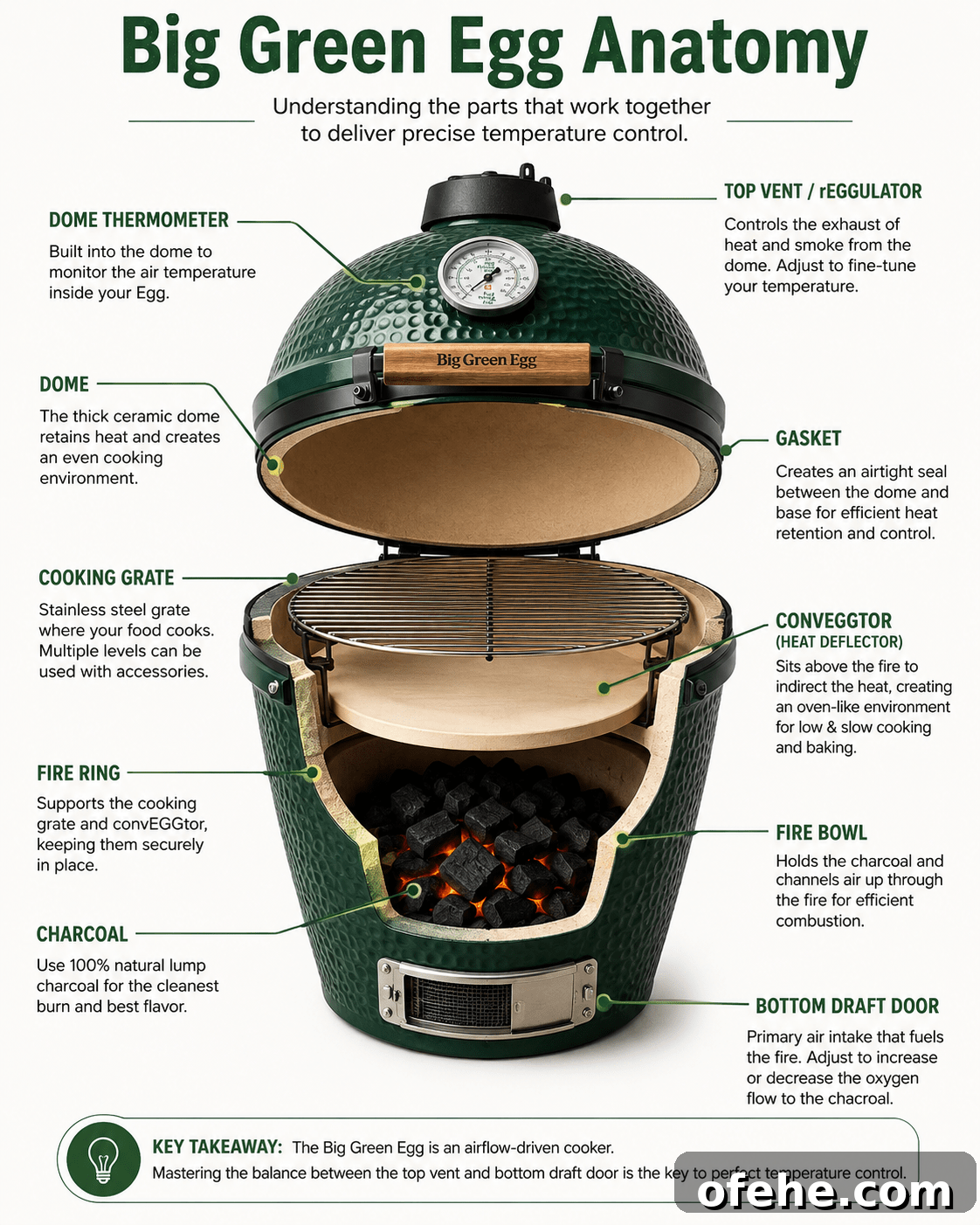
The convEGGtor Heat Deflector
The convEGGtor is essential for indirect cooking. This ceramic heat deflector blocks direct radiant heat while allowing hot air to circulate, turning the Egg into a smoker or outdoor oven.
Top and Bottom Air Vents
This is where temperature control happens. The Egg manages heat through airflow:
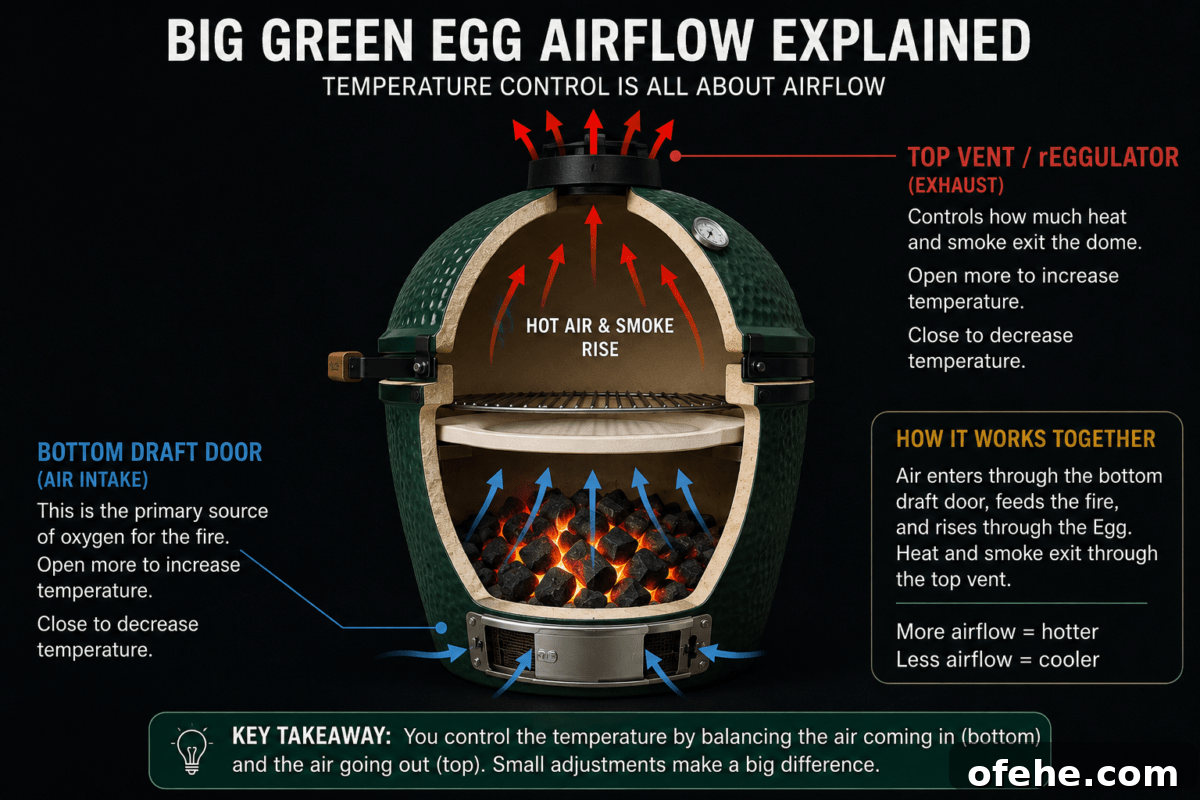
- the bottom draft door controls how much oxygen reaches the fire
- the top vent (rEGGulator) controls how quickly heat and smoke escape
More airflow = hotter fire. Less airflow = cooler fire. Understanding how these vents interact is the most important skill for Egg mastery.
Built-In Thermometer vs Digital Probes
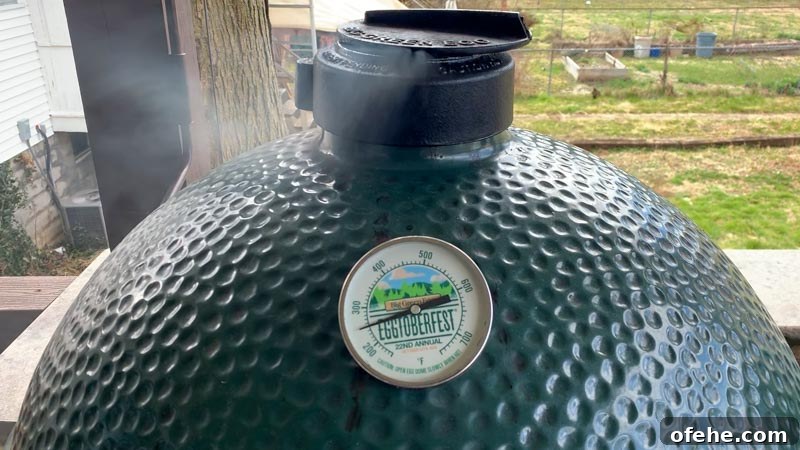
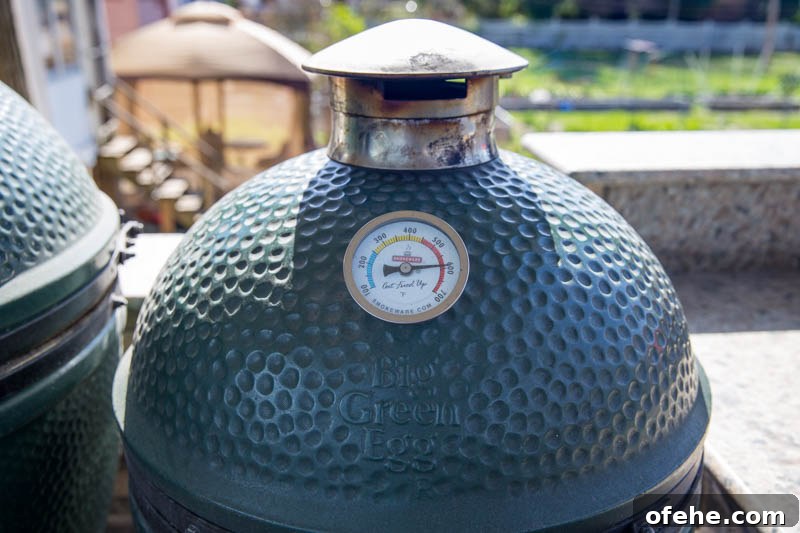
The dome thermometer is useful as a general reference, but it reads the air higher in the dome, not at grate level. For precise cooking—especially low-and-slow—a quality digital probe thermometer that measures grate-level temperature is far more accurate.
How to start your Big Green Egg for better temperature control
How you light the Egg affects how the fire builds and how controllable the temperature will be. For low-and-slow cooks, start with a small, controlled fire by lighting one or two spots in the charcoal. For high-heat grilling, light multiple areas to establish a stronger fire more quickly.
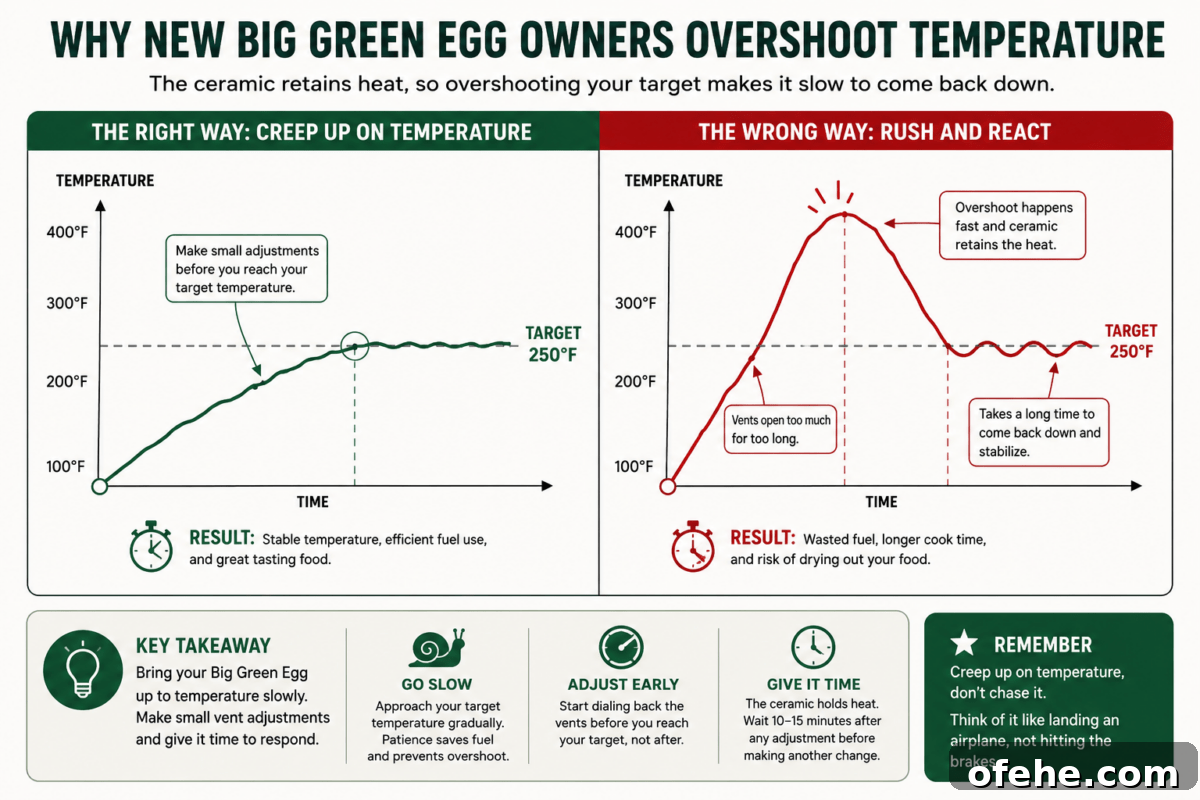
The biggest beginner mistake is rushing: opening vents wide and letting the Egg overshoot its target. Once the ceramic stores excess heat, cooling takes a long time. My rule: raise temperature gradually and make small vent adjustments as you approach your target. It’s always easier to add heat than to remove too much of it.
Understanding airflow: the real secret to temperature control
If you remember one thing from this guide: temperature control on the Big Green Egg is all about airflow.
Unlike a gas grill where a knob changes heat instantly, the Egg changes temperature by adjusting oxygen flow to the charcoal. The bottom draft door supplies fresh oxygen; the top vent controls exhaust. Both vents together shape the cooking environment.
Open both vents and the fire builds aggressively. Close them and the fire settles. Because the ceramic stores heat, changes aren’t always immediate—make an adjustment and wait for the cooker to respond before making more changes.
Master airflow and you’ll master temperature control.
Why new Big Green Egg owners overshoot temperature
Overshooting target temperature is common. The ceramic body absorbs heat and stores it. If you open vents too aggressively and wait too long to adjust, the dome thermometer may hit your target while the fire is already much hotter and the ceramic has stored excess heat.
The solution is patience: bring the Egg up to temperature slowly and start restricting airflow before you reach your target, not after. Think of it like landing an airplane—plan your descent early. Once the Egg overshoots, cooling it down takes time because the ceramic must release stored heat.
Temperature control for low and slow cooking
Low-and-slow barbecue is where the Egg excels. Once dialed in, the ceramic and airflow system hold steady temperatures for hours. Most barbecue cooks—brisket, pork butt, ribs—fall in the 200°F to 275°F range.
Don’t rush startup. Overshooting target temperature on a ceramic cooker leads to frustration because it takes longer to cool than a metal grill. For low-and-slow, warm up gradually, make small vent adjustments, and give the cooker time to respond. Patience is a crucial skill.
Once stable, the Egg becomes one of the easiest cookers to run for long barbecue sessions.
Temperature control for high-heat grilling
High-heat grilling behaves differently. At grill temperatures the Egg heats faster and responds quicker because of increased airflow. For burgers, steaks, chicken, seafood, and vegetables you’ll typically use anywhere from 350°F to 700°F+, depending on setup.
Beginners often treat high-heat grilling like low-and-slow cooking. At high temperatures vent adjustments have faster effects, heat builds aggressively, and opening the lid can cause flare-ups by introducing oxygen. Let the fire establish with vents open, then ease airflow back as you near your target. Early, small adjustments beat trying to recover from an out-of-control fire.
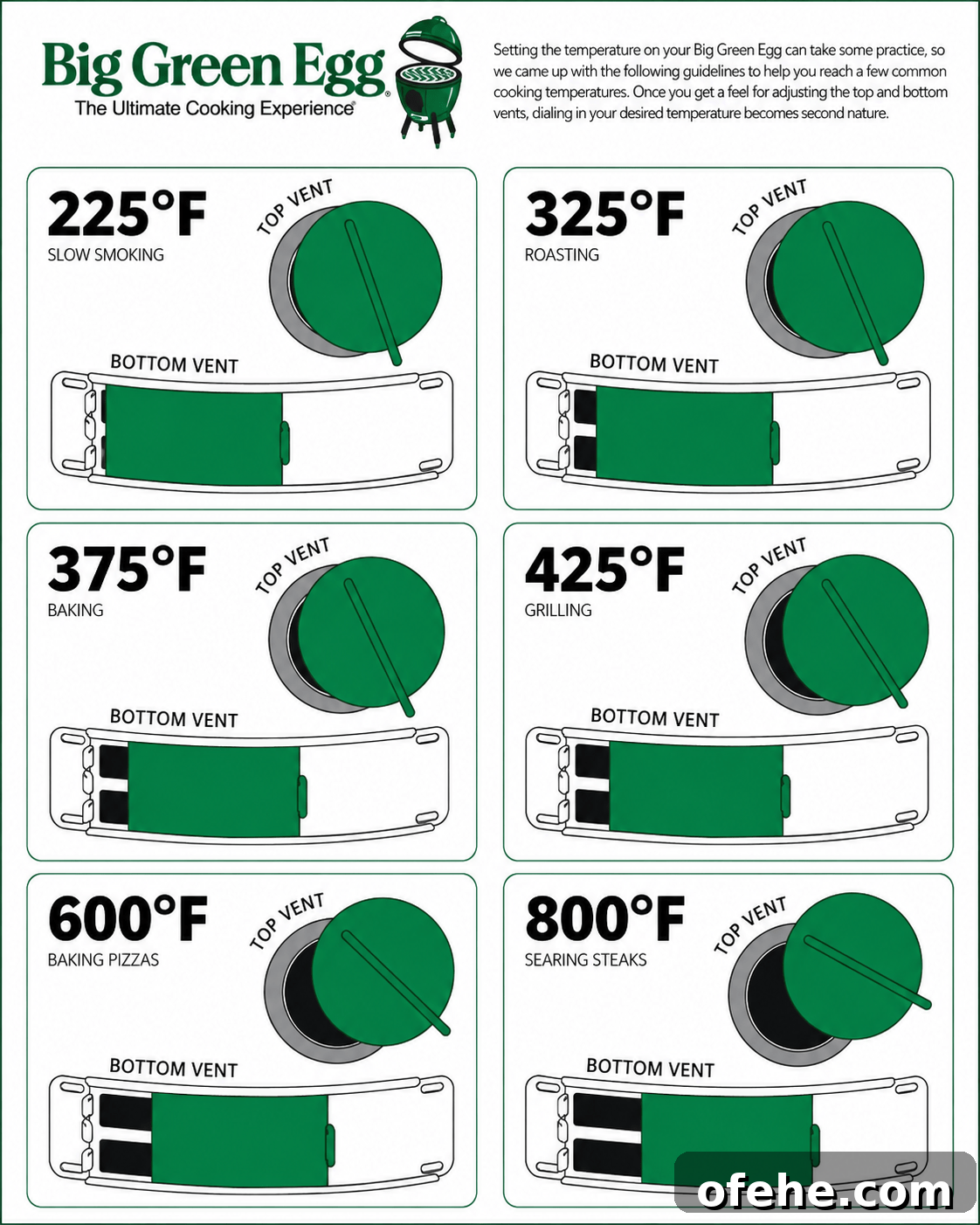
Temperature setting guide
Use small, consistent vent changes to reach your desired temperature. Refer to vent-setting charts or experiment with your own Egg to learn how specific positions translate to temperatures in your environment.
Troubleshooting common temperature problems
Why won’t my Big Green Egg get hot enough?
Restricted airflow is the usual culprit. Check for ash buildup around the fire grate or draft door. Too many small charcoal pieces or poor-quality lump charcoal can also choke airflow. Make sure both vents are open enough during startup to establish a healthy fire.
Why won’t my Big Green Egg cool down?
If the Egg won’t cool, it likely overshot and stored heat in the ceramic. Closing vents slows the fire, but the ceramic heat still has to dissipate. That’s why creeping up on temperature is so important.
Why does my temperature keep swinging?
Frequent over-adjustment causes swings. Make a change and wait—the Egg needs time to respond. Wind, opening the dome often, inconsistent fuel, or a turbulent startup can also create fluctuations. Small variations are normal; constant tinkering makes them worse.
Why does my temperature spike when I open the lid?
Opening the lid delivers a rush of oxygen to the fire, causing a brief flare and higher intensity. Open the lid only when necessary and avoid leaving it open longer than required.
Recommended tools for better temperature control
You don’t need many gadgets, but a few tools improve control and consistency.
Instant-read thermometer
A reliable instant-read thermometer is essential for checking doneness quickly and accurately.
Digital probe thermometer
Grate-level monitoring with a digital probe gives a truer picture of cooking temperature during long cooks and removes guesswork.
Temperature controllers
Devices that add a fan and use digital probes to automate airflow can maintain very stable temperatures. They’re not required but can be a helpful upgrade for long or precise cooks.
Kick Ash Basket or Fire Bowl
Anything that improves airflow and simplifies ash cleanup—like a kick ash basket—helps with fire management and consistent temperatures.
Frequently Asked Questions
What temperature should I smoke on the Big Green Egg?
Most low-and-slow barbecue cooks take place between 225°F and 275°F, depending on the cut and method.
Is dome temperature the same as grill grate temperature?
No. The dome thermometer reads higher in the cooker; grate-level temperature is typically lower. For long cooks, grate-level readings matter more.
How long does it take for a Big Green Egg to stabilize?
It depends on the target temperature. Low-and-slow cooks may take 30 to 45 minutes to stabilize; hotter cooks stabilize faster.
Should I leave the lid open when lighting the Big Green Egg?
Yes, briefly. Leave the dome open during initial ignition to establish combustion, then close the lid and manage temperature with the vents.
Why does my Big Green Egg use less charcoal than other grills?
The ceramic construction retains heat efficiently, so the Egg requires less fuel than many metal grills and smokers.
What is the biggest beginner mistake with Big Green Egg temperature control?
Rushing. Most problems come from overshooting target temperatures and then trying to recover.
Final thoughts
Learning temperature control on the Big Green Egg can be frustrating at first, especially if you’re used to gas grills or traditional smokers. But once you understand how airflow, fuel, and ceramic heat retention interact, it becomes intuitive.
Temperature control isn’t about constant adjustments or chasing small fluctuations. It’s about patience, making small changes, and letting the cooker do what it was designed to do.
Master this skill and the Big Green Egg becomes one of the most versatile and satisfying cookers you’ll own—whether you’re smoking brisket, grilling steaks, or roasting a whole chicken.