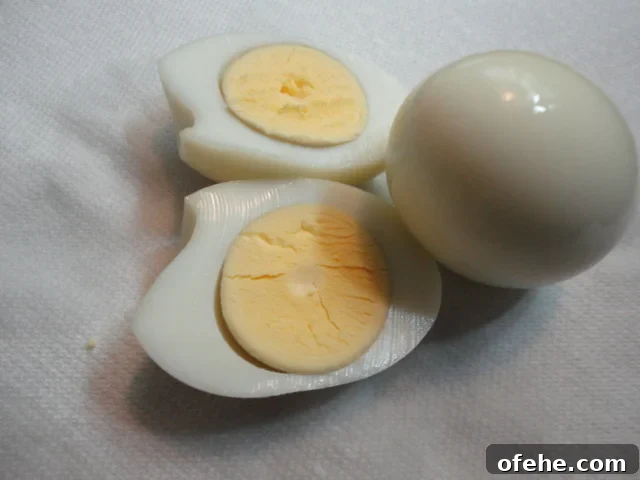
Wondering what to have for lunch, I realized I hadn’t made egg salad in quite some time. I remembered that Stuart had posted a short piece about hard cooked eggs (baking versus boiling), and I decided to try the oven method for preparing eggs for egg salad. Instead of boiling, I would bake the eggs using his suggested technique.
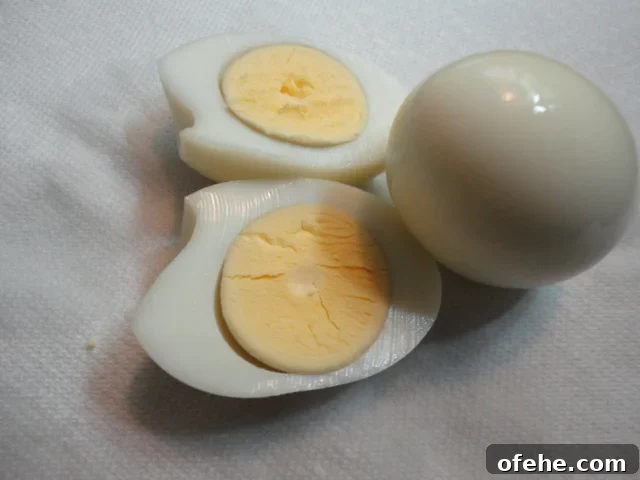
Hard Cooked Eggs
I read the instructions and selected nine eggs to bake, choosing ones that showed no hairline cracks. I pictured eggs exploding in the oven, egg whites and yolks splattering everywhere and an annoyed partner waiting at home. To reduce any mess or risk, I placed the eggs on a cooling rack set over a baking sheet to catch any spills and allow even airflow around the shells.
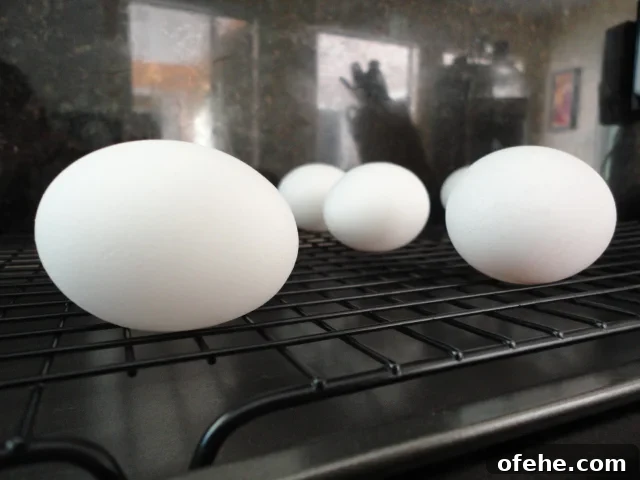
Eggs on Cooling Rack on Baking Tray To Be Hard Baked
I preheated the oven to 325°F and placed the eggs inside for 30 minutes. About 14 minutes in, I heard a crack and nervously looked through the oven light. One egg had lost part of its shell, but there was no mess in the oven — the egg white and yolk inside had already started to firm up. It seemed the expanding gases found a weak spot in the shell, but the contents were essentially set and contained.
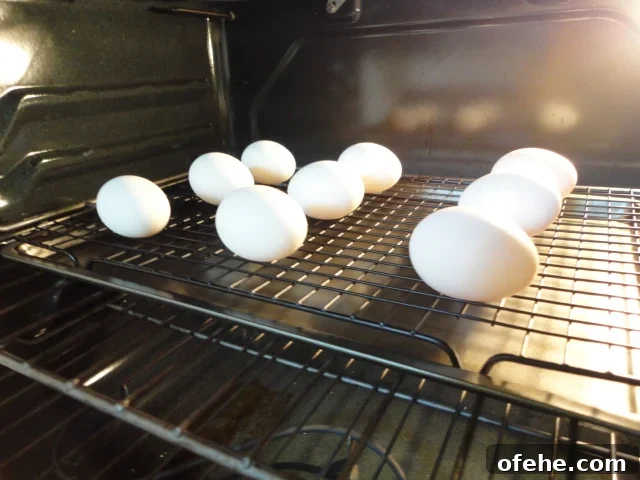
Eggs Baking in the Oven
After 30 minutes I turned off the oven, removed the tray, and immediately transferred the eggs to a bowl of ice water. The eggs were hot, so I recommend using oven mitts to move them; I used mitts for about half and handled the rest briefly with bare hands. Cooling them quickly in ice water halted the cooking process and made peeling easier.
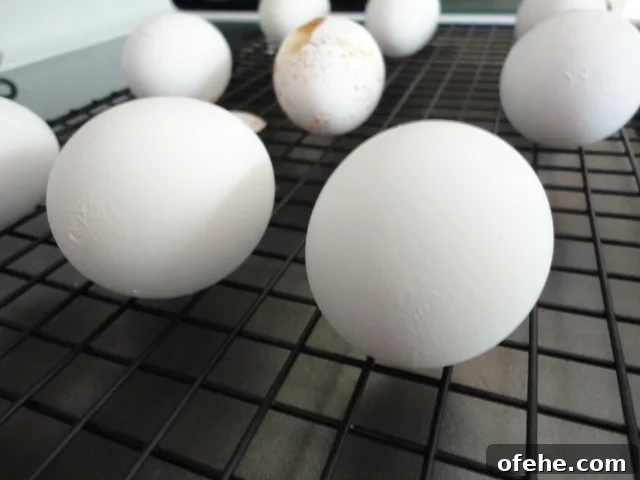
Baked Hard Cooked Eggs on Cooling Rack on Baking Tray (Notice the egg in the center has a cracked shell)
After about 10 minutes in the ice bath, I began peeling. The egg whites were slightly off-white on the exterior and two eggs had small brown spots where they had rested on the rack, but otherwise the appearance was normal. The shells came off easily — in my experience they peeled better than boiled eggs. Inside the air pocket common to eggs there was some discoloration on the inner shell where gases had heated, but there was no noticeable odor. I suspect the heat can darken organic residue in that pocket, but it did not affect the flavor or texture.
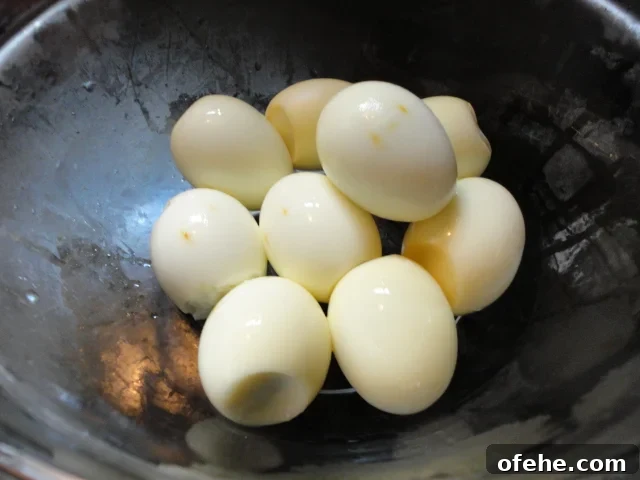
Hard Cooked Eggs Peeled in a Bowl (Notice the small brown spots where the eggs rested on the cooling rack while being baked)
I made egg salad with the baked eggs and found no off flavors or odors — the taste matched what you’d expect from hard boiled eggs. The egg whites around the yolks showed no unusual discoloration, and the texture was firm and consistent.
Overall I was pleased with the experiment. Baking eggs proved to be a practical alternative to boiling, especially when preparing larger batches. Because you can fit more eggs on racks and trays than in a pot, baking is convenient for making one to three dozen hard cooked eggs for salads, deviled eggs, or Easter egg dyeing. It’s a simple, low-maintenance method that yields reliably peelable eggs.