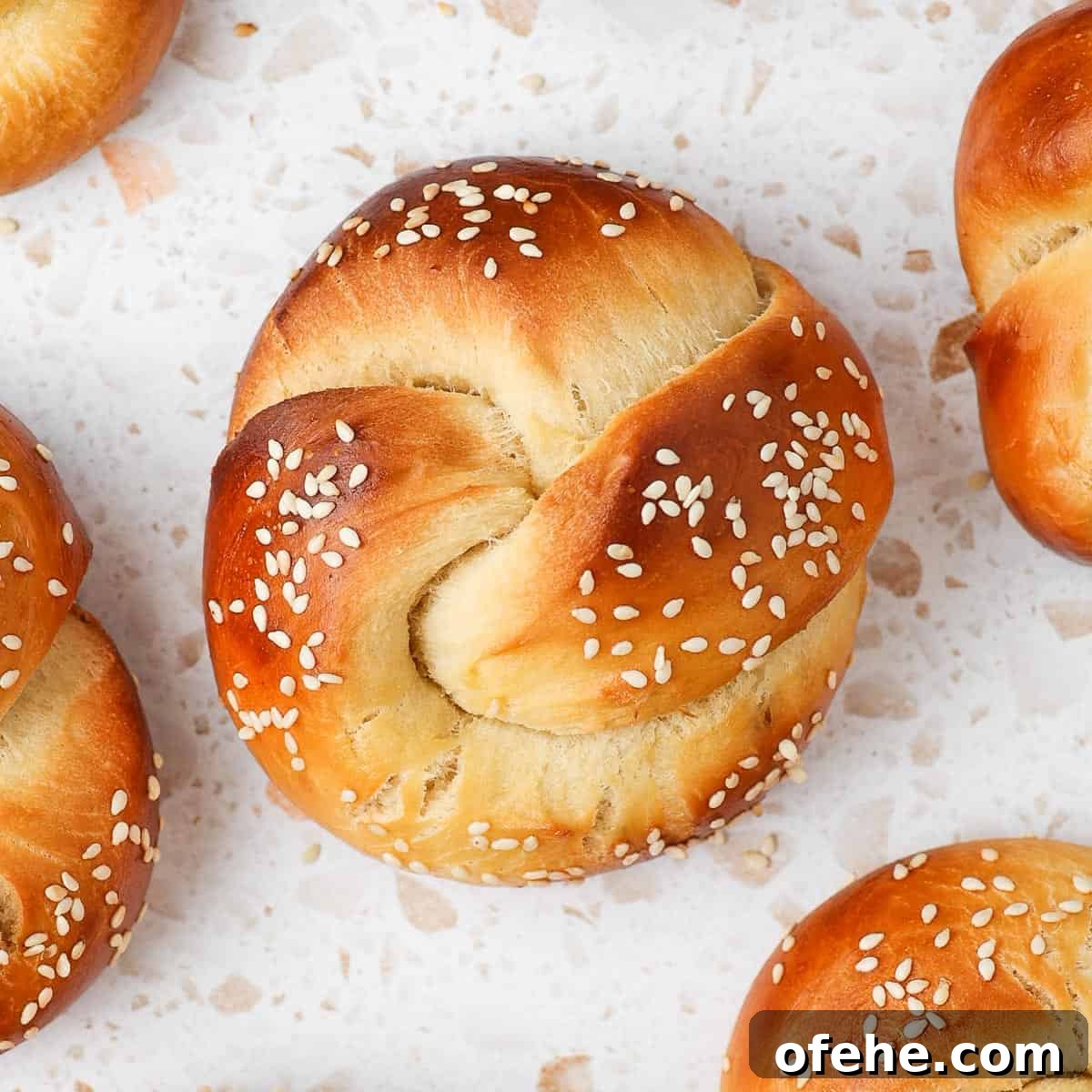
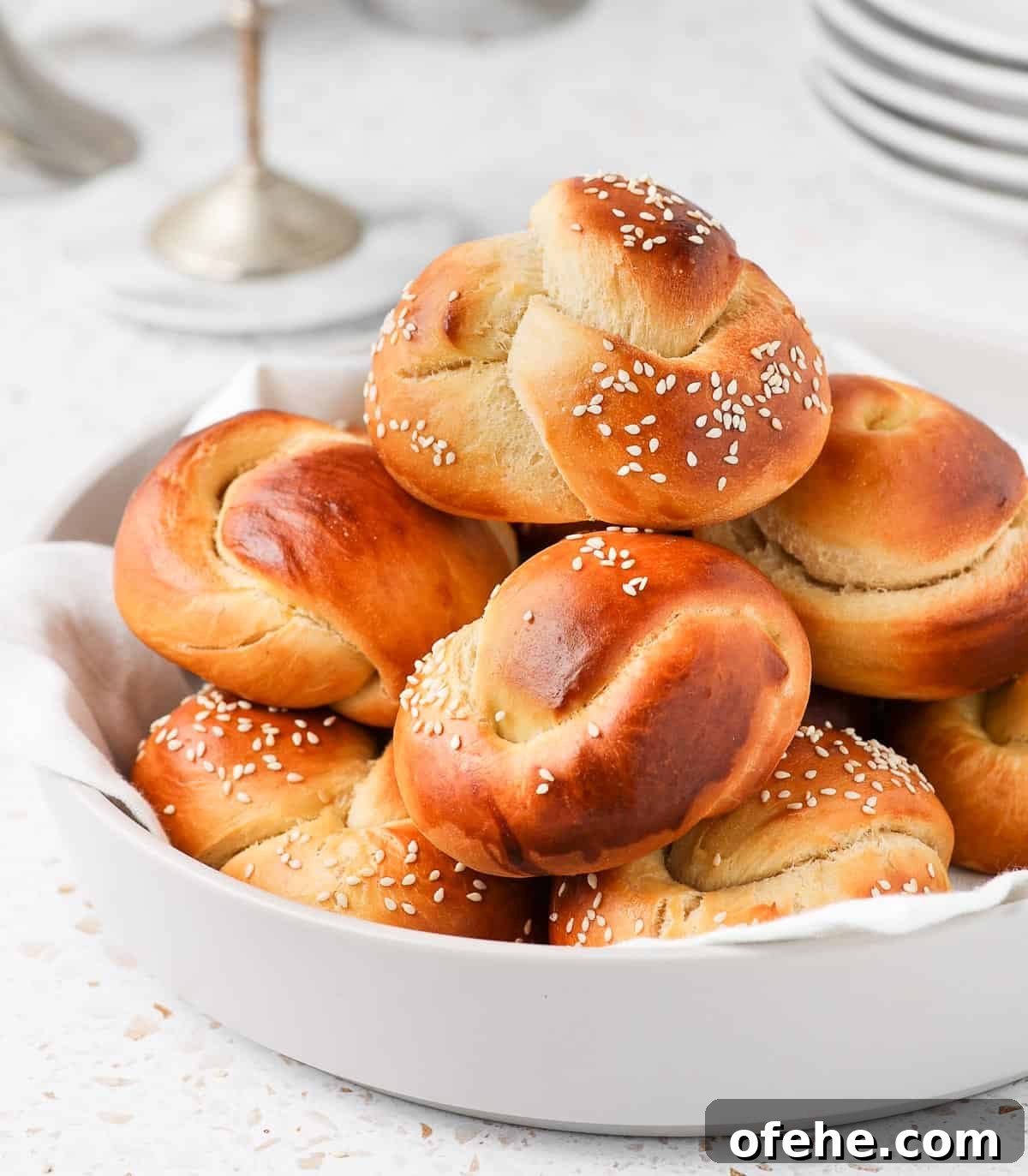
These Mini Challah Rolls are soft, fluffy and gently sweet — ideal for Shabbat, holiday meals, or served as dinner rolls. The recipe below explains the dough, shaping options and step-by-step baking instructions so you can make 12 perfect challah buns at home.
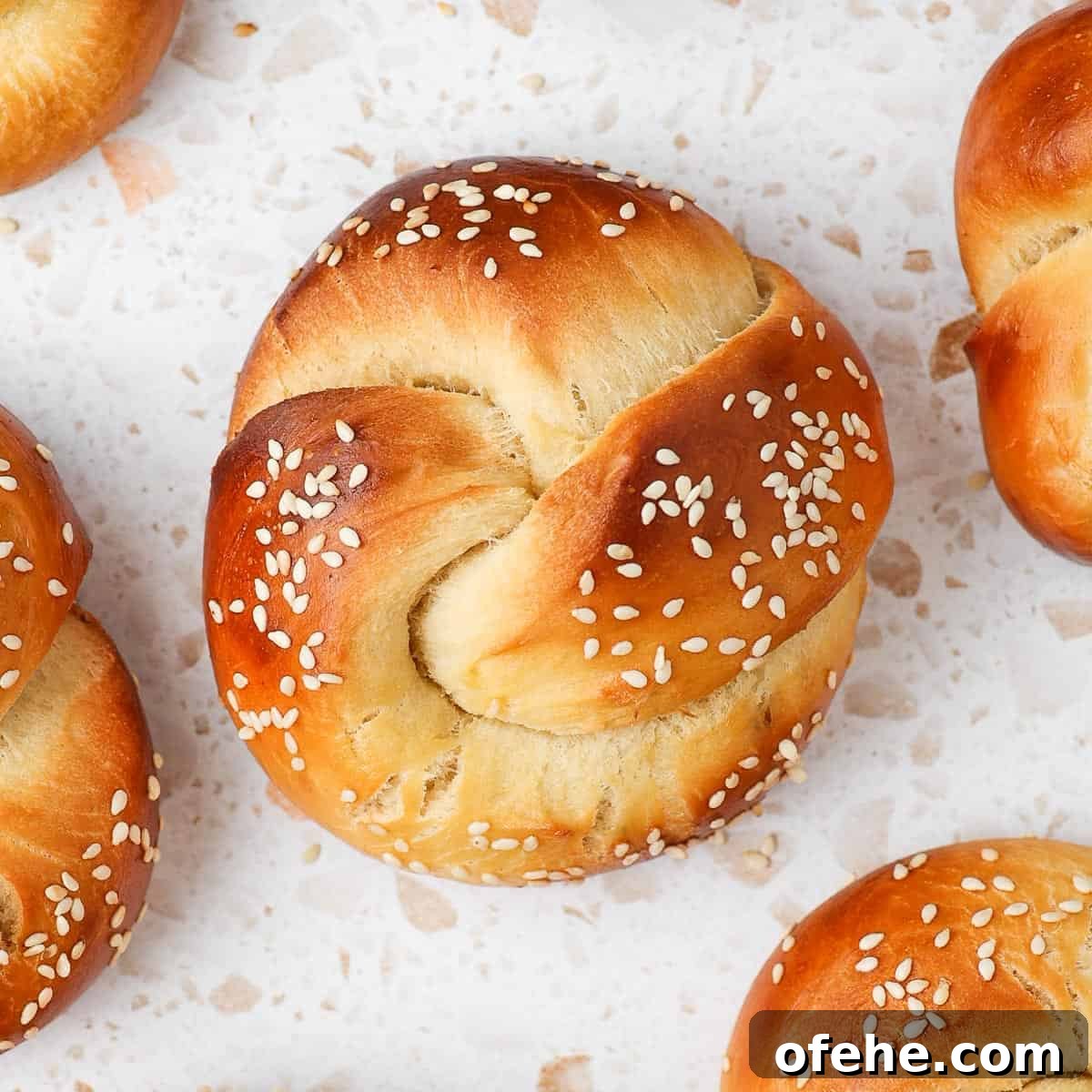
Why we love this recipe
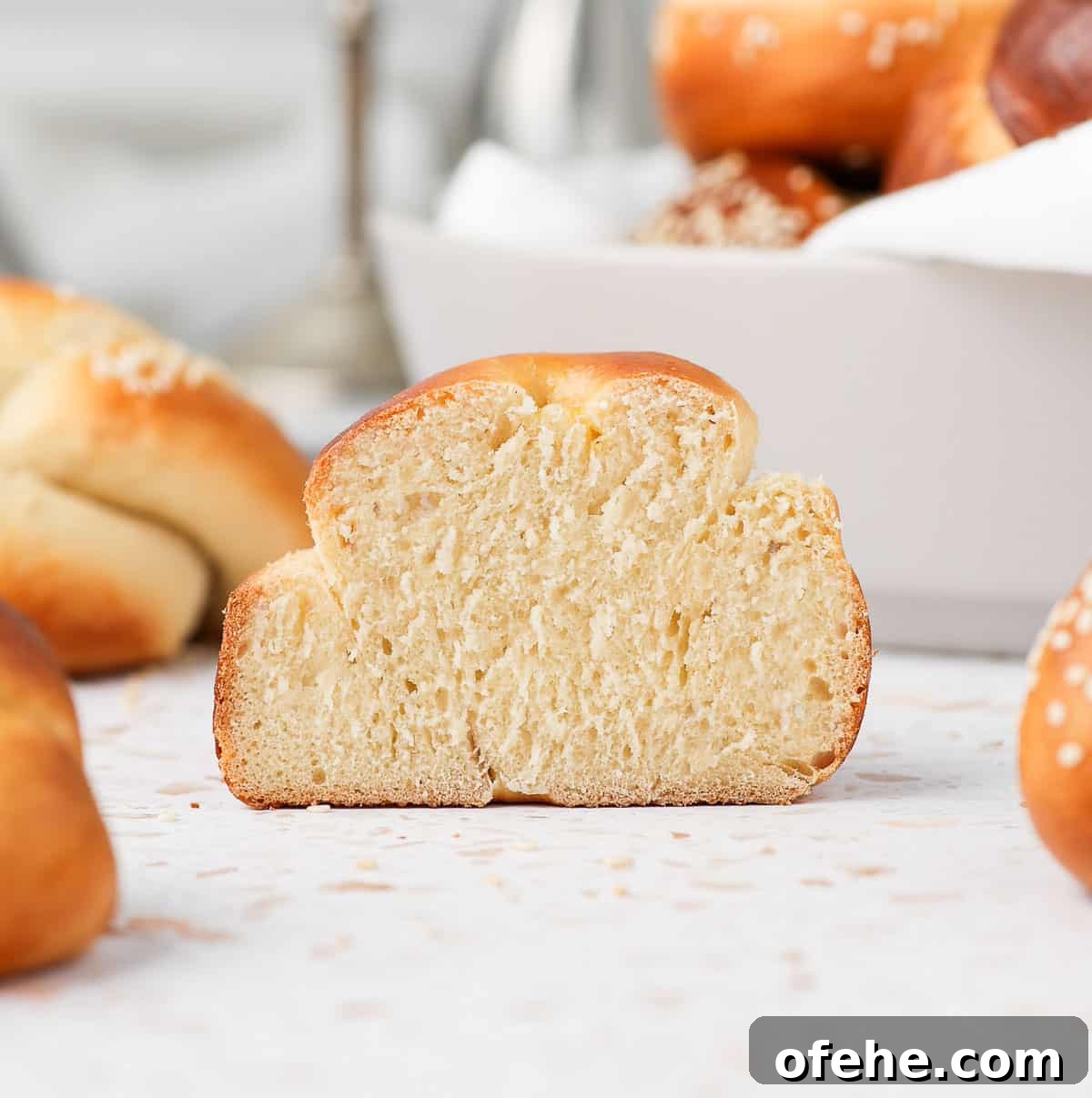
Challah is a comforting, enriched bread that often marks family gatherings and Friday night dinners. These mini rolls are a playful version of the traditional braided loaf — instead of one large bread, everyone gets an individual bun. The finished rolls have a golden, slightly crisp exterior and an airy, tender crumb inside. Top them with sesame or poppy seeds for extra texture.
They work well as dinner rolls, slider buns, or transformed the next morning into rich French toast.
Ingredients
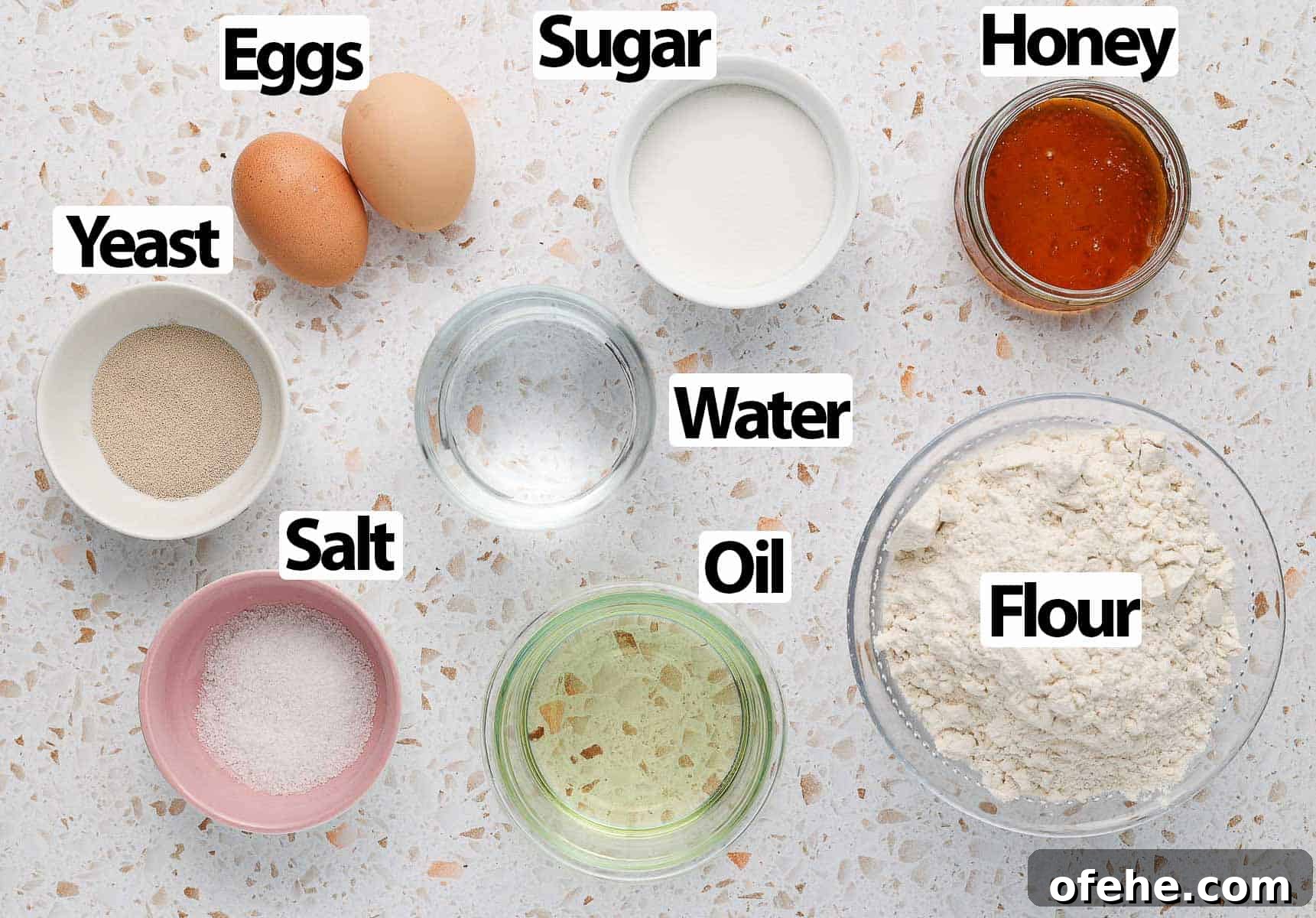
Challah is an enriched, dairy-free yeasted dough similar to brioche but made with oil instead of butter. Below are the quantities for 12 rolls.
- Water: lukewarm, about 35°C (95°F). Too-hot water can kill the yeast.
- Yeast: instant dry yeast is used here; active dry yeast can be substituted if bloomed first.
- Eggs: medium, room temperature (plus one for egg wash).
- Honey: adds sweetness and floral notes; maple syrup can be used instead.
- Oil: neutral oil such as canola or vegetable oil.
- Flour: plain / all-purpose flour yields a lighter crumb than bread flour.
Optional additions
You can customize the dough with cinnamon, raisins, or other add-ins to suit your taste.
How to make Challah Rolls
Challah bread dough
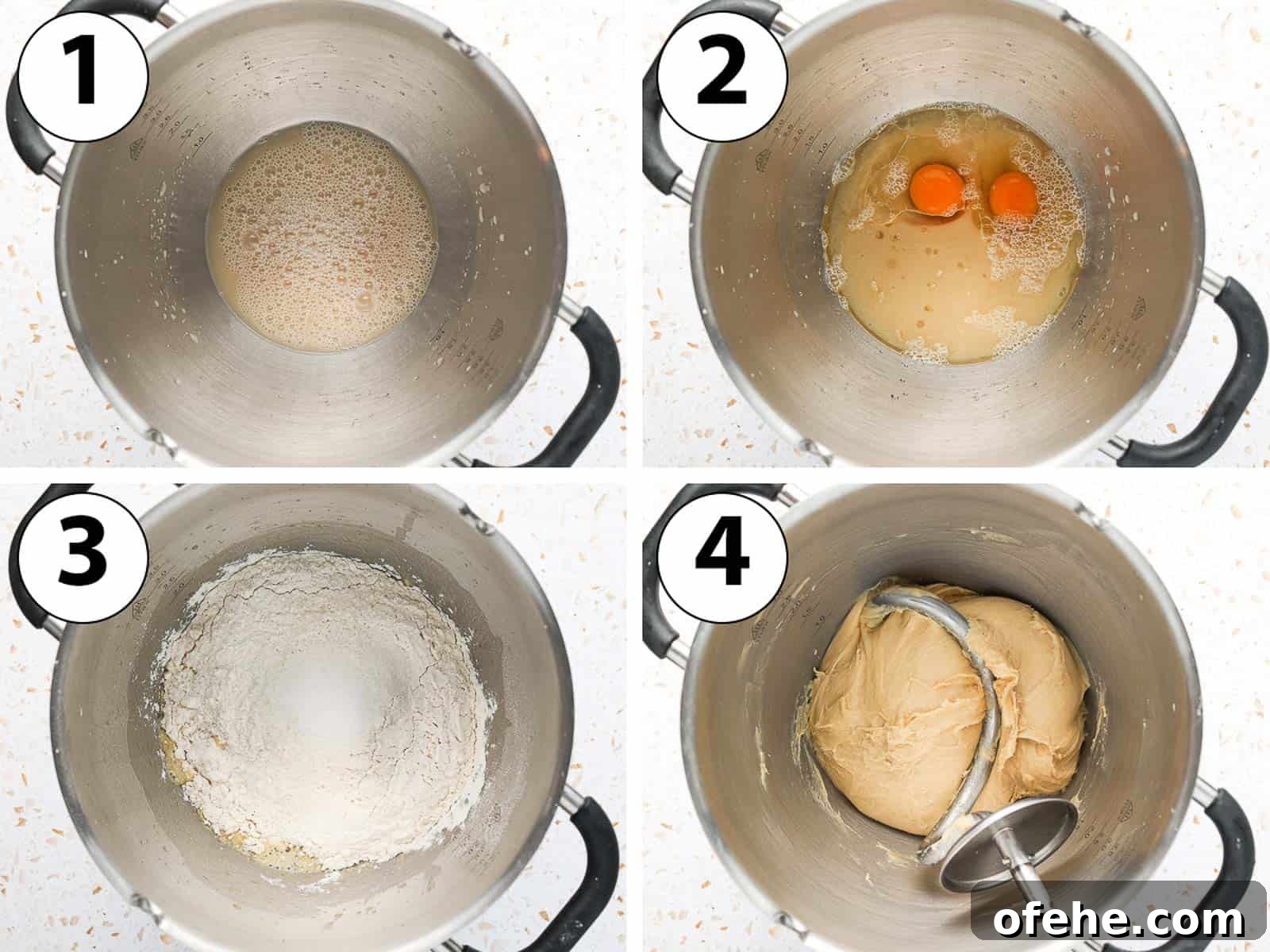
- Combine warm water, sugar and yeast in the bowl of a stand mixer. Let sit about 10 minutes until small bubbles or froth appear to confirm the yeast is active.
- Whisk in oil, honey and eggs until combined.
- Add flour and salt. Using the dough hook, knead on medium to medium-high speed for 15–20 minutes until the dough becomes very soft and elastic.
Enriched challah dough is soft and slightly sticky; it benefits from a longer knead to develop gluten. Kneading by hand is possible but requires more effort and time.
Kneading & bulk proofing
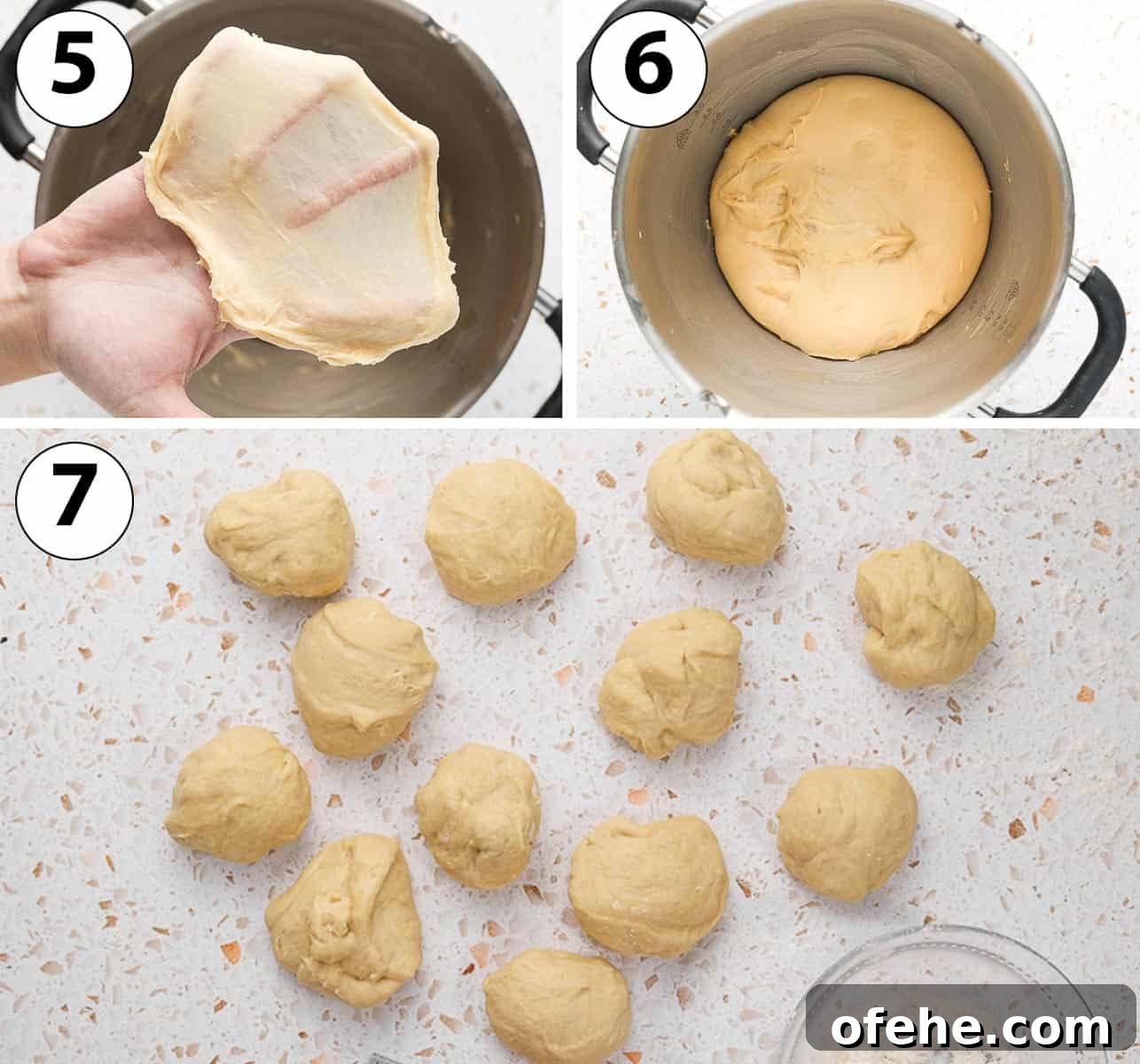
- Perform the windowpane test: stretch a small piece of dough; if it stretches thin and light passes through without tearing, the dough is ready.
- Cover the bowl and proof the dough in a warm spot for about 1½ hours, or until doubled in size. Alternatively, refrigerate overnight for deeper flavor and easier handling.
- Punch down the dough and turn it out onto a very lightly floured surface. Divide into 12 even pieces using a kitchen scale for uniform rolls.
- Gently shape each piece into a long rope: flatten to a rectangle, fold a long edge toward the center, then roll and lengthen by rolling under your hands.
Avoid adding too much extra flour — a slight stickiness makes shaping easier.
Shaping the rolls
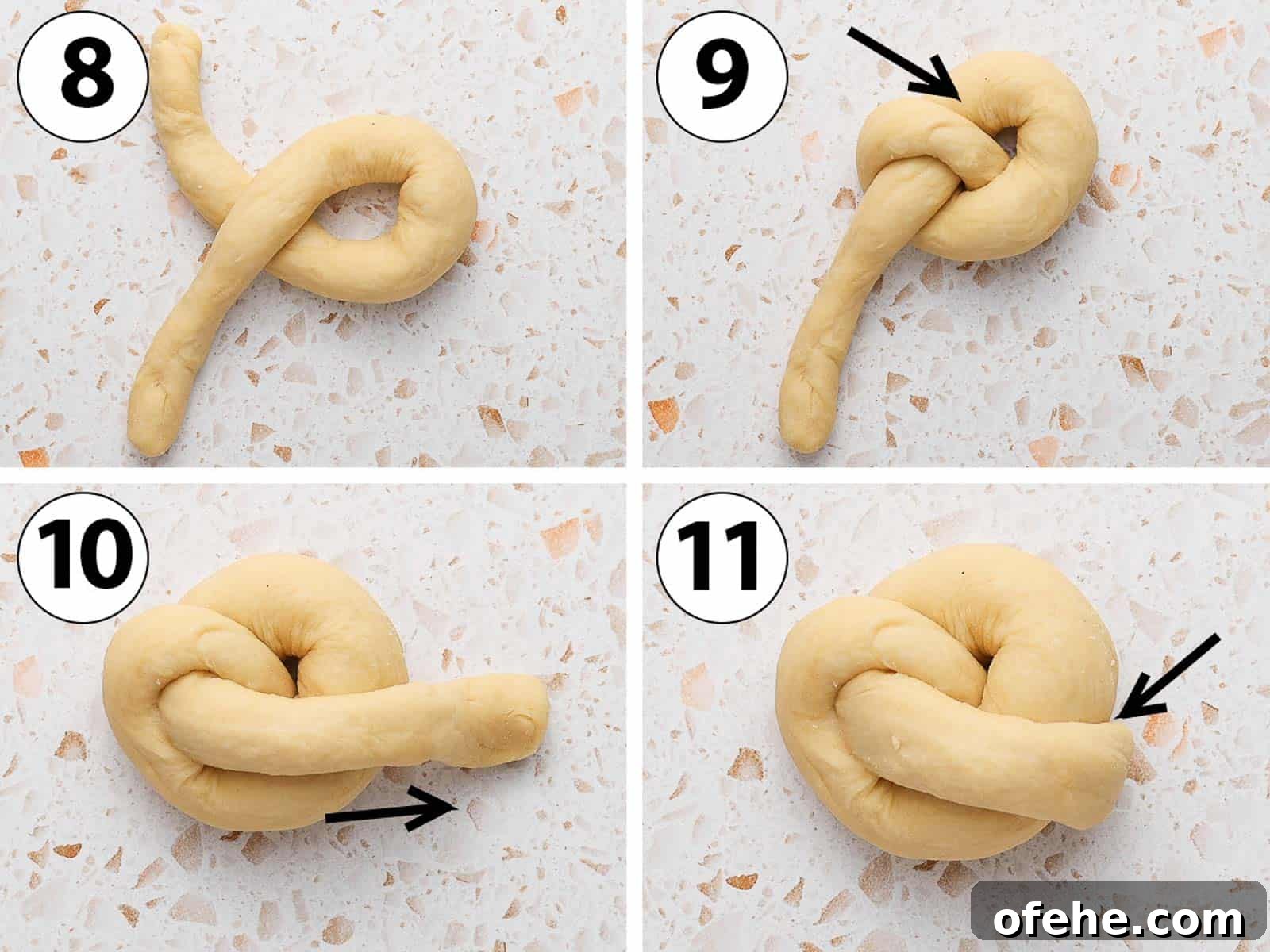
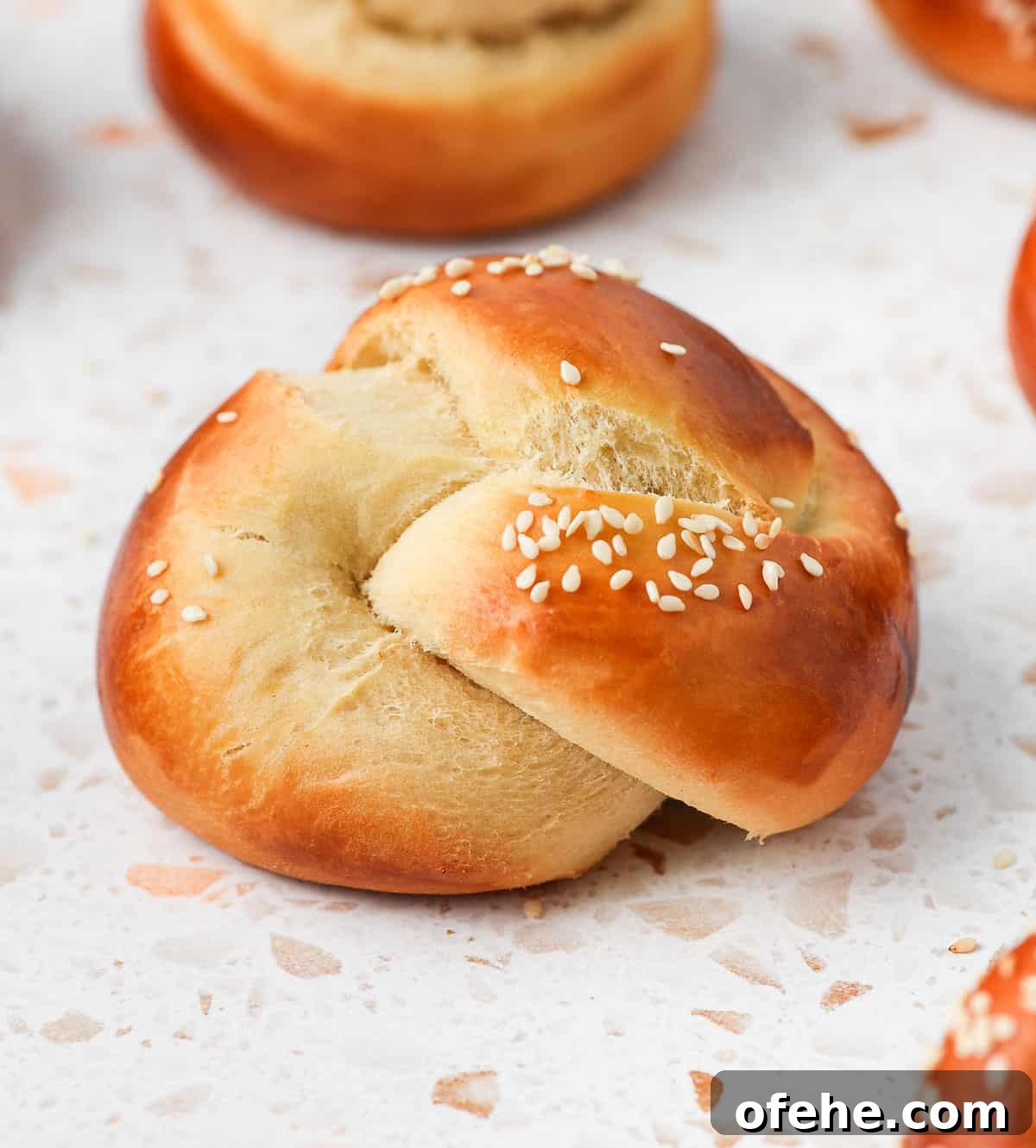
There are several attractive shaping methods. The knot is a favorite:
- Lay the rope in front of you. Create a loop with the right side, leaving ends on both sides.
- Pull the left end toward the loop center and tuck it under the outside of the circle.
- Bring the right end over the hole and tuck it underneath to finish the knot.
Other ways to shape bread rolls
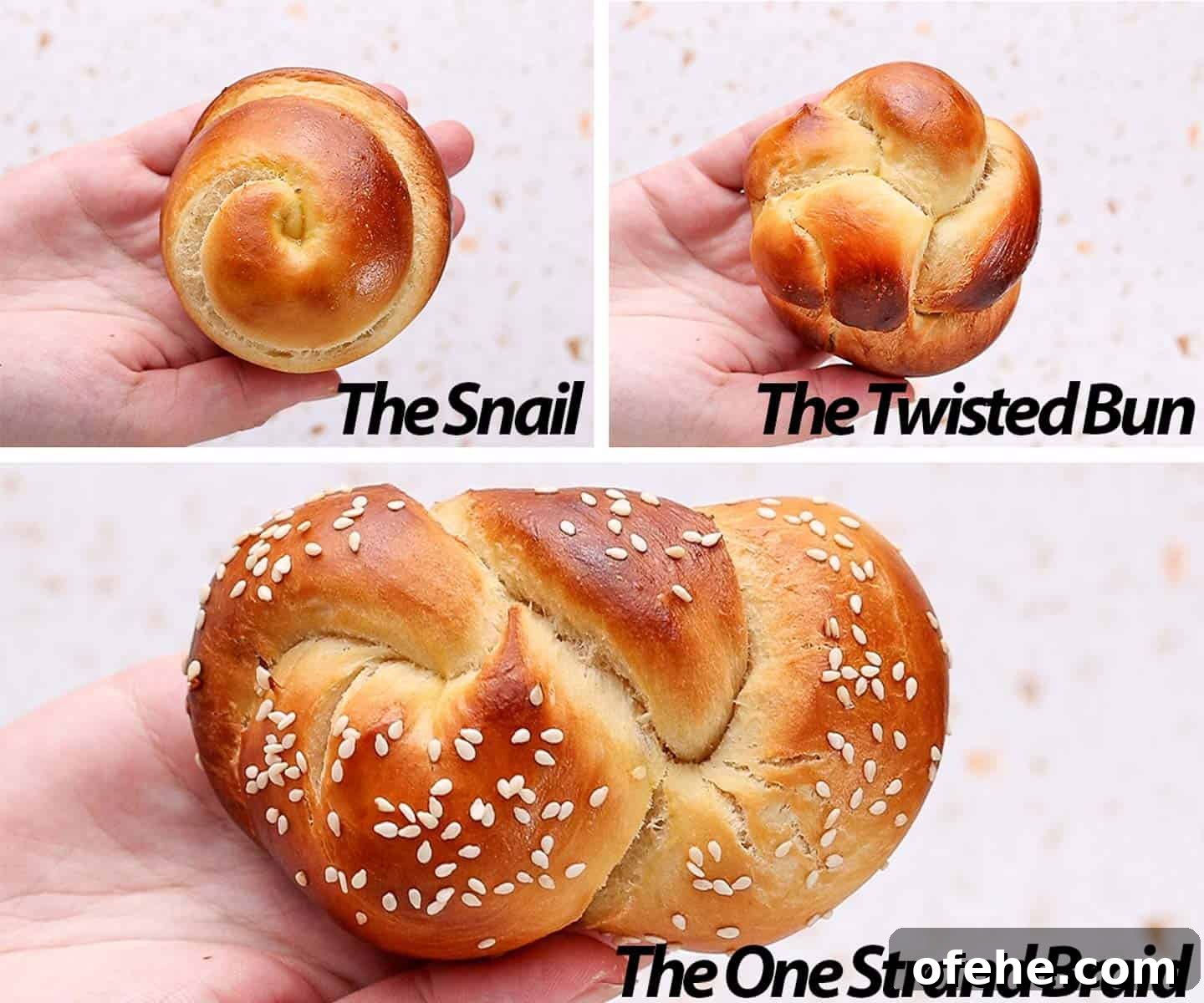
- The snail: coil the rope around itself from one end.
- The twisted bun: split a piece into two ropes, twist them together, then coil like the snail.
- The one-strand braid: twist a single rope to form a mini braid.
Second proofing & baking
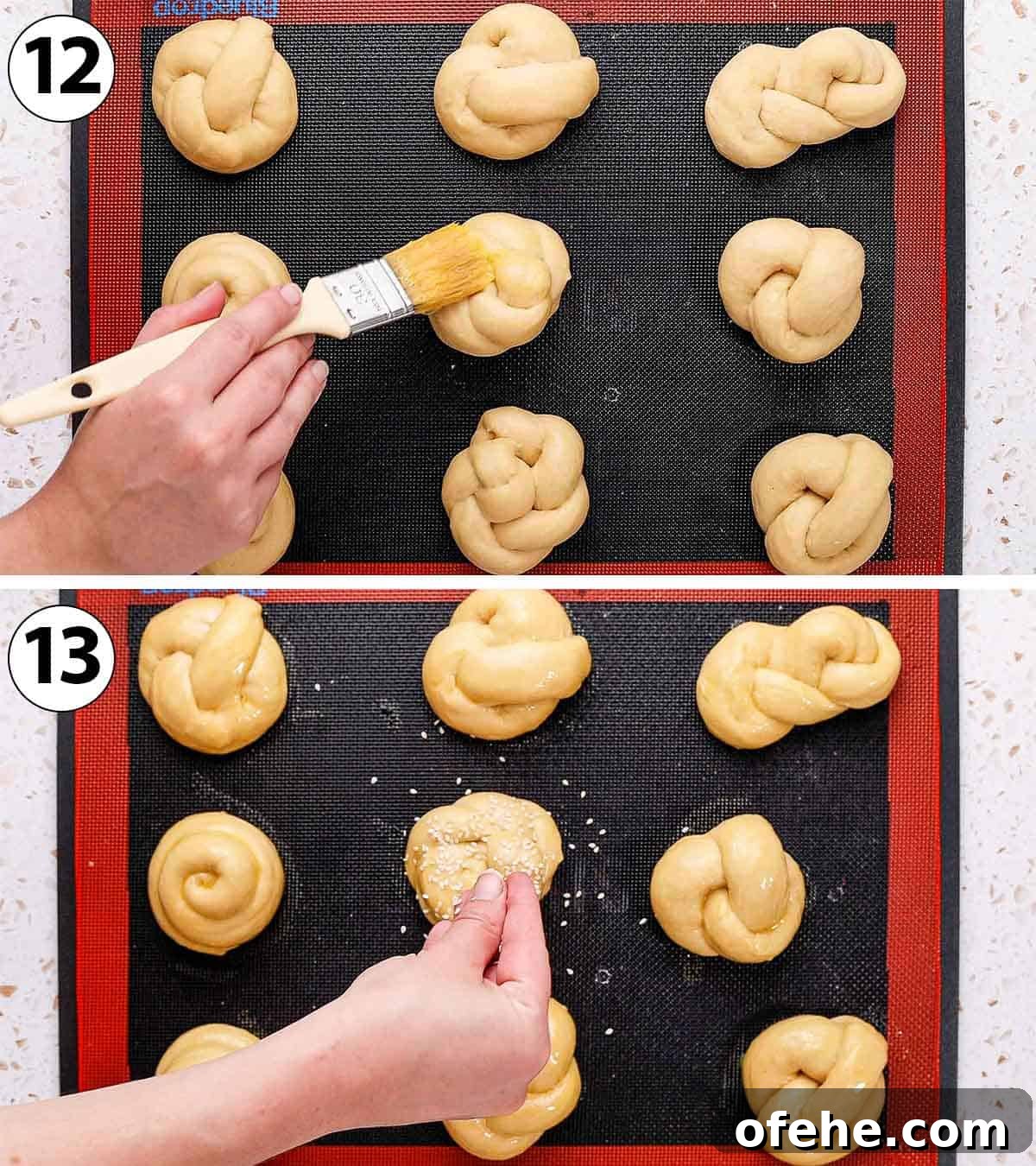
- Arrange shaped rolls on a baking tray lined with parchment. If baking in two batches, keep the second tray chilled to prevent over-proofing.
- Brush each roll with egg wash (one lightly whisked egg). For a deeper sheen use yolks only; dilute with a touch of water for a lighter finish.
- Sprinkle toppings if desired, such as sesame or poppy seeds.
- Let rolls proof 30–45 minutes while you preheat the oven to 180°C (350°F).
- Bake 16–18 minutes until golden and well risen. Cool completely before serving.
Recipe FAQs
Challah is an enriched, dairy-free yeast bread made with eggs and oil. It’s traditionally braided and served for Shabbat and holidays.
Both are enriched doughs, but brioche contains milk and butter while challah is traditionally dairy-free, using water and oil instead.
Yes. Cold proofing for 8–12 hours develops flavor and firms the dough, making it easier to handle.
Common toppings are sesame or poppy seeds; you can also leave rolls plain or add a sweet streusel for a sweeter version.
Serve them as dinner rolls, use as burger or slider buns, toast with butter and jam, or make French toast from leftovers.
Tips and troubleshooting
- Dough too sticky: enriched doughs require extended kneading to develop gluten. If under-kneaded it will feel sticky. Cold-proofing also firms the dough and makes shaping easier.
- Dough did not rise: check that the yeast was active and that the dough proofed in a warm enough spot for long enough.
- Baking in two batches: shape all rolls, place both trays on parchment, egg-wash and top. Proof the first tray at room temperature and refrigerate the second to prevent over-proofing; bring the second to room temperature before baking.
Storing & freezing
These rolls are best eaten within 24 hours but will keep up to three days at room temperature in an airtight container. They also freeze well: freeze individually on a tray, then transfer to a freezer bag. Thaw at room temperature or warm directly in a toaster.
More bread recipes
- Cinnamon Babka
- Chocolate Chip Brioche Bread
- Homemade Sesame Bagels
- Cinnamon Roll Bread Loaf
- Chocolate Brioche Bread
- Sweet Potato Buns
- Pumpkin Buns
Made this recipe? Let us know in the comments and tag your photos on Instagram @a.baking.journey!
Recipe
12
Sylvie
Ingredients
- 240 ml Water
- 30 g Caster Sugar
- 9 g Instant Dry Yeast
- 60 ml Vegetable Oil (such as canola)
- 60 g Honey
- 2 large Eggs, at room temperature
- 600 g Plain / All-Purpose Flour
- 10 g Fine Table Salt
- 1 Egg for egg wash
- Sesame Seeds or Poppy Seeds for topping (optional)
Instructions
- Place warm water (about 35°C / 95°F), sugar and yeast in the mixer bowl. Mix and set aside 10 minutes until foamy.
- Whisk in oil, honey and eggs. Add flour and salt, attach the dough hook and knead on medium to medium-high for 15–20 minutes until soft and stretchy.
- Cover and proof in a warm spot for about 1½ hours until doubled in size.
- Punch down the dough and transfer to a very lightly floured surface. Divide into 12 even pieces.
- Shape each piece into a thin rope and arrange on a lined baking tray.
- Braid or shape each rope as desired and place rolls on the tray.
- Brush with egg wash and add toppings if using.
- Proof at room temperature 30–45 minutes while preheating the oven to 180°C (350°F).
- Bake 16–18 minutes until golden. Cool completely before serving.
Notes
- If the yeast shows no activity, the liquid may be too cold or the yeast is inactive. Bloom active dry yeast to confirm activity.
- Use the windowpane test to check kneading: a thin translucent stretch indicates sufficient gluten development.
- Cold-proofing overnight (8–12 hours) enhances flavor and firms the dough for easier shaping.
- For even rolls, weigh the total dough and divide by 12 to determine each piece’s weight.
- If baking in two batches, refrigerate the second tray after shaping to avoid over-proofing; bring to room temperature before baking.