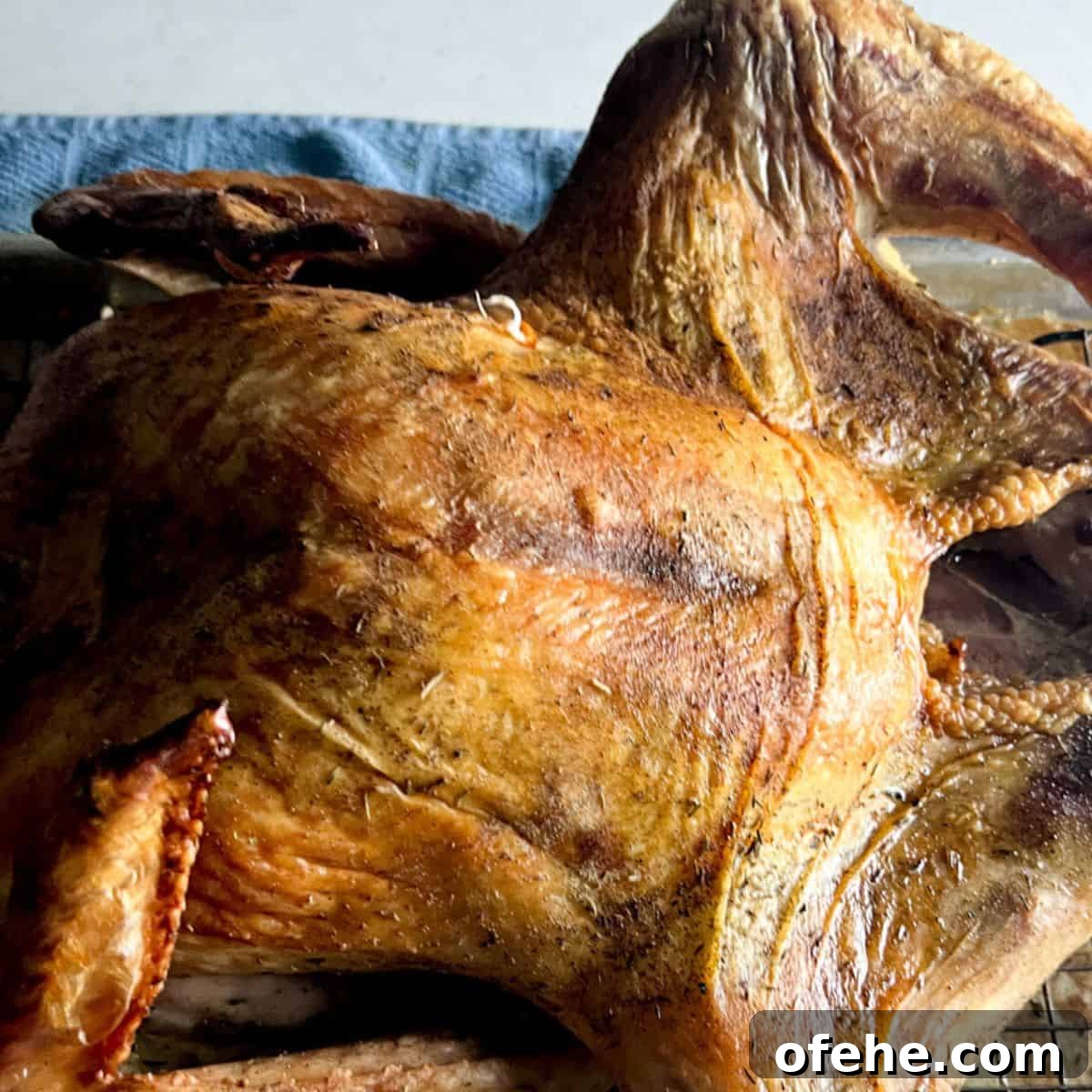
If you’re looking for a different way to cook your Thanksgiving turkey, try spatchcocking. The skin browns beautifully and becomes super crispy, while the breast meat stays juicy and tender.
I tried spatchcocking a whole turkey for the first time recently and was very pleased with the result. I followed Alton Brown’s approach, which worked perfectly. You can roast the spatchcocked turkey in the oven or cook it on a smoker when weather permits.
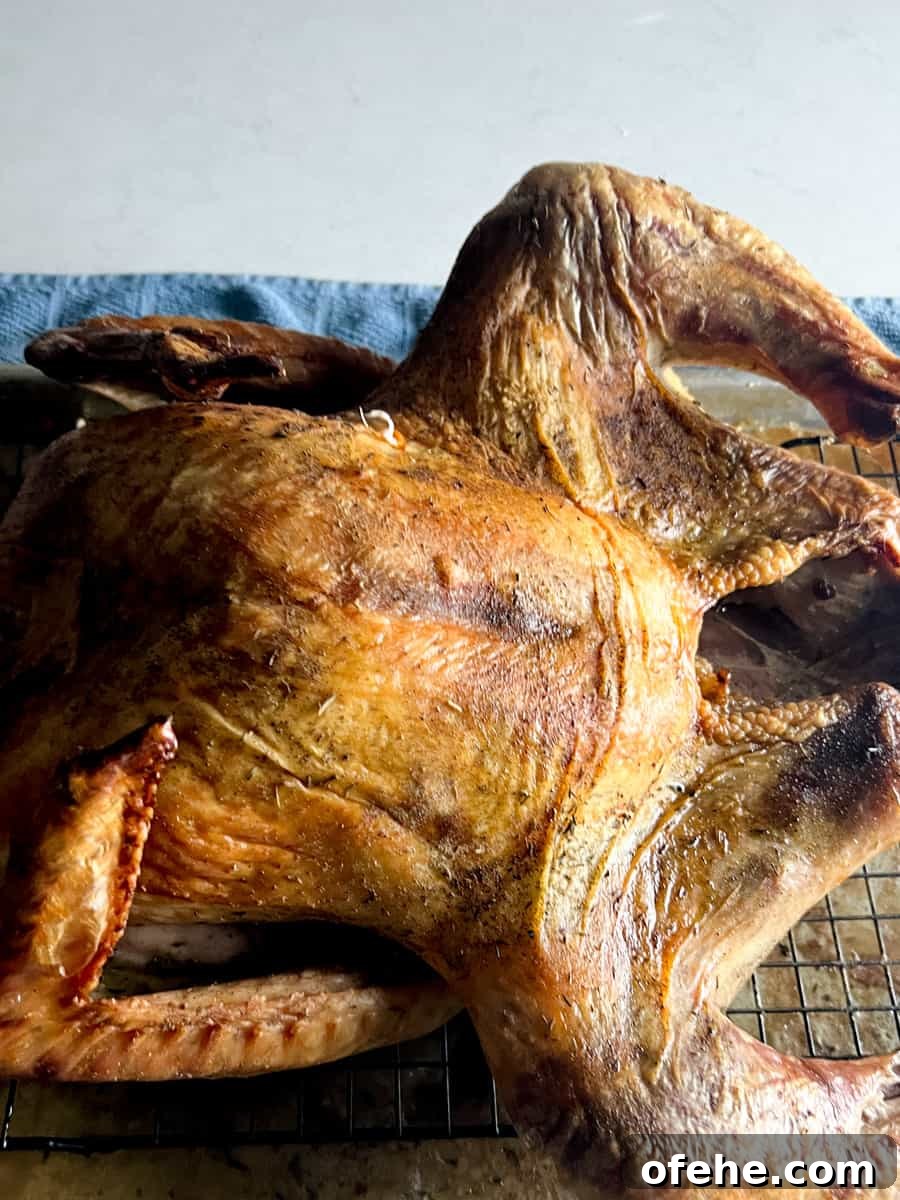
Note: a very sharp pair of kitchen shears makes removing the backbone much easier. Cutting through the ribs is the trickiest part.
What is Spatchcocking?
Spatchcocking means removing the backbone from the bird, flipping it over, and pressing the breast flat so the turkey lays evenly. Flattening the bird helps it roast evenly, shortens cooking time, and promotes crisp, evenly browned skin.
The first time you flatten a turkey you might not press as hard as needed; with practice it becomes easier and faster.
What kitchen tools do I need?
You will need a few simple tools:
- A spice or blade-style grinder for whole peppercorns and allspice
- Sharp, heavy-duty kitchen shears for cutting the backbone
- A probe thermometer to check doneness
Ingredients Needed
- 1 ½ teaspoons whole black peppercorns
- ½ teaspoon whole allspice berries
- 1 ½ teaspoons dried thyme
- 3 ½ tablespoons kosher salt
- 1 ½ teaspoons rubbed sage
- 1 (13- to 14-pound) whole turkey, neck and giblets removed and reserved for stock
How to Make
- Four days before cooking: make the rub and season the turkey. Coarsely grind the peppercorns and allspice by pulsing 3–4 times in a blade-style coffee or spice grinder. Add the dried thyme and pulse 2–3 more times. Combine the ground spices with the salt and rubbed sage in a small bowl and set aside.
- Spatchcock the turkey: place the bird breast-side down with the tail toward you on a stable surface or silicone mat set inside a large sheet pan. Using heavy-duty kitchen shears, cut up one side of the backbone from tail to neck, then cut down the other side to remove it completely. Reserve the backbone for stock or gravy. Discard any excessive fat or loose skin inside the cavity. Flip the turkey breast-side up and press firmly on both breasts with the heel of your hand until the breastbone cracks and the bird lays flat.
- Set the turkey breast-side up on a rack inside a sheet pan. Tuck the wing tips back under the forewings. Flip the turkey breast-side down and rub half the seasoning over the skin; then flip it back breast-side up and rub with the remaining mixture so the entire bird is evenly seasoned.
- Place the seasoned turkey, uncovered, on the lowest shelf of the refrigerator and let it dry-brine for 4 days. This helps the skin dry out and the flavors penetrate.
- On roasting day, let the turkey sit at room temperature for about 1 hour. Preheat the oven with one rack in the center and another just below it. Put an empty roasting pan or a rimmed sheet pan on the lower rack and preheat the oven to 425°F (220°C).
- Place the turkey, still on the cooling rack, directly on the center oven rack. Add a cup of water to the pan below to prevent drippings from smoking. Roast at 425°F for 30 minutes to help the skin crisp and brown.
- After 30 minutes, reduce the oven temperature to 350°F (175°C) and continue roasting until a probe thermometer in the thickest part of the breast reads 155°F (about 40–50 more minutes). The timing will vary with oven and bird size, so rely on temperature rather than time alone.
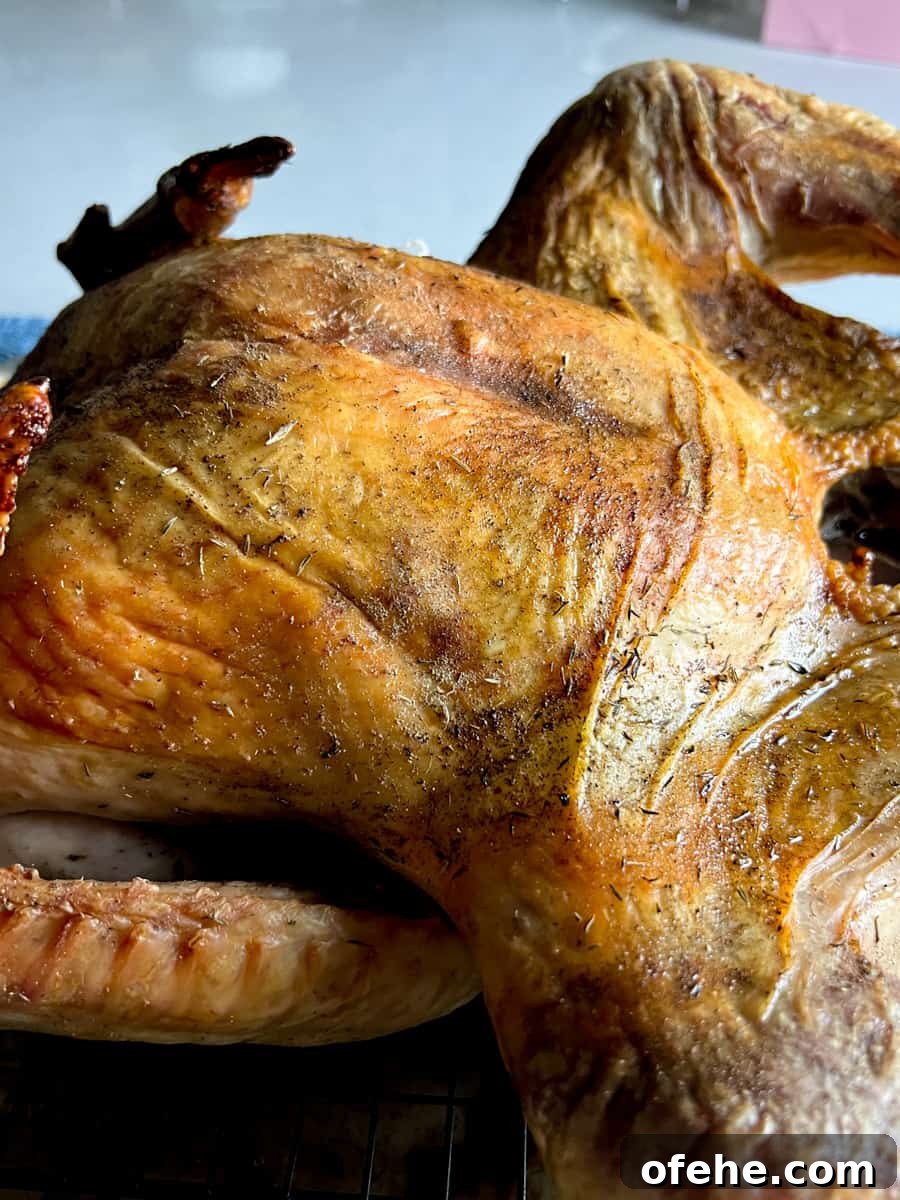
- Remove the turkey and rack from the oven and let it rest for 15 minutes before carving. Carryover heat will bring the internal temperature closer to 165°F, ensuring the meat is safe and juicy.
Tips and Notes
- Using a probe thermometer lets you remove the turkey at the right time for perfect juiciness.
- Dry-brining for several days enhances flavor and improves skin texture.
- If you prefer to smoke, spatchcocking works equally well on a smoker when weather and conditions allow.
Please Let Me Know What You Think!
Please leave a review and star rating if you try this recipe — it helps others decide and tells us how we did.
I’d love to see your finished turkey photos. Share them on Pinterest and Instagram, and tag @recipediariesww so I can see your results.
Questions or feedback? Drop a comment in the comment section — I’m happy to help and always welcome suggestions.
Spatchcocked Dry-Brined Roasted Turkey
- Author: Jenna
- Prep Time: 65 min
- Cook Time: 80 min
- Total Time: 85 min
- Yield: 8 to 10
- Category: Medium
- Method: Oven
- Cuisine: American
Description
Spatchcocking produces a turkey with crisp, deeply browned skin and juicy breast meat. It’s a straightforward technique that reduces cooking time while improving evenness of cooking.
Ingredients
- 3 ½ tablespoons kosher salt
- 1 ½ teaspoons rubbed sage
- 1 ½ teaspoons dried thyme
- 1 ¼ teaspoons whole black peppercorns (coarsely ground)
- ½ teaspoon whole allspice berries (coarsely ground)
- 1 whole turkey (13–14 lb), neck and giblets reserved for stock
Instructions
- Four days before cooking, grind the peppercorns and allspice, pulse in the thyme, and mix with salt and sage to make the rub.
- Place the turkey breast-side down on a stable surface. Use heavy-duty shears to remove the backbone, reserve it for stock, then press the breasts flat until the bird lies evenly.
- Set the turkey on a rack inside a sheet pan. Tuck the wing tips and rub half the seasoning on the underside, then flip and rub the remaining seasoning on top.
- Refrigerate uncovered on the lowest shelf for 4 days to dry-brine.
- When ready to roast, bring the turkey to room temperature for 1 hour. Preheat the oven to 425°F with a pan on the lower rack to catch drippings.
- Place the turkey on the center rack and roast at 425°F for 30 minutes, adding a cup of water to the pan below to prevent smoking.
- Reduce heat to 350°F and roast until the breast reaches 155°F on a probe thermometer (about 40–50 minutes more).
- Remove and rest the turkey for 15 minutes before carving; carryover heat will bring it near 165°F.
Nutrition
- Serving Size: 1