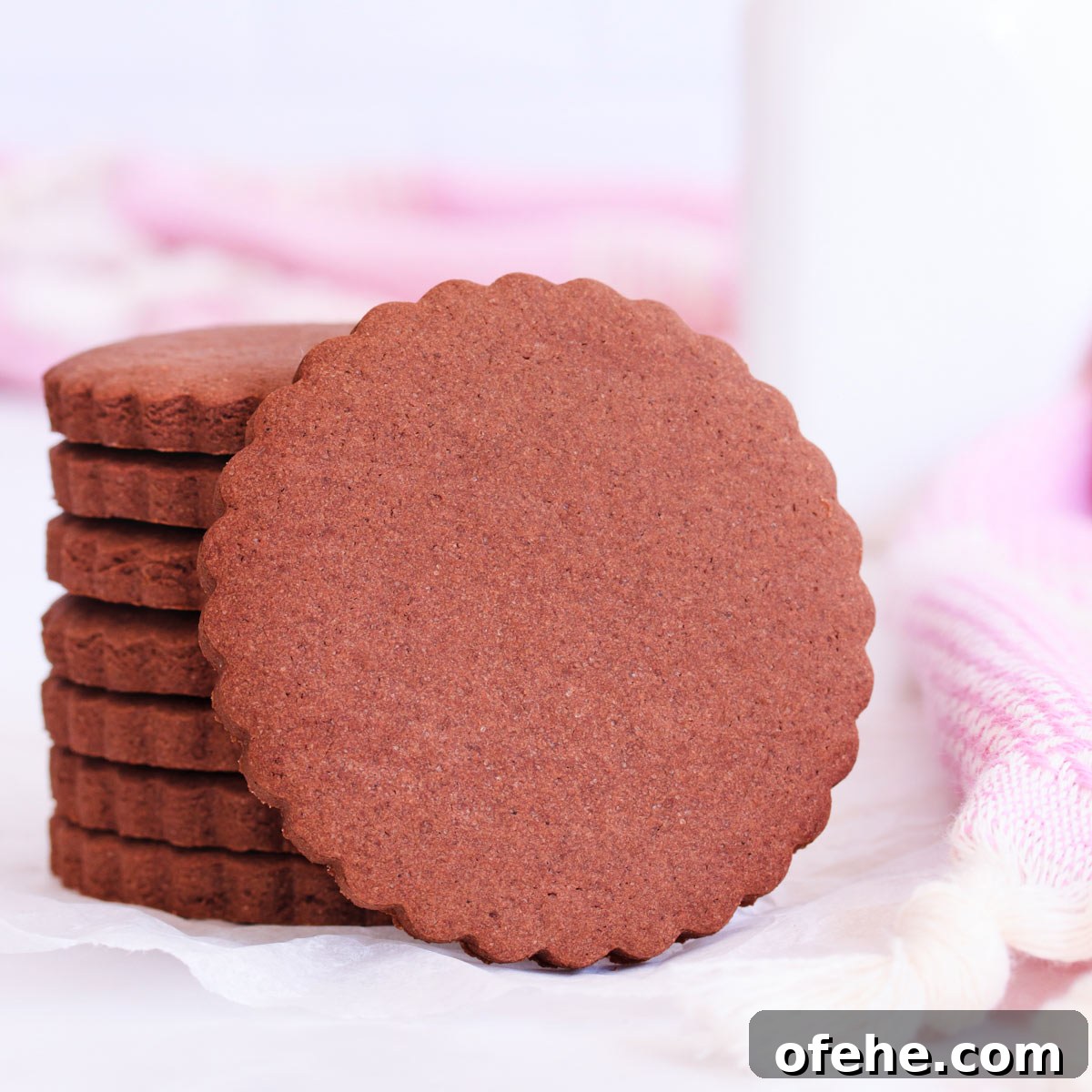
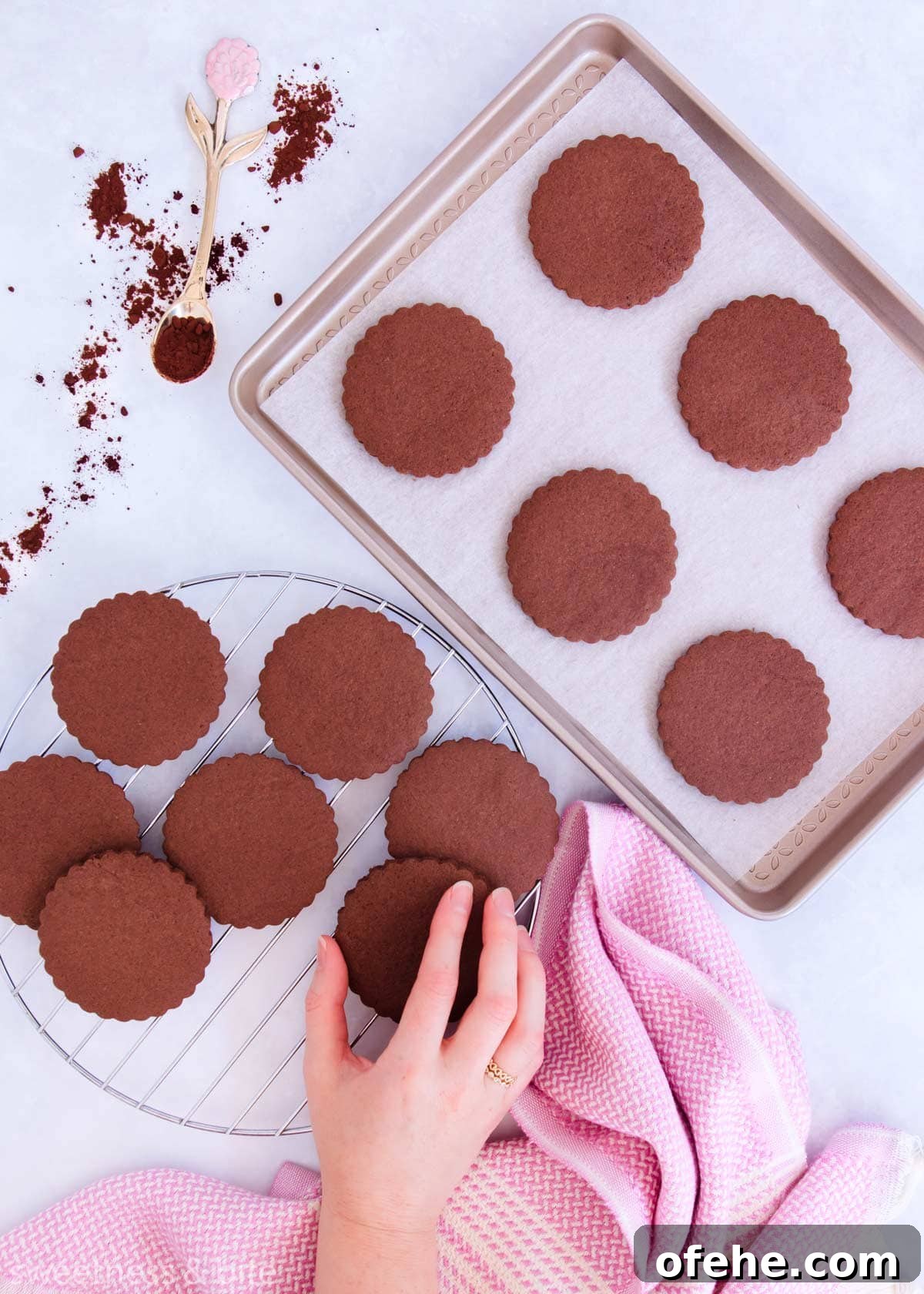
These gluten-free chocolate cookies are crisp at the edges with a rich chocolate flavour. They hold their shape well and have smooth, flat tops ideal for decorating.
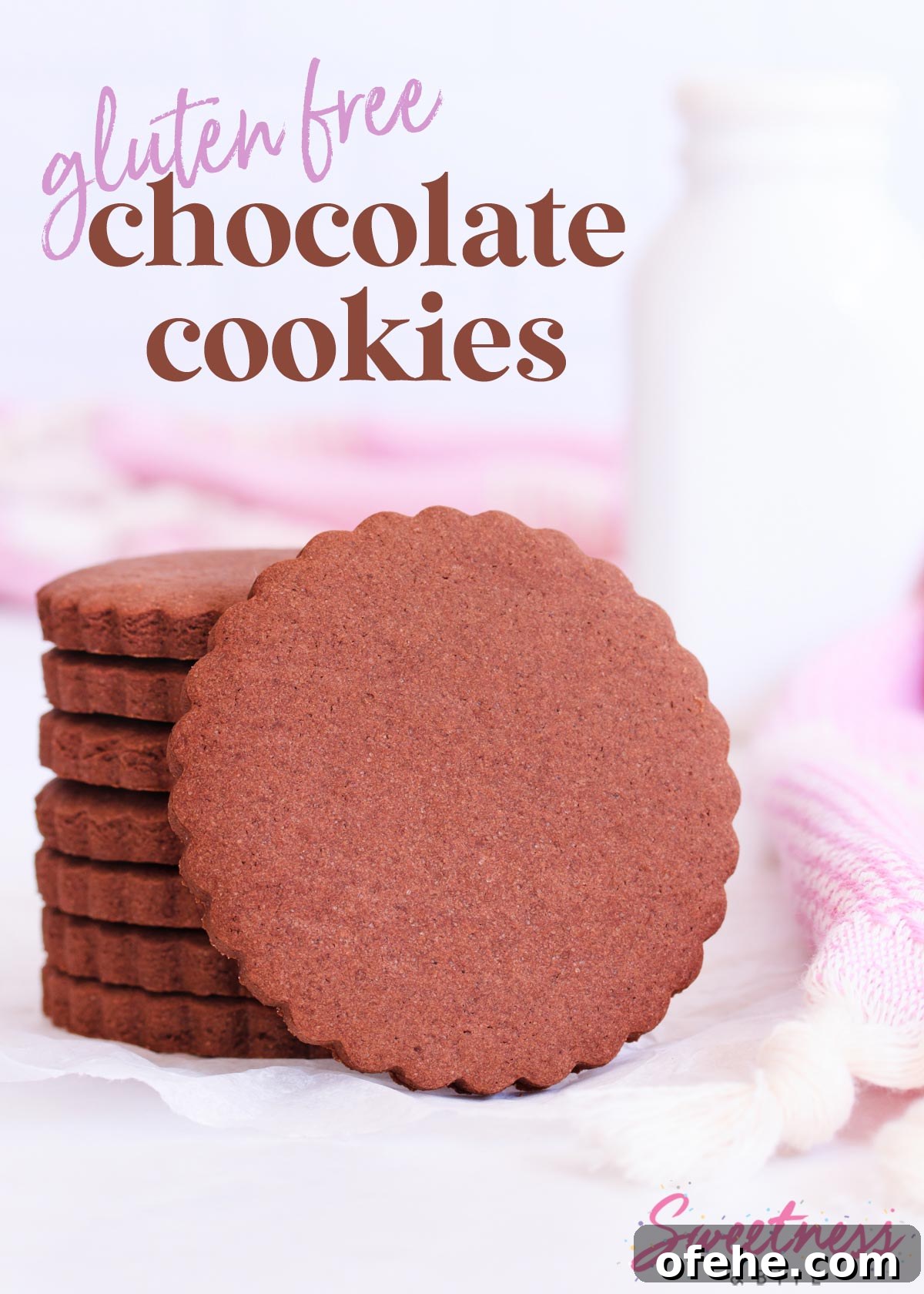
If you’re searching for a dependable gluten-free chocolate cookie, this recipe delivers. It’s based on the same principles as my gluten-free vanilla sugar cookies but with a deep chocolate flavour and a texture that’s perfect for cut-out shapes and decoration.
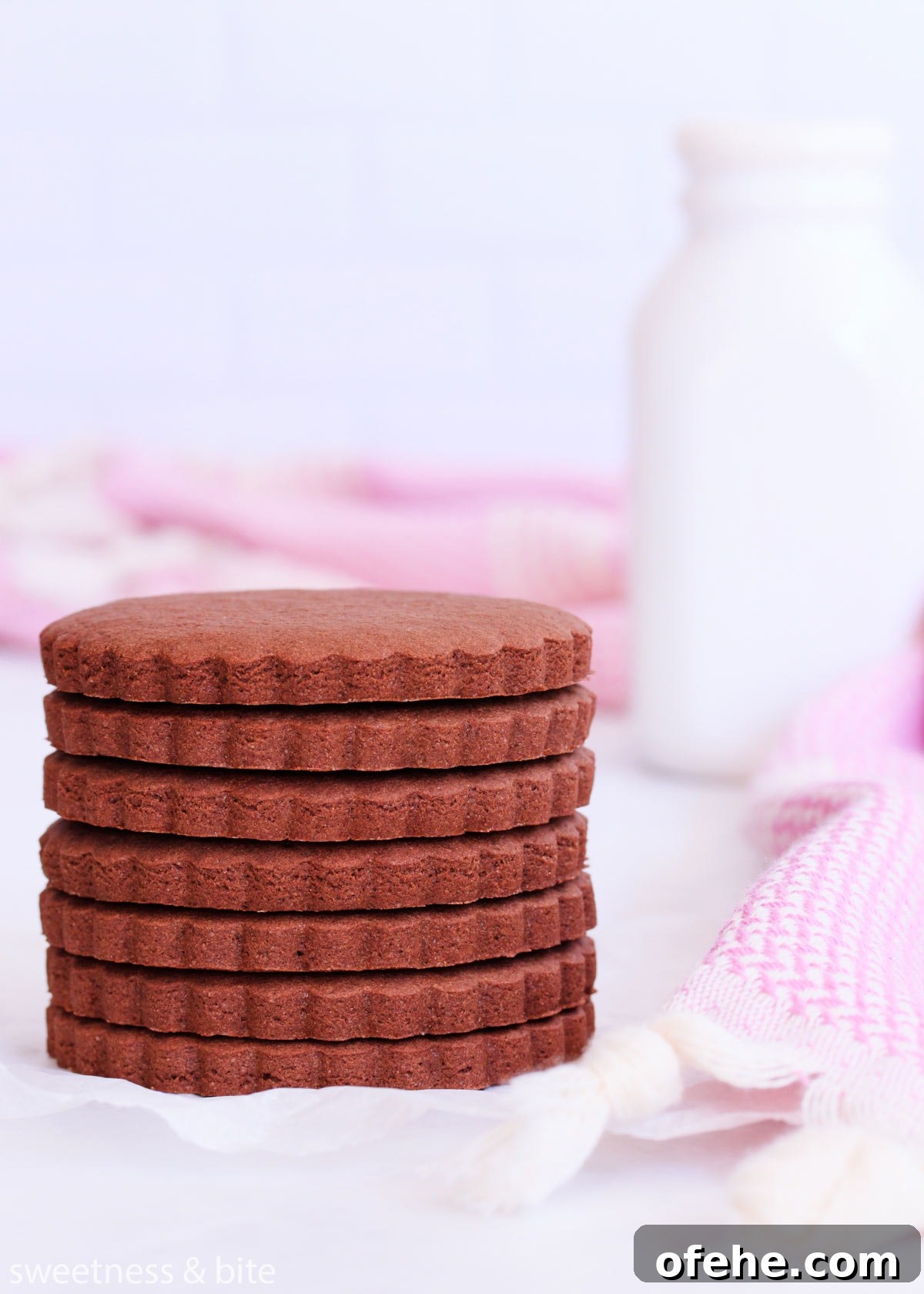
These cookies are straightforward to make, with crunchy edges and a slightly softer centre. They do not spread, creating smooth, flat surfaces that are great for royal icing, fondant, or a simple chocolate drizzle.
Jump to the recipe card for the full ingredients list and printable recipe, or keep reading for ingredient tips and process photos.
Ingredient Notes
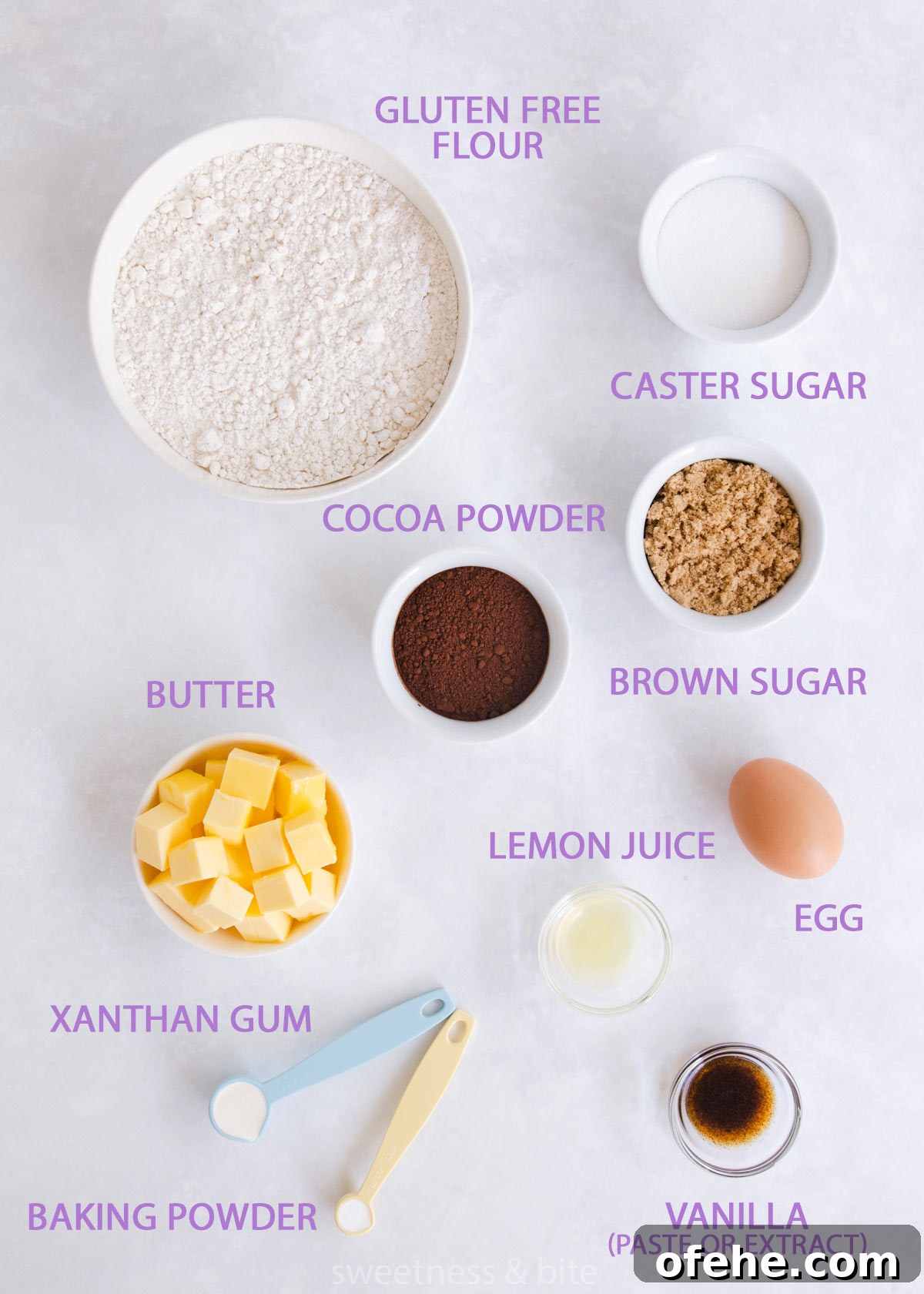
Gluten-free flour: I used a reliable homemade gluten-free baking blend. Different store-bought or homemade blends vary in ingredients and ratios, so results can change depending on the blend you use.
Cocoa powder: Dutch-processed cocoa gives a deeper, darker chocolate flavour, but natural cocoa works if that’s what you have.
Xanthan gum: Helps bind the dough and prevents crumbling. Omit if your flour blend already contains a gum.
Baking powder: Use a gluten-free baking powder.
Caster sugar: Produces a smooth cookie surface. Granulated sugar can be used as an alternative.
Brown sugar: Adds moisture, flavour and a touch of acidity that helps cookies keep their shape.
Butter: Either salted or unsalted is fine; use softened butter.
Egg: One large egg at room temperature.
Vanilla: Use vanilla extract or vanilla paste.
Lemon juice: A small amount of acid helps the cookies set quickly and prevents spreading. You will not taste lemon in the finished cookies; it simply stabilizes the dough.
How to Make Gluten Free Chocolate Cookies
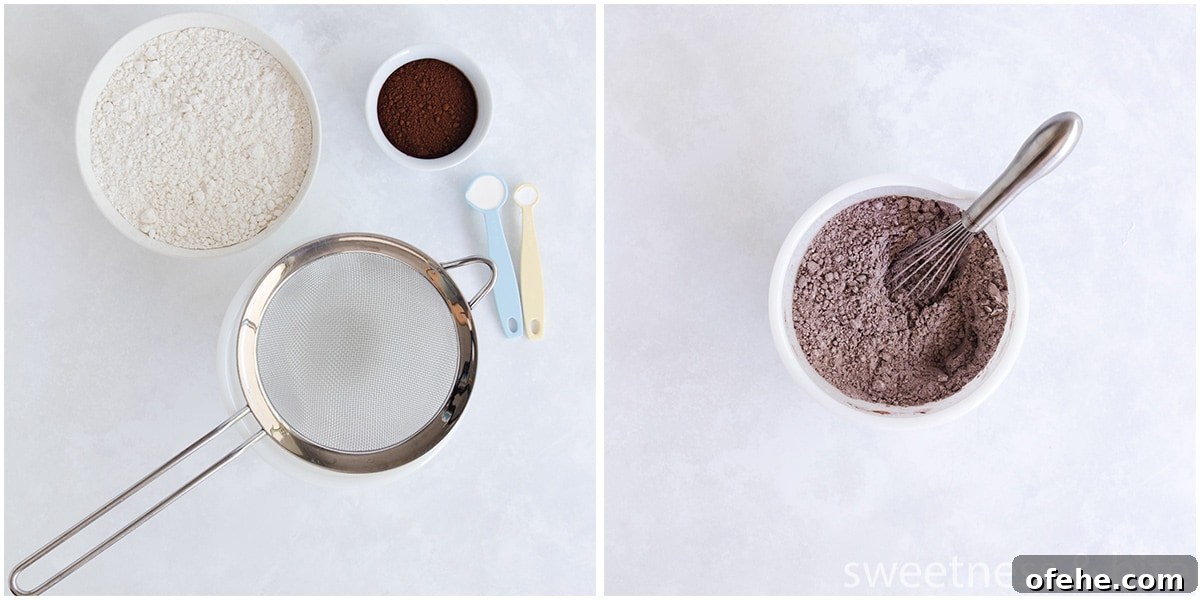
This recipe is simple and quick. Use a stand mixer with a paddle attachment or a handheld mixer and a large bowl. Begin by sifting the dry ingredients together and whisking them to combine.
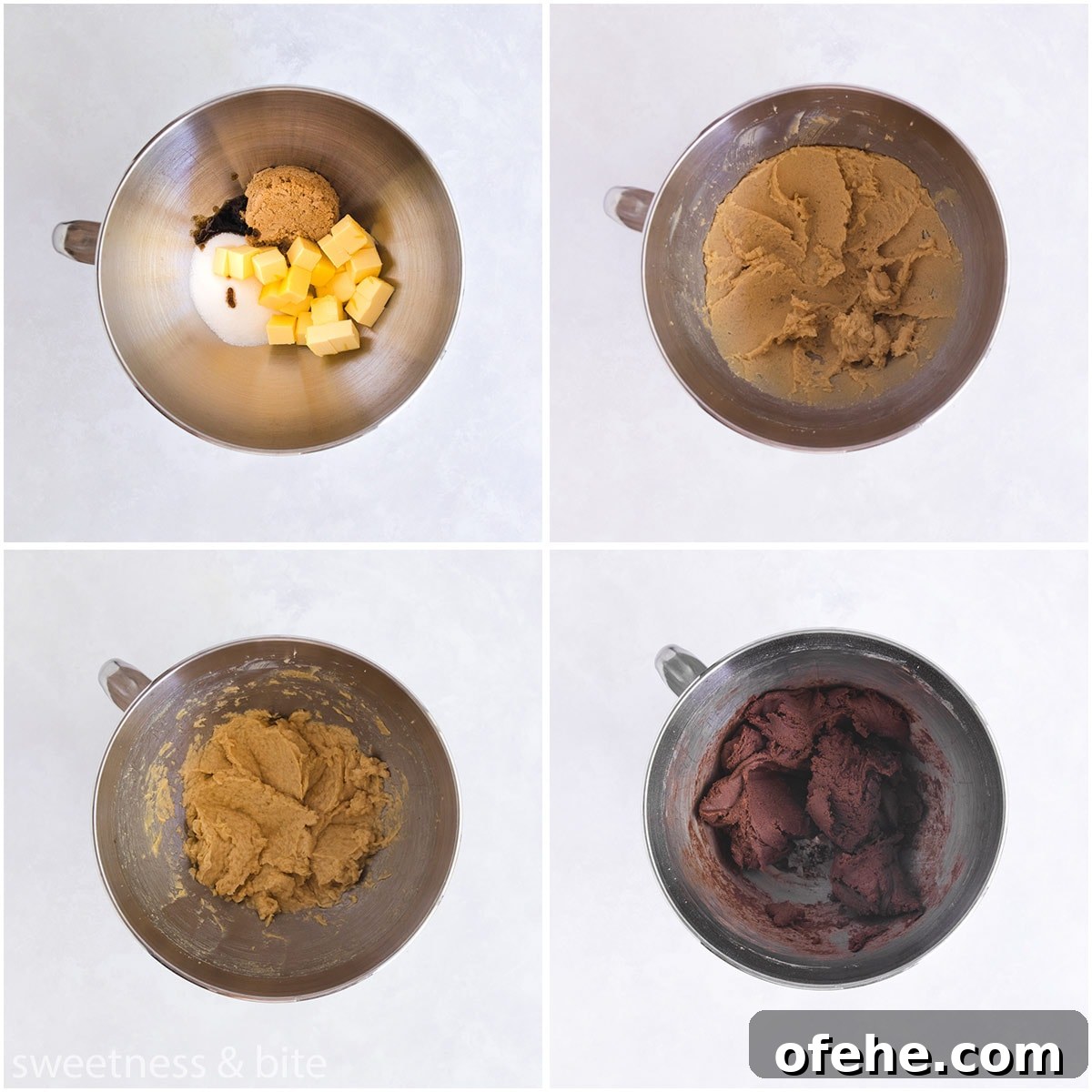
Cream the butter, both sugars and the vanilla just until combined and creamy — avoid overbeating, which introduces air and can create uneven tops. Add the egg and mix briefly until incorporated; if the mixture looks slightly separated, it will come together once the dry ingredients are added.
Add the dry ingredients in two to three batches. For very thick dough, finish mixing the last bit by hand with a wooden spoon to avoid straining a handheld mixer.
If the dough is a little soft, chill it in the fridge for 5–10 minutes to firm up before rolling. Divide the dough into two pieces and roll each between sheets of parchment or non-stick baking paper. Use a light dusting of gluten-free flour or cornstarch on the dough or rolling pin if needed. Roll to about 5mm thickness — spacer rings or thin dowels make this easy.
Transfer the rolled dough (still on the paper) to a baking sheet and chill until firm. Cut shapes with your cookie cutters, then chill the cut shapes briefly so they hold their form when baked. Excess dough can be re-rolled multiple times without toughening, since there’s no gluten to overwork.
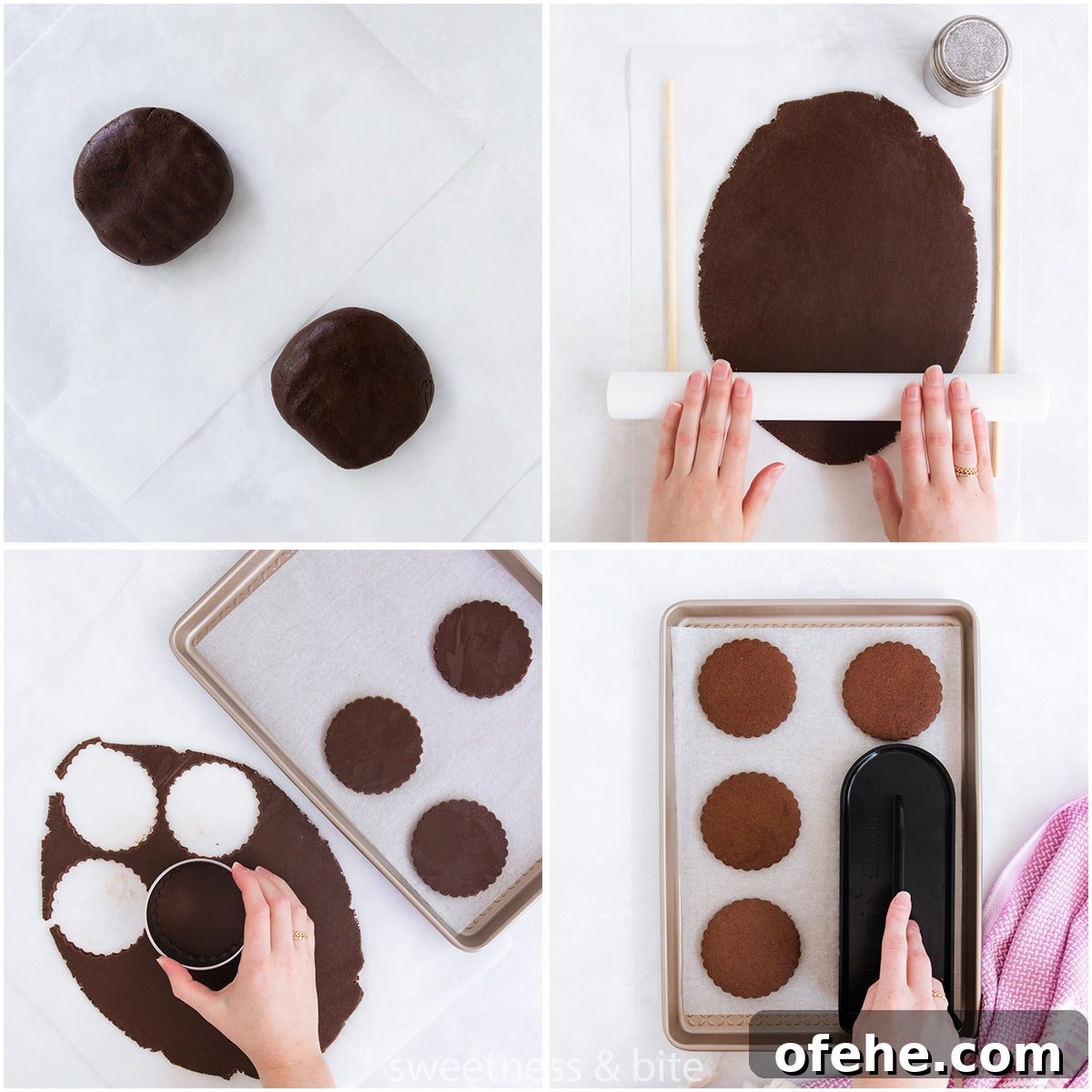
Arrange the cut cookies on lined baking sheets about 1″ apart. If the shapes have warmed and softened, chill them again for a few minutes before baking.
Cookie Baking Notes
Baking time depends on cookie size, shape, dough thickness and your oven. Detailed edges brown faster, larger cookies need more time, and darker or thinner baking sheets speed baking. I recommend testing the first tray: roughly 10 minutes for small cookies, 12 minutes for medium and 14 minutes for large, then adjust as needed.
Let cookies cool on the tray until firm enough to move, then transfer to a wire rack. For extra-flat cookies, gently press the tops with a fondant smoother as soon as they come out of the oven to create a smoother surface for icing.
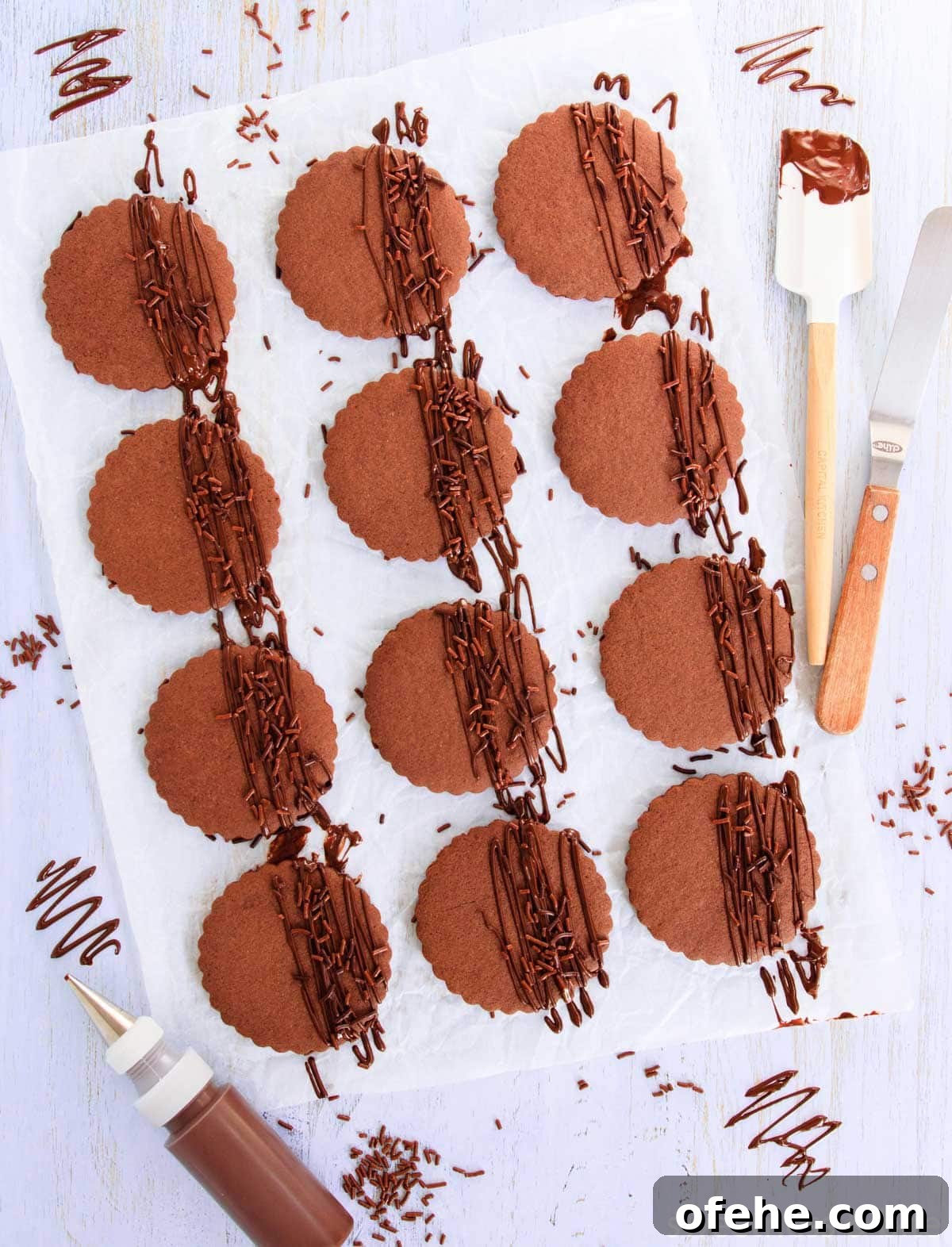
These cookies are sturdy and ideal for decorating. If you prefer a simple finish, drizzle melted dark, milk, or white chocolate and sprinkle as desired. They hold up well under fondant or royal icing and are easy to handle while decorating.
Decorating the Cookies
Decorate however you like. These cookies are robust enough to be moved and handled while applying royal icing or fondant. If not decorating, a chocolate drizzle and sprinkles make a quick and tasty finish.
Storing the Cookies
Store un-iced cookies in an airtight container for 1–2 weeks; they will soften over time but can be refreshed in a warm oven for a few minutes to crisp the edges. Cookies iced with royal icing can be layered with parchment between them in an airtight container for 1–2 weeks. Fondant-covered cookies should not be stored airtight if they retain any moisture; decorate them within a day or two of serving for the best texture.
Freezing Gluten Free Chocolate Cookie Dough
To freeze dough, shape it into discs, wrap well in plastic wrap, and seal in an airtight container or resealable bag. Thaw in the fridge for an hour or two before rolling. You can also freeze cut shapes on a baking sheet until firm, then stack them in a container with parchment between layers. Bake from frozen, adding a minute or two to the bake time.

Gluten Free Cookie Making Tips
- Bring butter and eggs to room temperature before starting for consistent mixing.
- Use a reliable gluten-free flour blend. The starches and flours in a blend affect texture and performance; the blend used to test this recipe contains tapioca starch, potato starch and brown rice flour.
- Avoid over-flouring when rolling: roll between parchment sheets and use only a light dusting of flour or cornstarch as needed to prevent sticking.
- Chill the rolled dough and the cut shapes before baking. Chilling helps shapes transfer intact and prevents excess spreading in the oven.
More posts you may like…
- Gluten Free Sugar Cookies – my original no-spread gluten-free vanilla cookies.
- Gluten Free Gingerbread Cookies – a year-round favourite, not just for the holidays.
- Cookie Decorating Tutorials – step-by-step guides for decorating these cookies with royal icing and fondant.
Gluten Free Chocolate Cookies
Ingredients
- 290 g gluten free flour
- 40 g Dutch cocoa powder
- 1 teaspoon xanthan gum*
- ¼ teaspoon baking powder
- 125 g butter softened
- 75 g caster sugar
- 75 g brown sugar
- 2 teaspoons vanilla extract or paste
- 1 ½ teaspoons lemon juice
- 1 large egg at room temperature
Instructions
-
Sift the gluten-free flour, cocoa powder, xanthan gum and baking powder together and whisk to combine.
-
Beat the butter, caster sugar, brown sugar, vanilla and lemon juice until creamy and combined. Avoid overbeating to prevent air bubbles and uneven tops.
-
Add the egg and mix until incorporated; it may look slightly separated but will come together when the dry ingredients are added.
-
Add the dry ingredients in 2–3 additions, scraping the bowl and mixing until a soft dough forms. Finish the last addition by hand if the dough becomes very thick.
-
Chill the dough in the fridge for 10–15 minutes until slightly firm.
-
Divide and roll each piece between parchment sheets to about 5mm thickness. Slide the rolled dough onto a baking sheet and chill until firm.
-
Preheat the oven to 180°C (350°F) and line baking sheets with parchment.
-
Remove the top sheet of parchment, cut shapes and place them on the prepared trays about 1″ apart. Chill briefly if they have warmed up.
-
Bake for 10–14 minutes depending on size: about 10 minutes small, 12 minutes medium, 14 minutes large. Check the first tray after 10 minutes and adjust as needed.
-
Cool on the trays until firm enough to handle, then transfer to a wire rack to cool completely.
-
Store in an airtight container or decorate as desired; cookies keep well for at least a week.
To freeze the cookie dough:
-
Shape the dough into flat discs, wrap well and freeze in an airtight container. Thaw before rolling.
-
To freeze cut shapes, freeze them on a sheet until firm, stack with parchment between layers and bake from frozen, adding a minute or two to the baking time.
Notes
Nutritional Disclaimer: Any nutritional information provided is an estimate and intended as a guide only.