I’ve mentioned before that my partner follows a mostly vegetarian lifestyle — occasionally vegan when guilt strikes (cue the eye rolls). He wasn’t always like this; a couple of months at an ashram a few years ago changed his relationship with food. I tease him about it, but I also admire his conviction. I’ve tried to switch myself, but severe anemia means I still rely on iron-rich foods, so I haven’t converted.
Labels aren’t important to me, but I do care about what’s in our food, how it’s made, and the environmental impact. Not in a preachy way — more of a practical, to-each-their-own attitude. When time allows, we skip pre-packaged options and make things from scratch.
We love homemade nut butters — peanut and almond were our first experiments. We make small batches that disappear within days. Raw cashews have a rich, creamy taste that begged to become butter; this batch was so good I had to share it.
Making nut butter requires little effort and yields incredibly creamy results. All you need are your favorite nuts and a powerful food processor or blender. You can optionally add a little oil and flavoring, which is what I did here.
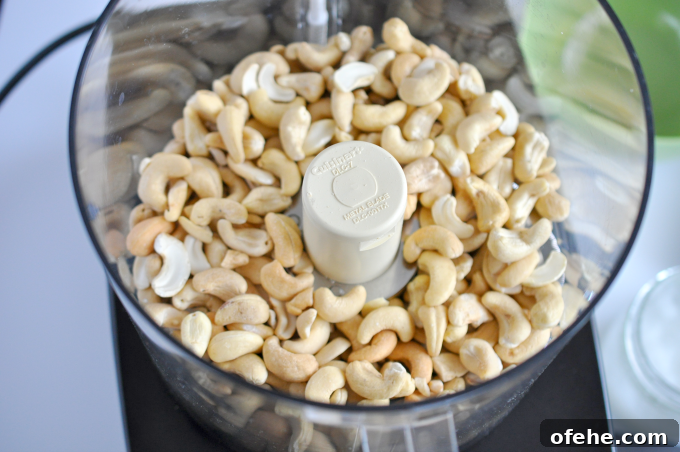
Start by weighing your ingredients — I scale everything, especially for baking. I used raw cashews that had been soaked and dried. You can roast them after drying for a deeper flavor (see the notes at the end of the recipe).
When I processed the cashews for about 3–5 minutes they began to clump. You can let the processor work longer so the natural oils release and the mixture loosens, but I don’t like the loud noise at that stage. To smooth things faster, I added 2 grams (about 1 teaspoon) of coconut oil.
You can see the change from chunky to silky in the photo above. Next, add flavor. I love cinnamon and had a jar of cinnamon honey on hand — delicious. Once the nuts were smooth after the oil, I stirred in 7 grams (about 1 teaspoon) of honey and a pinch of fine sea salt at around the 12-minute mark. I processed for another 3 minutes until the texture matched store-bought peanut butter.
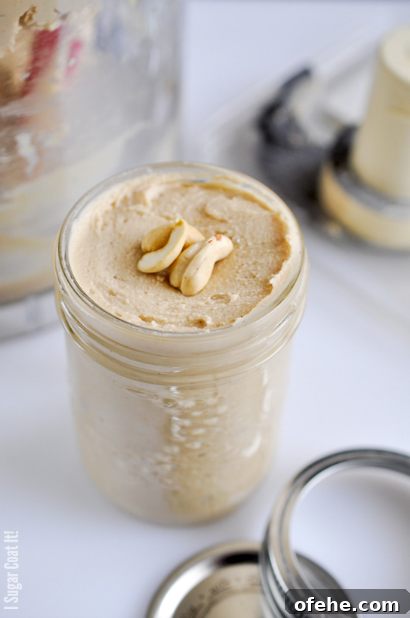
Don’t be fooled by the pale color — in about 15 minutes you’ll have a jar of rich, creamy Cashew Cinnamon Honey Butter with a subtle cinnamon note. It’s wonderful on toast, makes a great smoothie base, and works beautifully in baking.
If cashews aren’t your preference, substitute another nut and experiment. We’ve tried pecans with maple syrup (incredible), pistachios, hazelnuts, peanuts, and almonds. Processing time varies by nut type, batch size, and equipment.
Seed butters are excellent too — I’m working on a pumpkin seed version and some cashew nut milk to share soon.
If you can resist eating it straight from the processor, store your Cashew Cinnamon Honey Butter in a canning or mason jar. They make lovely gifts; I like to tuck a cupcake liner between the lid and the screw top for a simple touch.
If you haven’t made your own nut or seed butter yet, you really must — it’s simple and far superior to most store options.
I Sugar Coat It
Cashew Cinnamon Honey Butter
Print Recipe
Servings: 1 cup
Course: Nut Butter
IngredientsMethodNotes
Ingredients
- 350 g raw organic cashews
- 2 g organic coconut oil 1 tsp
- 7 g cinnamon honey 1tsp
- pinch of fine sea salt
Method
-
Soak your cashews for about 3 hours, then dehydrate using your preferred method. I used a dehydrator, which took about 12 hours.
-
Weigh your completely dried nuts and add them to the food processor. Pulse a few times to break them up.
-
After several pulses, let the processor run for about five minutes or until the nuts begin to clump. Stop occasionally to scrape the sides so everything processes evenly.
-
Add the coconut oil and continue processing for another 5–7 minutes until smooth and creamy. Add the honey and salt, then process an additional 3 minutes until the texture resembles store-bought peanut butter.
-
Use a silicone spatula to transfer the butter to a canning or mason jar. Refrigerate and enjoy.
Notes
You will need: a food processor (I use a 14-cup model) and mason or canning jars.
Soaking nuts helps remove naturally occurring enzyme inhibitors and makes nuts easier to digest. If you soak, be sure to dehydrate completely before making butter. A dehydrator or a low oven works well. Roasting after drying enhances flavor for nuts like pecans, hazelnuts, and almonds. Smaller batches work well in a blender; larger batches process better in a food processor. I usually remove the blade to scrape out the butter, using a silicone spatula to reach all areas. Store in the refrigerator for a few weeks.