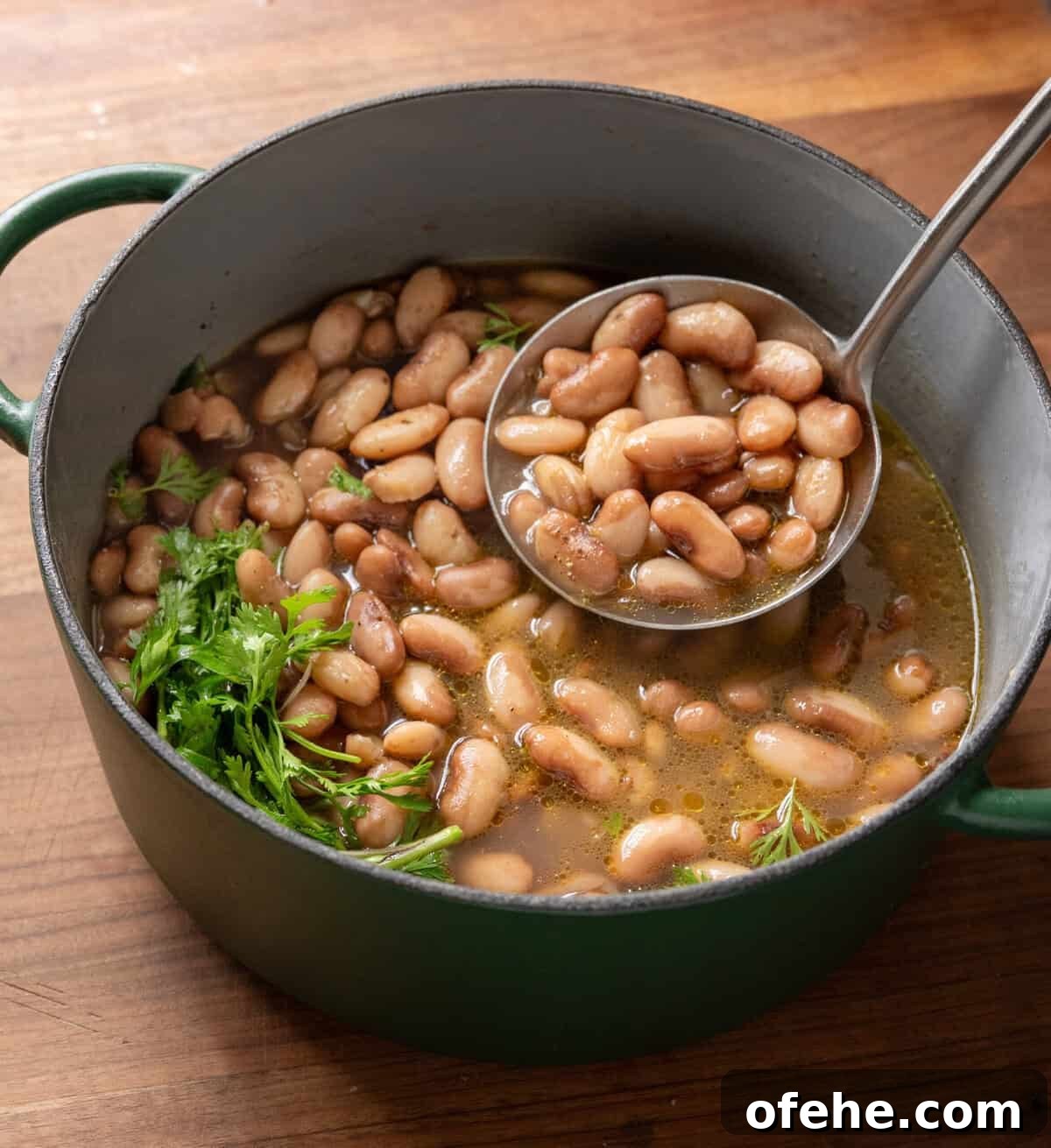
Beans deliver extraordinary nutrition for the price — rich in protein and fiber and very budget-friendly. While canned beans are convenient, beans cooked from dried have a depth of flavor and a creamy texture that canned versions rarely match.
Here I share how to cook beans so they turn out tender, creamy, and enveloped in a flavorful brothy sauce. These techniques produce beans that are delicious on their own and versatile enough to enhance tacos, toast, grain bowls, burrito bowls, and breakfast scrambles.
If you use an Instant Pot, there’s a dedicated guide and video that cover every bean variety and timing for pressure cooking.
In this post:
- Brothy beans vs. “plain” beans
- Ingredient notes
- Step-by-step instructions
- To soak, or not to soak?
- Tips for minimizing gas
- Get creative
- Storage instructions
- A Perfect Pot of Beans recipe
Watch the video
On YouTube I walk through the process and demonstrate a few serving ideas — that visual guide is helpful if you prefer to watch rather than read.
Brothy beans vs. “plain” beans
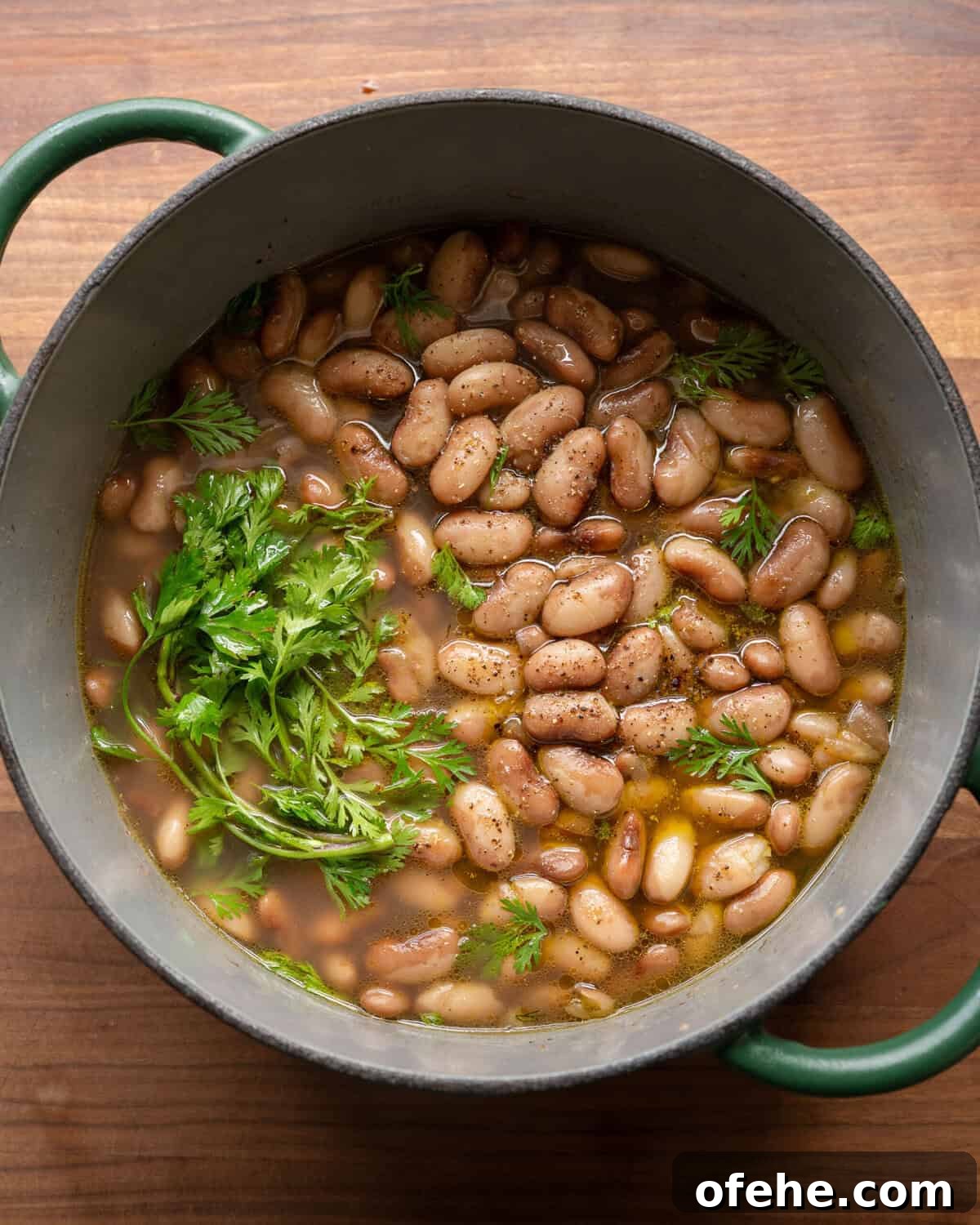
This post focuses on making brothy beans: beans cooked with aromatics and herbs, finished with olive oil and a splash of acid, resulting in a saucy, luxurious pot you can eat straight from the bowl.
If you want simpler beans to substitute for canned, follow this method but skip the sautéed aromatics and the finishing oil and vinegar. Cook soaked beans in water with salt (and optional bay leaves), then season to taste. For freezing, portion cooked beans into roughly 1.5-cup servings so they match a standard 15-ounce can when defrosted.
Ingredient notes
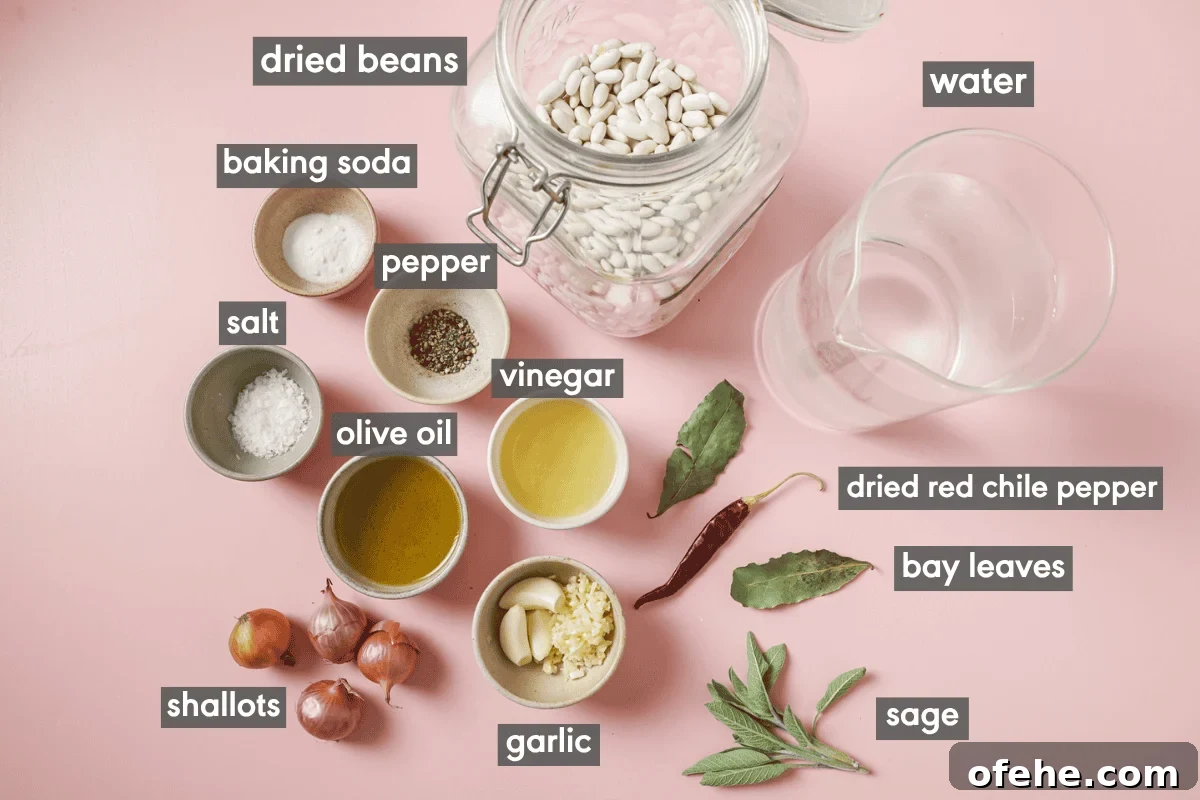
Dried beans
This method works for almost any dried bean, but cooking time depends on bean size and density, bean freshness, and whether you soak them first. Smaller beans cook faster; older beans can take much longer or may never fully soften if they’re very old. Check package dates if unsure.
Freshness tip
Beans older than two years may remain firm even after long cooking. For best results, use relatively fresh beans.

Aromatics
Sautéed aromatics—shallots or onions and garlic—are the foundation of deeply flavored beans. Add a bouquet garni and a couple of dried chiles for gentle heat and complexity; these elements elevate the beans well beyond the canned version.
Water
I begin with about 6 cups (1.5 L) of water for 1 pound (454 g) of dried beans, then add more as needed. Cover the beans with roughly 1 inch (2.5 cm) of water above them; too much water dilutes the broth and can make it less rich.
How much water?
Cover the beans with about 1 inch of water. As the beans cook they release starches that thicken the liquid into a saucy broth. Avoid overfilling the pot so the broth stays concentrated and flavorful.

Finishing elements
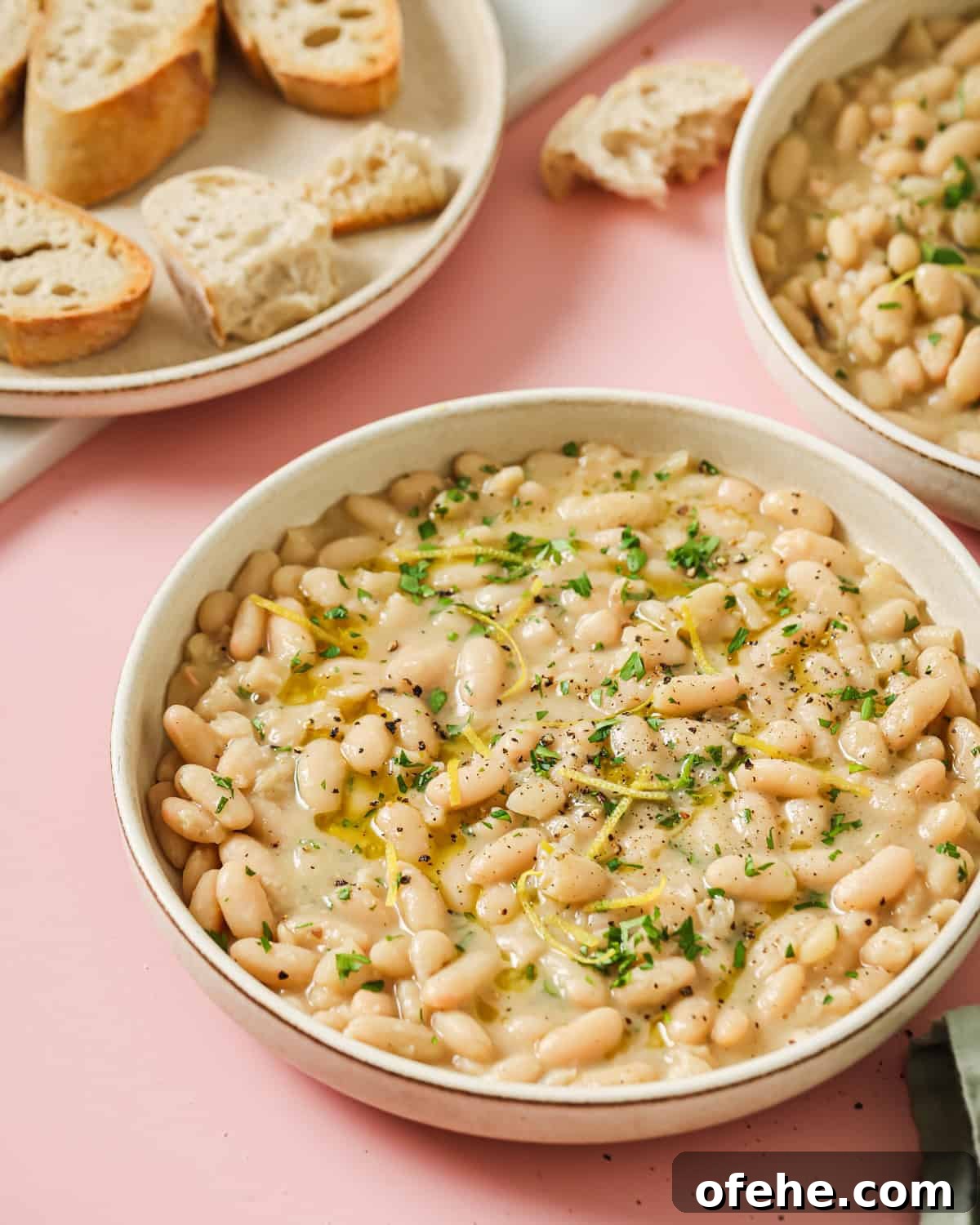
Finish the beans with good-quality olive oil for richness, a generous amount of salt—beans need it—and a bit of acid (lemon juice or a mild vinegar) to brighten and balance the flavors.
Step-by-step instructions
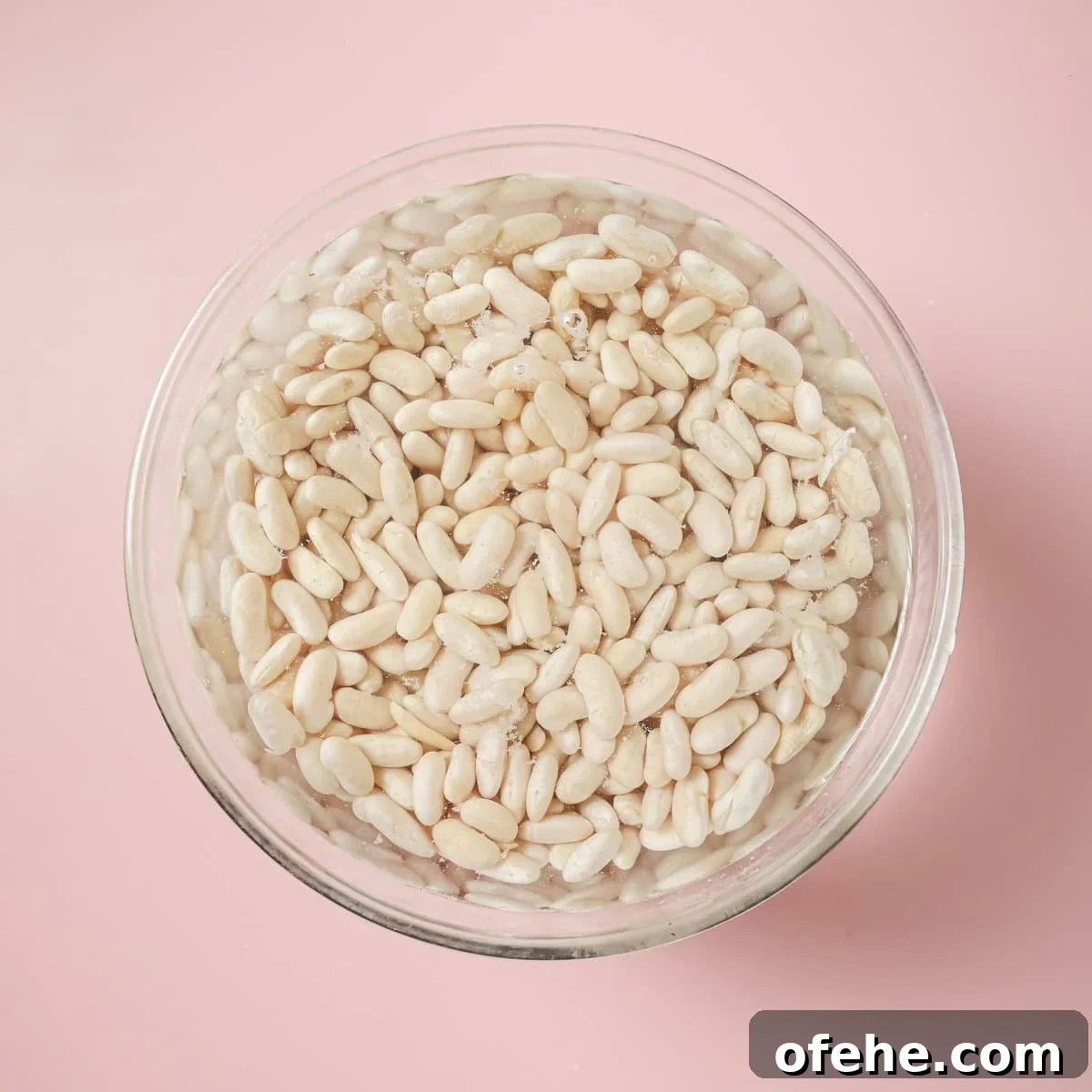
- Cover the beans with cool water, add kosher salt and optional baking soda, and soak 8–12 hours.
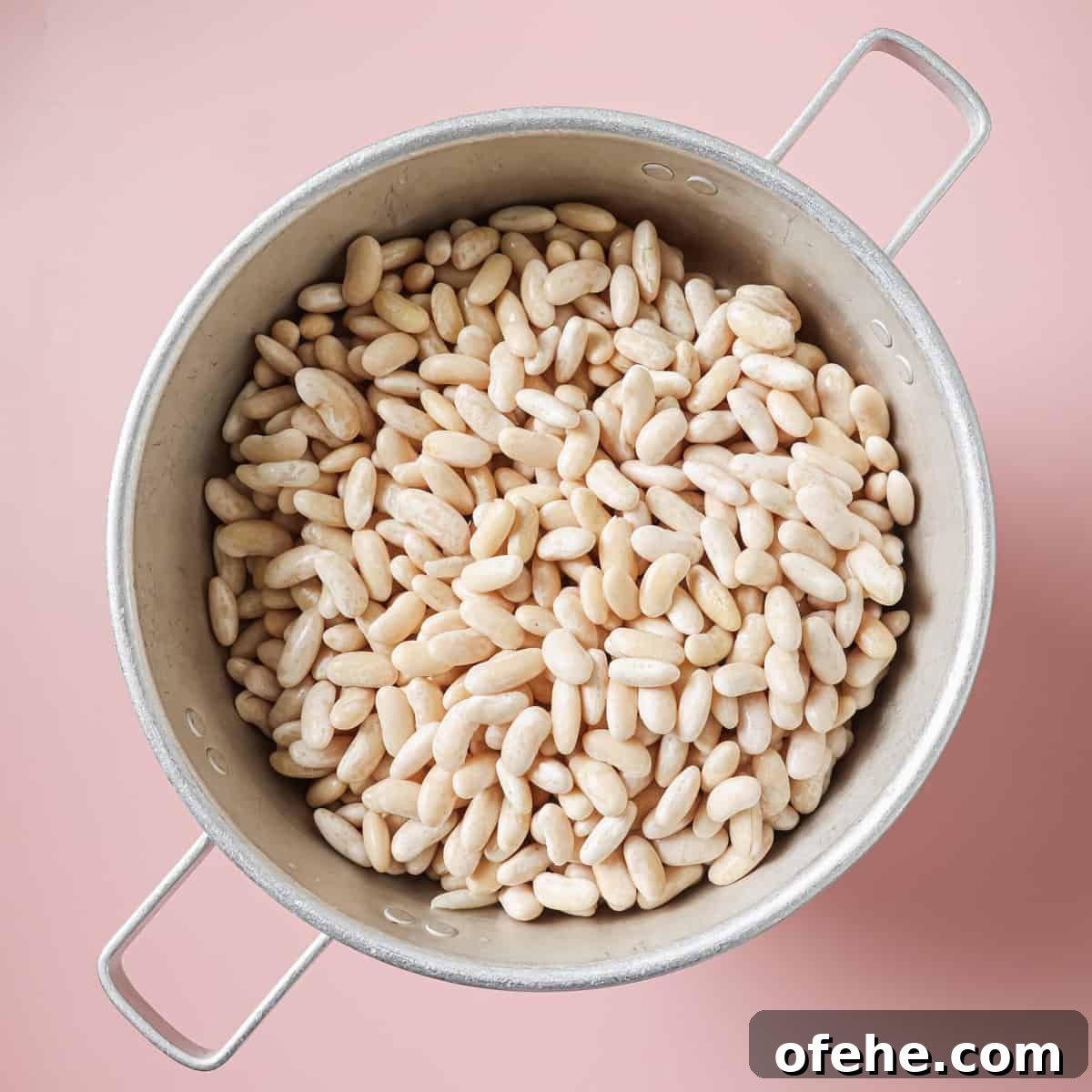
- Drain and rinse the soaked beans.

- Heat olive oil in a Dutch oven over medium heat. Add shallots or onion and cook until golden and soft, about 5 minutes.
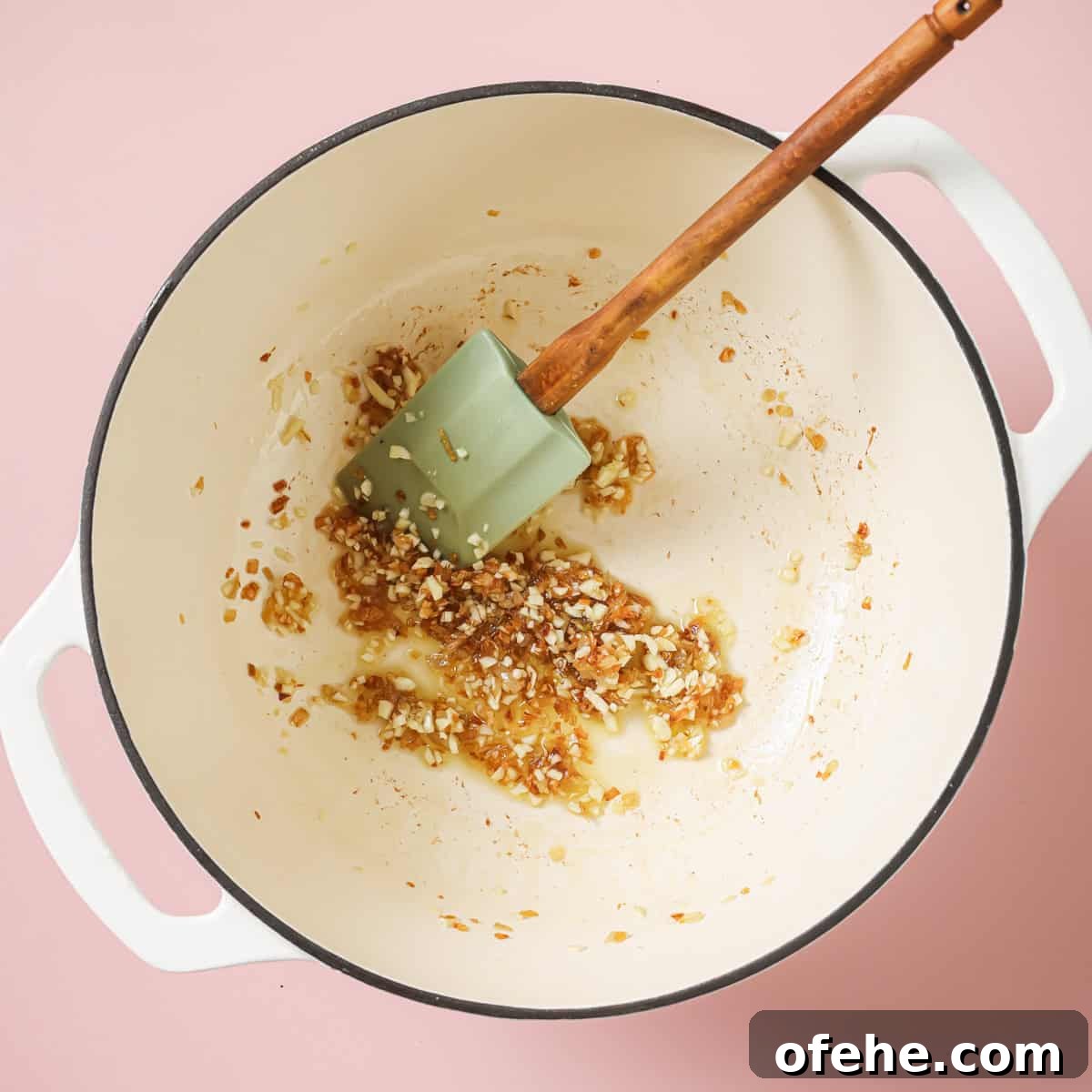
- Add garlic and cook, stirring, for 1–2 minutes until fragrant.
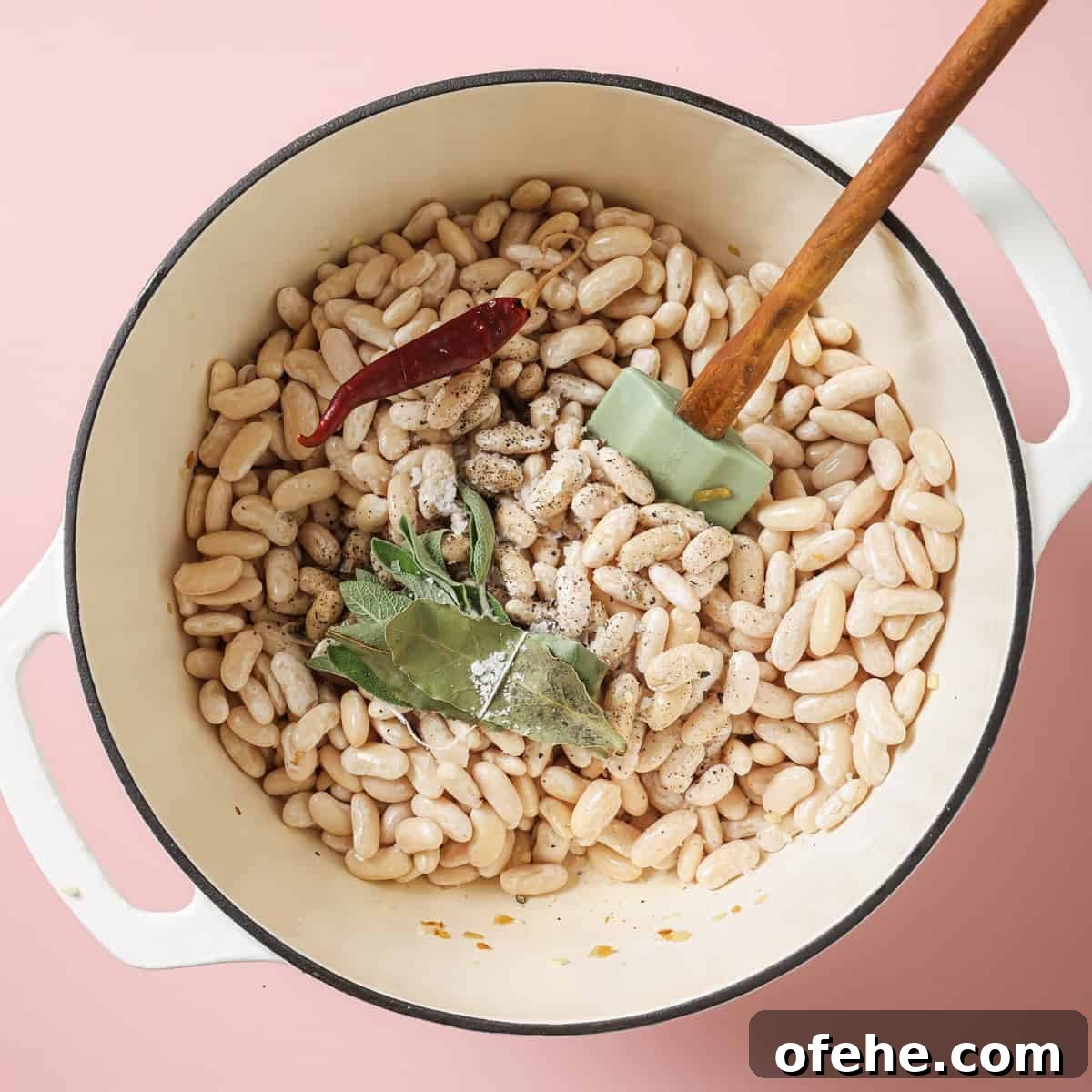
- Add the soaked beans, bouquet garni, dried chiles (optional), pepper, a bit of salt, and about 6 cups (1.5 L) water.

- Bring to a rapid boil, then partially cover and boil for 10 minutes.

- Reduce heat to low and simmer gently until tender—about 40–50 minutes for medium beans. Test several beans for doneness.
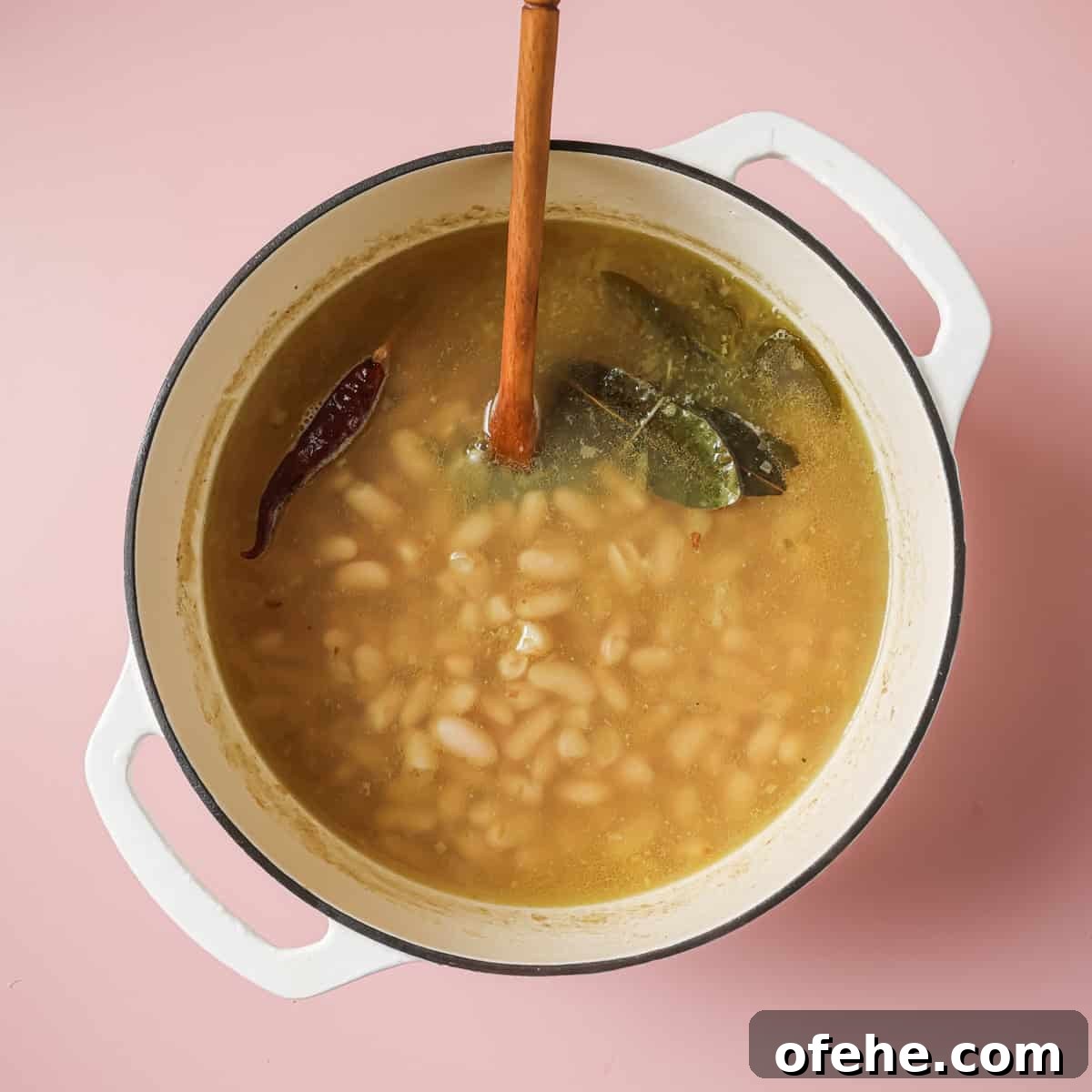
- If the liquid level drops, top off with freshly boiled water to keep the beans covered.
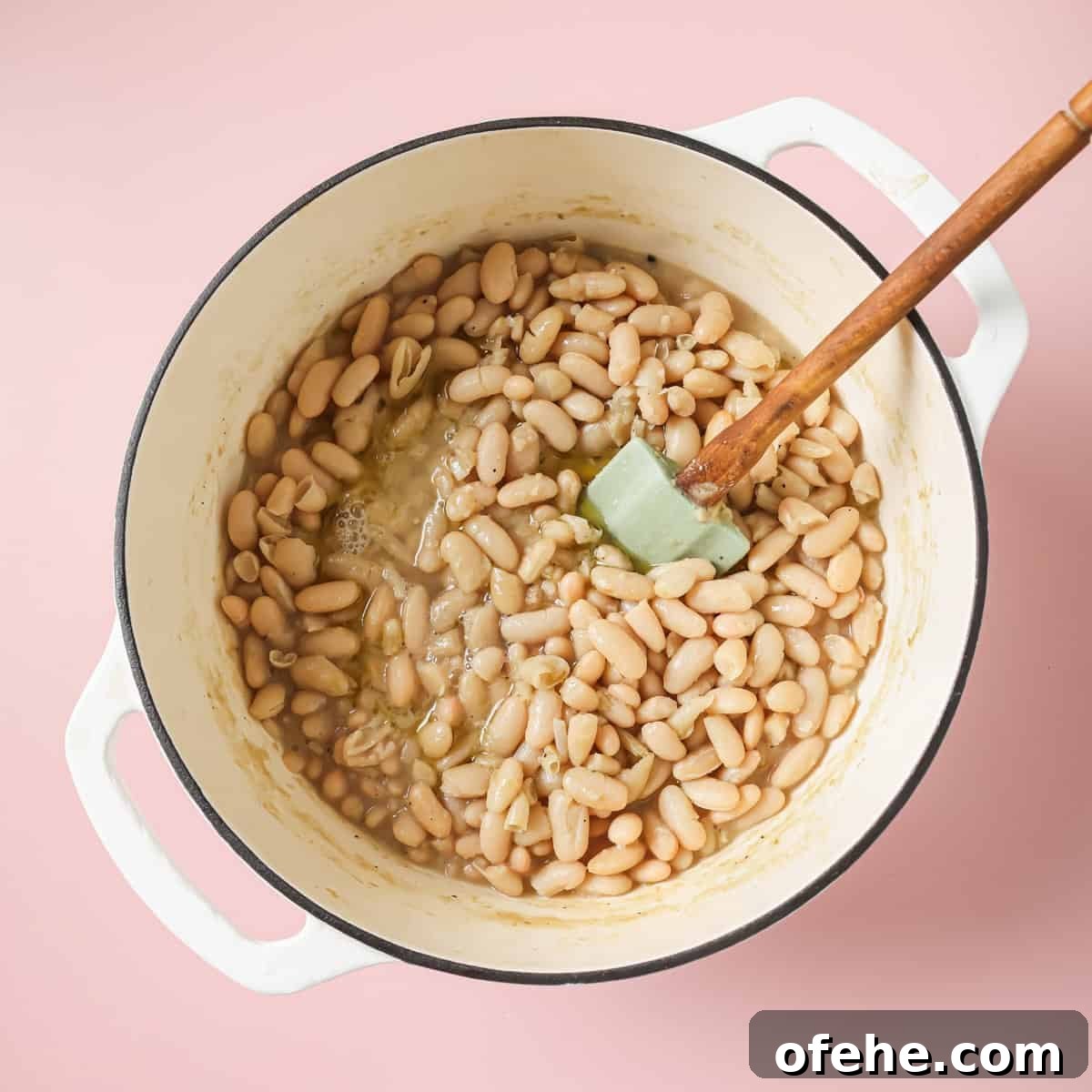
- When tender, discard the chiles and bouquet garni. Season generously with salt, stir in good-quality olive oil, and add 1–2 teaspoons vinegar or lemon juice. Adjust oil, salt, and acid to taste.
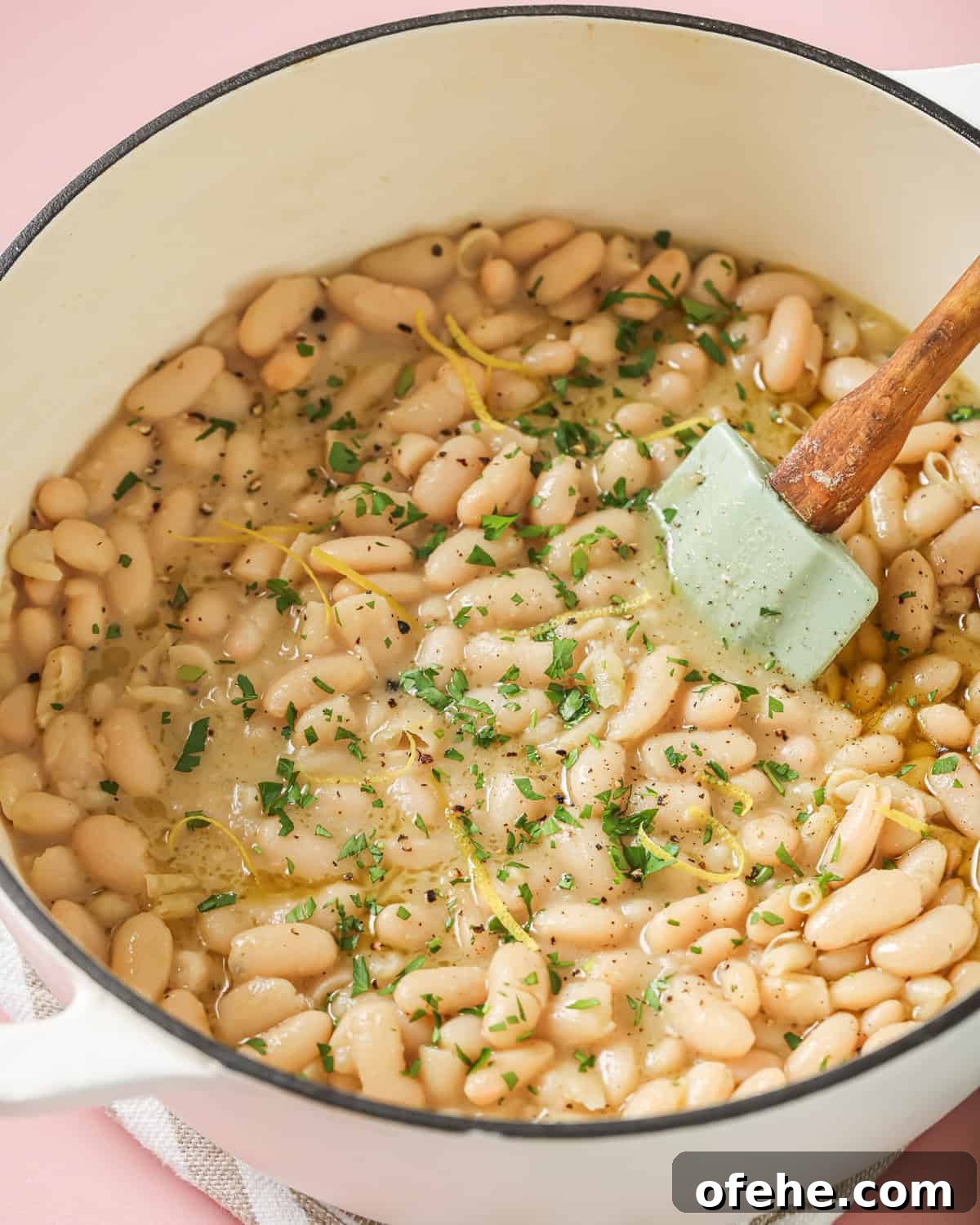
- Garnish with fresh herbs or lemon zest if desired.
To soak, or not to soak?
You don’t strictly have to soak beans, but soaking reduces cook time and often improves texture and digestibility.
Why I soak:
- Soaking significantly cuts cooking time, especially for large beans.
- Soaked beans are typically easier to digest.
- Soaking reduces split skins, producing a more even texture.
Preferred method: a salty soak
Cover beans with cool water, add a generous amount of salt, and soak overnight (8–12 hours). Salt in the soak helps soften the bean skins and seasons the beans from the inside.
For larger beans, a small pinch of baking soda in the soak can speed softening by raising the pH and breaking down pectin.
Forgot to soak?
Use a quick-soak method: bring the beans briefly to a boil, then remove from heat and let sit for about an hour before draining and proceeding with the recipe.

Tips for minimizing gas
To reduce digestive discomfort:
- Soak the beans and discard the soaking water, then cook in fresh water to remove oligosaccharides that can cause gas.
If gas persists, try one of these:
- Add a strip of kombu to the cooking pot (remove before serving) to aid digestibility and add umami.
- Use a pinch of asafetida added to the oil when sautéing aromatics; it’s been used traditionally to help make legumes easier to digest.
Get creative
Once you have the basics down, personalize the pot:
- Try different bean varieties, including heirloom types.
- Add spices after the garlic for additional flavor.
- Toss in leftover vegetables like carrots, celery, or fennel to bulk up the pot.
- Swap dried chiles for red pepper flakes or Aleppo pepper if you prefer.
- Use herbs that complement the bean type—oregano works nicely with black or pinto beans.
- Finish with chopped fresh herbs, gremolata, or lemon zest.
These beans are excellent spooned from the pot or used in tacos, burrito bowls, grain bowls, on toast, or alongside a breakfast scramble with fermented condiments and greens.
Storage instructions
Store leftover beans with their cooking liquid in the refrigerator for up to 5 days. For longer storage, freeze beans with their liquid for 3–6 months. Portioning into single-serving blocks before freezing makes reheating and portioning easier.
Did this method level up your meal prep? Try the recipe below and adjust seasonings to your taste.
A Perfect Pot of Beans

Ingredients
- 1 pound (454 g) dried beans (such as Great Northern)
- Diamond Crystal kosher salt, to taste (see notes)
- 1–2 tsp baking soda (optional)
- 2 tbsp (28 g) extra-virgin olive oil, plus more for finishing
- 4 medium shallots (or 1 medium yellow onion), chopped
- 6 cloves garlic, chopped
- 6–8 cups (1.5–2 L) water
- 2 bay leaves + a few sprigs fresh thyme (or rosemary/sage)
- 2 dried red chile peppers (optional)
- Freshly cracked black pepper
- 1–2 tsp champagne vinegar or lemon juice
Instructions
- Spread beans on a surface and discard any debris.
- Soak: Place beans in a large bowl with about 8 cups (2 L) water. Add 1½ tbsp Diamond Crystal kosher salt and baking soda if using. Cover and soak 8–12 hours. Transfer to fridge if soaking longer than 12 hours.
- Drain and rinse the beans.
- Prep flavorings: Tie bay leaves and thyme into a bundle. Snip dried chiles if using.
- Cook aromatics: Heat a Dutch oven over medium heat with 2 tbsp olive oil. Cook shallots until golden, about 5 minutes. Add garlic and cook until fragrant.
- Pour in 6 cups (1.5 L) water, add soaked beans, herb bundle, dried chiles, plenty of black pepper, and 1 tsp kosher salt.
- Boil: Bring to a rapid boil. Partially cover and boil for 10 minutes.
- Simmer: Reduce heat to low and simmer gently, uncovered, until beans are tender. Medium beans typically take 40–50 minutes; larger beans may take an hour or more. Top off with freshly boiled water if the level drops.
- Finish: When tender, discard chiles and bundle. Season generously with salt (about 1½ tsp kosher salt or to taste), stir in at least 1 tbsp good olive oil, and add 1–2 tsp vinegar or lemon juice. Adjust oil, salt, and acid to taste.
- Storage: Refrigerate beans in their liquid for up to 5 days or freeze with liquid for 3–6 months.
Notes
- Cook times are for medium beans. Smaller beans cook faster; larger beans require more time and may take up to two hours or longer depending on freshness and soak time.
- If using table salt, use about half the listed salt amounts. If using sea salt or a different kosher salt, adjust slightly upward.
- Baking soda speeds softening. Skip it for small beans or if you prefer firmer texture.
- Substitute ¼–½ tsp red pepper flakes or 1–2 tsp Aleppo pepper for dried chiles if desired.
- Any mild vinegar works for finishing, such as apple cider or white wine vinegar.
- I always drain soaking water because it contains oligosaccharides that some find hard to digest. If you tolerate beans well, you can cook them in the soaking liquid.
- Use kitchen twine, a tea bag string, or a small piece of cheesecloth to bundle herbs if you don’t have twine.
Nutrition
Carbohydrates: 50.1 g |
Protein: 16.9 g |
Fat: 8 g |
Saturated Fat: 1 g |
Sodium: 500 mg |
Potassium: 874.6 mg |
Fiber: 25 g |
Sugar: 3.1 g |
Vitamin C: 1 mg |
Calcium: 10.4 mg |
Iron: 4.3 mg
Nutrition information is an approximation.