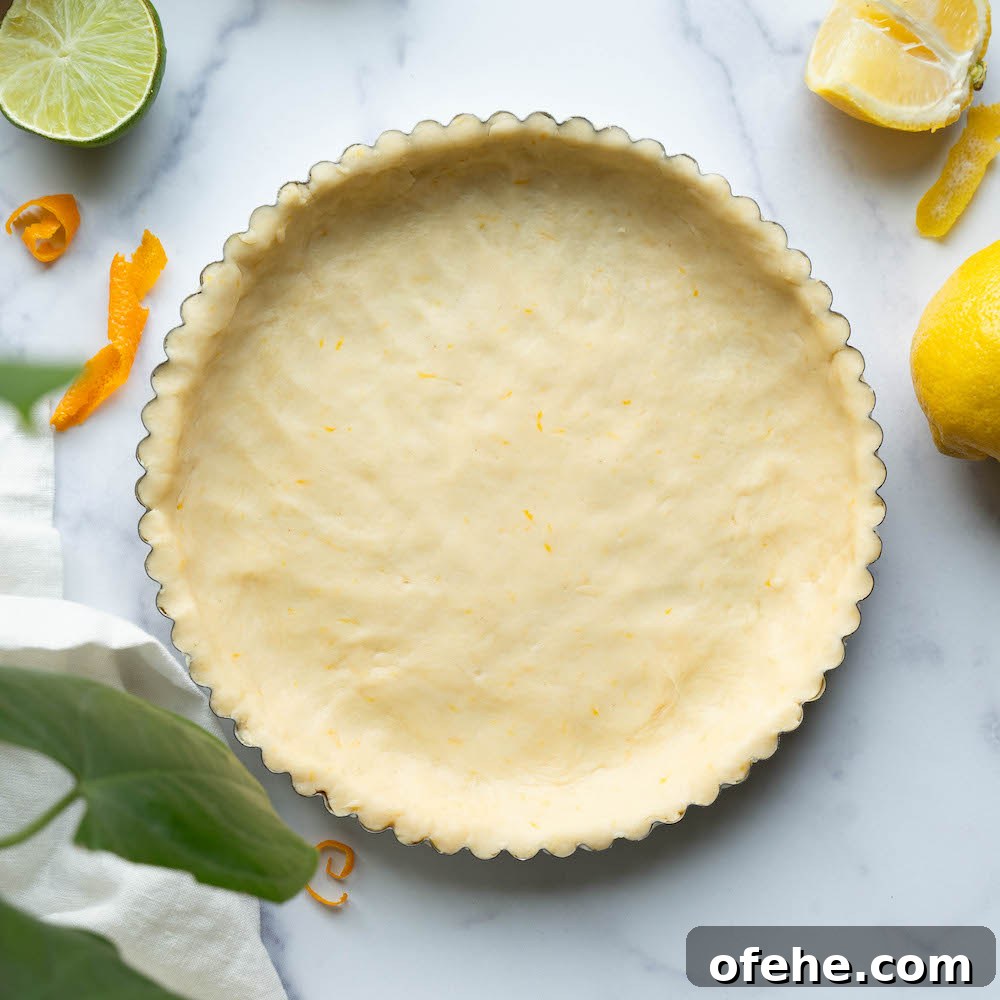
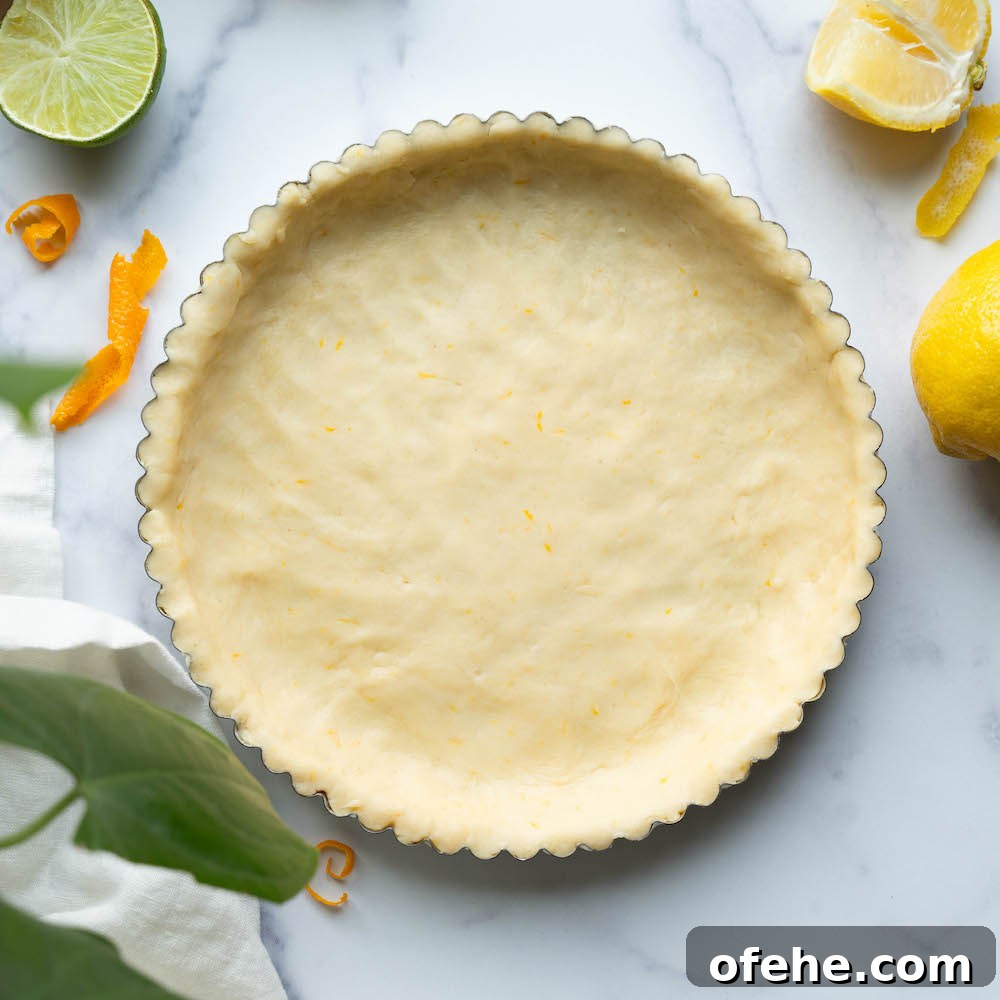
This citrus shortbread tart crust is buttery, tender, and ideal for tarts filled with curd, pastry cream, or whipped fillings. The recipe is straightforward and requires only a few pantry ingredients. One of the nicest things about this dough is you do not need to roll it out: simply break it into pieces and press it directly into your tart pan with your fingers for an even, rustic crust.
Making a reliable tart crust at home is easier than it looks when you follow a few simple techniques. With a little attention to texture and temperature, you can create a crust that is both sturdy and delectably melt-in-the-mouth.
Below are seven key tips I use every time I make a shortbread tart crust. These suggestions help ensure consistent results and a great flavor profile that complements a variety of tart fillings.
1. Use ingredients that pack a lot of flavor
Flavor matters in a plain tart crust because the crust often plays a supporting role to the filling. Add fresh citrus zest and a small amount of fresh juice to brighten the dough. Other impactful additions include browned butter for a nutty depth, good-quality vanilla extract, finely ground toasted nuts for texture and aroma, or a pinch of instant espresso powder for a subtle lift in baked chocolate tarts.
2. Let your butter get super soft and creamy
Softened butter makes the dough easier to combine without overworking. Bring the butter to a very soft, spreadable consistency — similar to mayonnaise — so it creams smoothly with the sugar. This gentle creaming gives the dough a light, tender texture while avoiding the toughness that comes from working cold, hard butter into the flour too aggressively.
3. Add a bit of cornstarch to your flour
Replacing a portion of the flour with cornstarch (or another non-gluten starchy flour) softens the crumb and creates a pleasantly delicate, melt-in-the-mouth texture. Cornstarch, rice flour, or potato starch all help shortbread stay tender while still providing structure to the finished crust.
4. Don’t overwork your dough
Overmixing develops gluten and will make the crust tough. Combine ingredients with a light hand, add only the amount of flour needed, and stop as soon as the dough comes together. The dough should hold without being firm; shortbread is meant to be tender, not dense.
5. Press your dough into the tart pan instead of rolling it out
This recipe is designed to be pressed into the pan rather than rolled. Break the shortbread into pieces and distribute them around the tart pan. Use your fingers and the heel of your hand to press the dough evenly across the bottom and up the sides. Take your time to smooth and level the crust so thickness is consistent around the pan.
6. Chill before baking
Chilling the shaped dough is essential to prevent shrinkage in the oven. A shortbread crust has a high fat content, and warming fat melts quickly, causing the crust to slump. To firm the dough, place the tart pan lined with parchment and filled with pie weights or dried beans into the freezer for 20–30 minutes. This step helps the crust hold its shape when it hits the heat of the oven.
7. Par-bake it with beans or pie weights
Par-baking with weights prevents the crust from puffing and maintains its defined edges. Lay a piece of parchment over the chilled crust, press it into the sides and base, and fill the lined shell with pie weights or dried beans. Bake until the edges are golden and the base is mostly set, then remove the weights and parchment and return the shell to the oven for a few minutes to finish browning and ensure the bottom is fully baked.
Bonus tip: For very moist fillings, brushing the baked crust with lightly beaten egg white and baking briefly can create a thin seal that helps protect the crust from sogginess.
This method is intended for tart shells that will receive a separately prepared filling such as curd or a chilled cream. If you plan to bake a tart with the filling in the shell, reduce the par-bake time so the crust can finish baking with the filling.
Ideas for fillings that work beautifully with this shortbread crust include citrus curds, fruit curds like grapefruit or mango, pastry cream with fresh fruit, chocolate ganache, or a lemon and olive oil custard. Because the crust is sturdy yet tender, it pairs well with both bright, acidic curds and rich, creamy fillings.
Citrus Shortbread Tart Crust
Ingredients
- 1/3 cup powdered sugar
- 4 ounces unsalted butter, very soft
- 1 cup all-purpose flour
- 1/4 cup cornstarch
- 1/4 teaspoon salt
- 2 tablespoons fresh orange, lemon, or grapefruit juice
- 1 tablespoon orange, lemon, or grapefruit zest
Instructions
- In a large bowl, cream the softened butter with the powdered sugar and citrus zest until the mixture is well combined and fluffy.
- Add the flour, cornstarch, and salt, and mix gently until just combined.
- Stir in the fresh citrus juice until the dough comes together. Avoid overmixing.
- Butter a 9-inch tart pan. Break the shortbread dough into small pieces and distribute them evenly across the bottom of the pan. Use your fingers and the palm of your hand to press the dough into an even layer on the base and up the sides, all the way to the rim.
- Cover the shaped dough with a sheet of parchment and fill with pie weights or dried beans. Freeze the tart for at least 20 minutes to firm the dough.
- Preheat the oven to 375°F (190°C). Bake the tart shell with the weights until the edges are golden and the base is mostly set, about 22–27 minutes. Carefully remove the parchment and weights, reduce the oven temperature to 325°F (160°C), and bake for an additional 5–8 minutes until the bottom is fully baked and lightly golden.
- Allow the crust to cool completely in the pan before filling.
Did you try this recipe?
Be sure to leave a comment below!