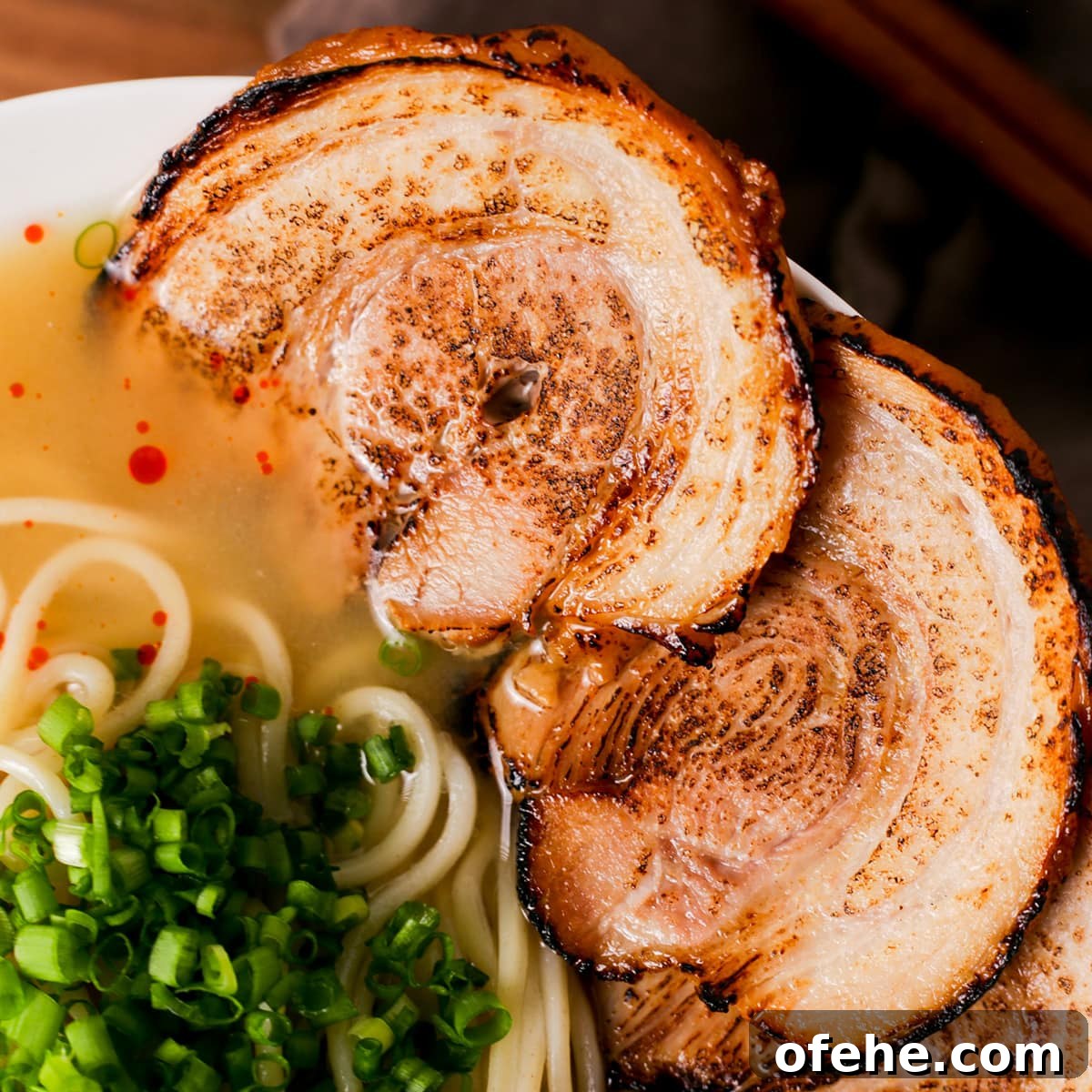
Chashu, or Japanese braised pork belly, is typically sliced thin and lightly charred. Slowly braised in a sweet-savory soy-based liquid until tender yet juicy, it’s an essential ramen topping alongside ajitama (ramen eggs). Chashu is straightforward to make at home, and the leftover braising liquid is highly versatile for stir-fries, soups, marinades, and more.
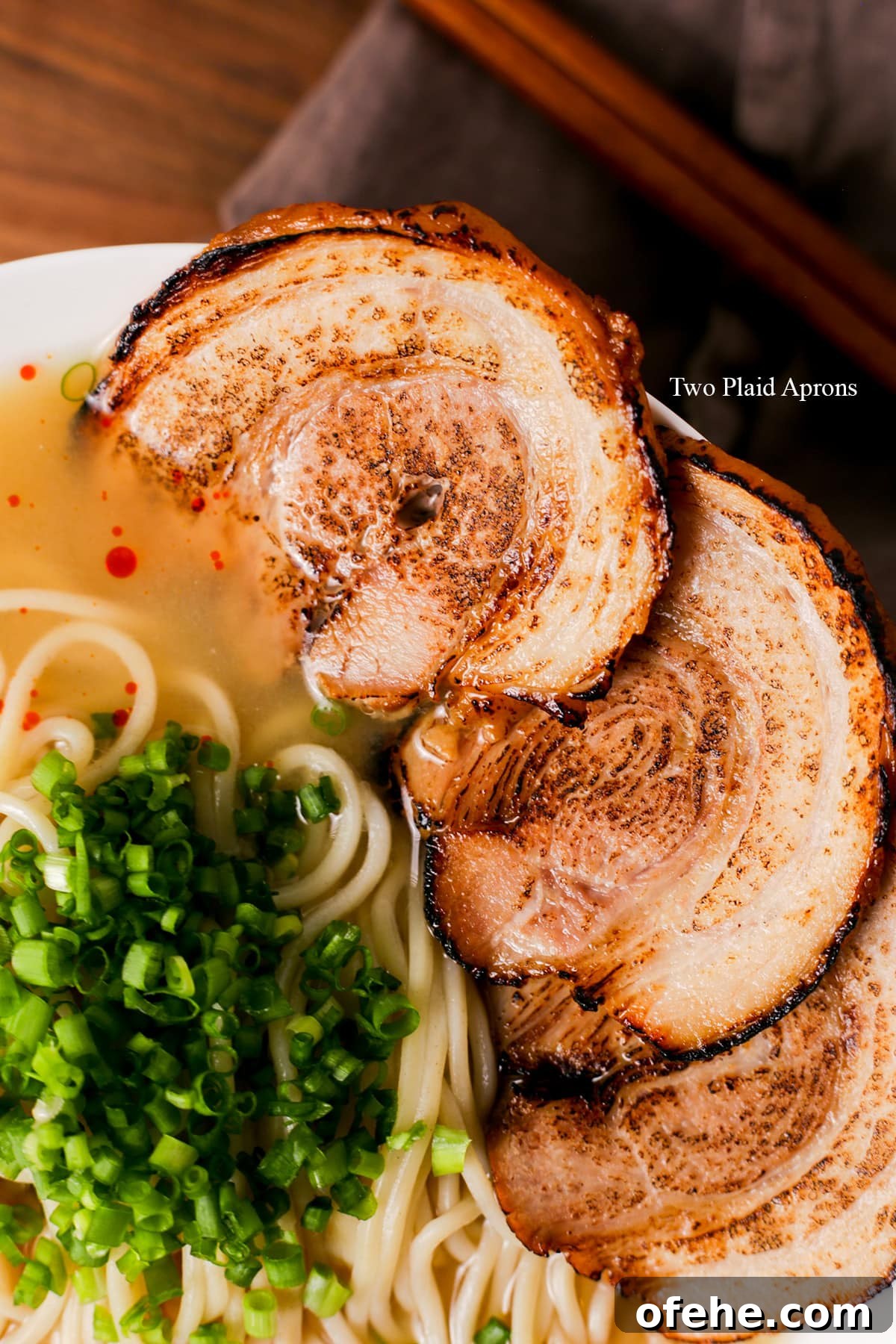
What is chashu?
Chashu is Japan’s adaptation of Chinese char siu (BBQ roast pork). Unlike the roasted Chinese version, Japanese chashu is braised in a soy-forward, sweet-and-salty liquid until tender. After braising the rolled pork belly is usually chilled, sliced paper-thin, and served atop ramen, in rice bowls, or as a side with some reduced braising liquid.
Ingredients needed
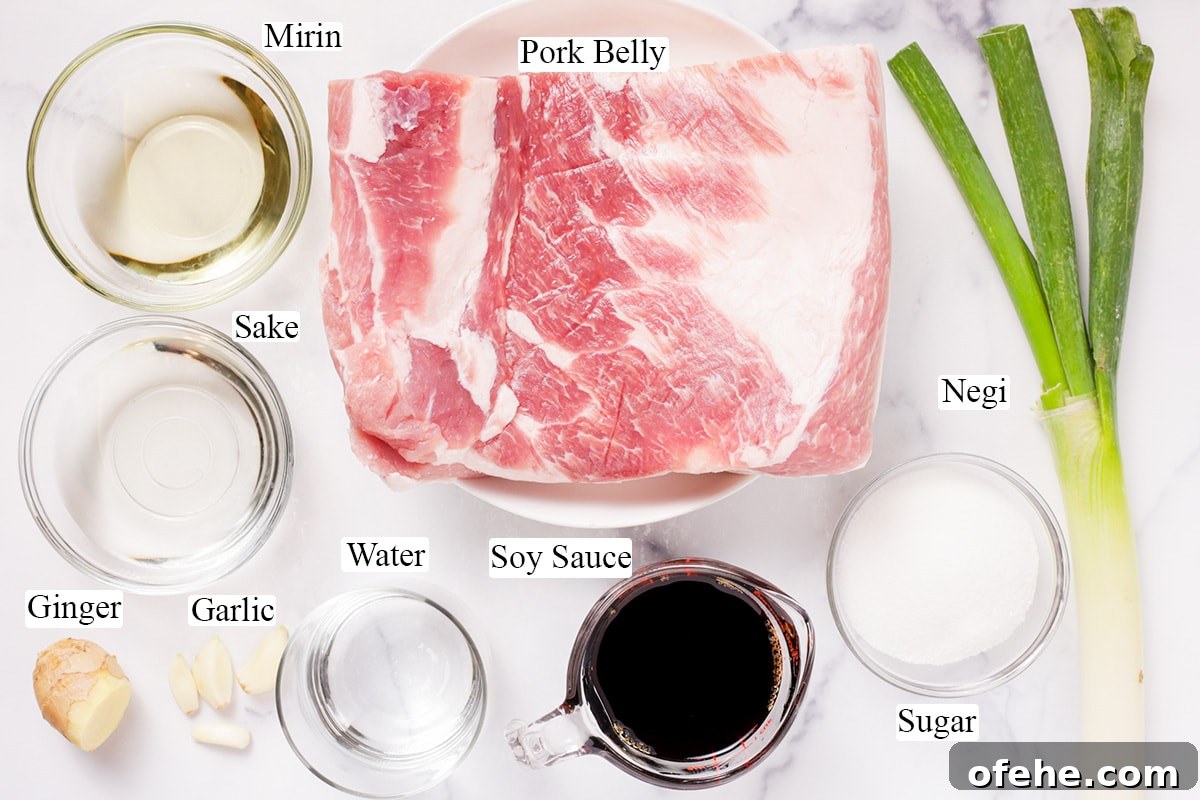
Please see the recipe card below for exact quantities.
- Pork belly – Skinless is recommended for a tender bite, though you may leave the skin on if preferred. Choose a piece with an even thickness and a good fat-to-lean ratio so it cooks uniformly and stays juicy.
- Soy sauce, sake, mirin, sugar, water – These form the sweet-savory braising liquid. Sake helps reduce any unwanted porky aroma and rounds out flavor.
- Negi, ginger, garlic – Negi is the long Japanese green onion; if unavailable, substitute leek tops or several green onion stalks. Ginger and garlic add depth and aroma.
How to make chashu
See the recipe card below for full ingredient amounts and timings.
Prep and braise
1. Roll and tie the pork belly. Roll the pork belly lengthwise into a tight log, fat side out, and secure it with butcher’s twine so it keeps its shape while cooking. If the piece is too long for your pot, cut it in half before rolling.
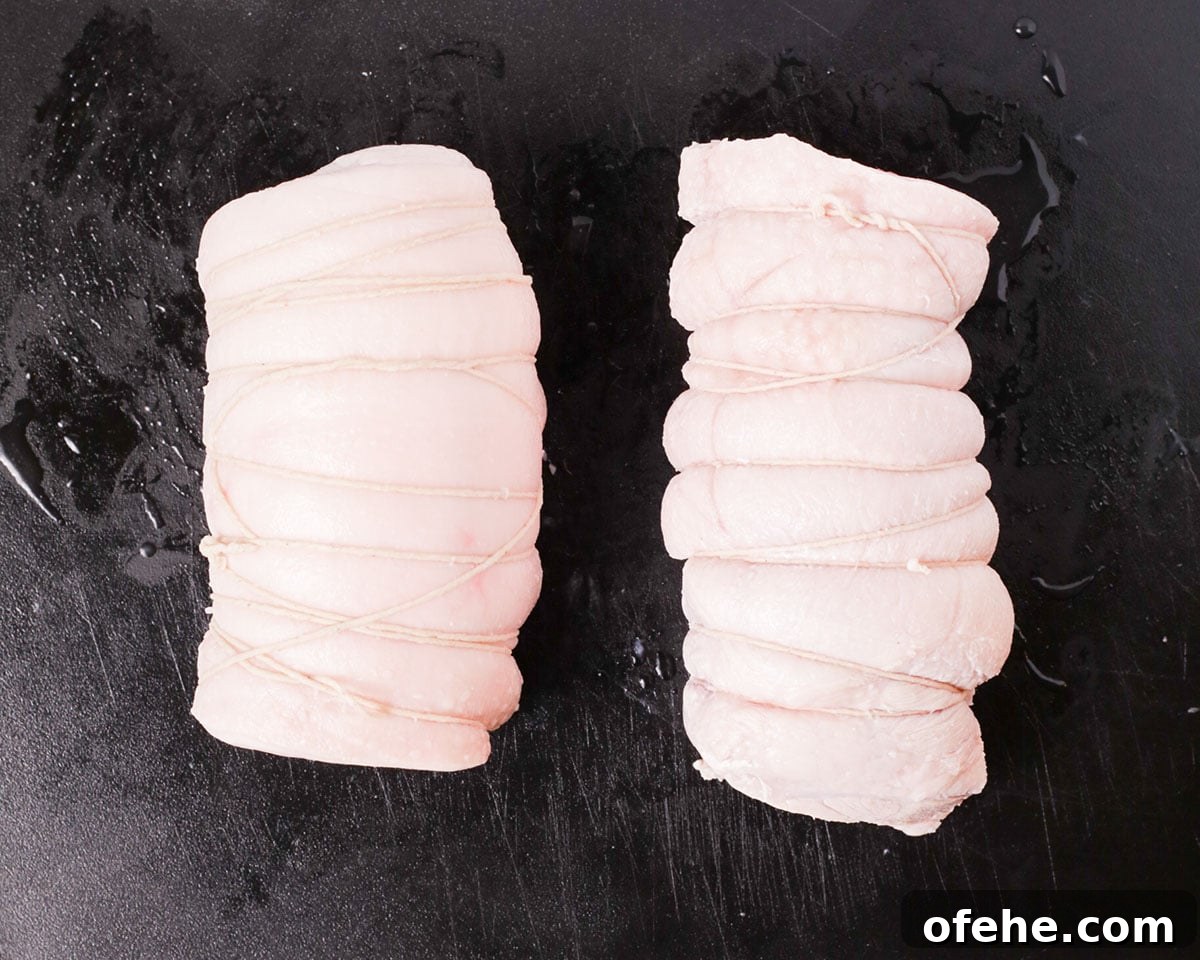
Pro tip: Use a pot just wide enough for the pork belly log so the braising liquid reaches the sides. If the pot is too large the liquid won’t cover enough of the meat.
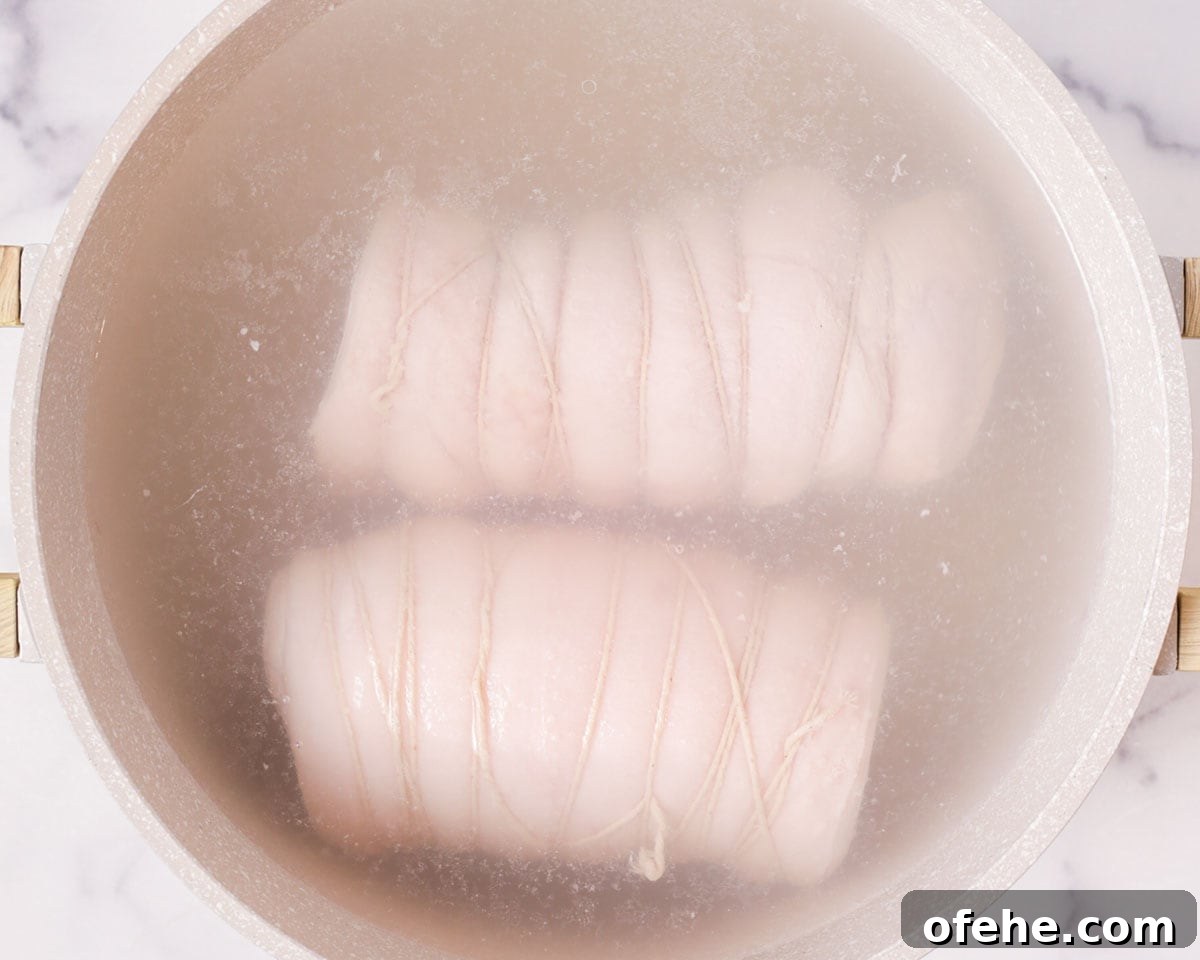
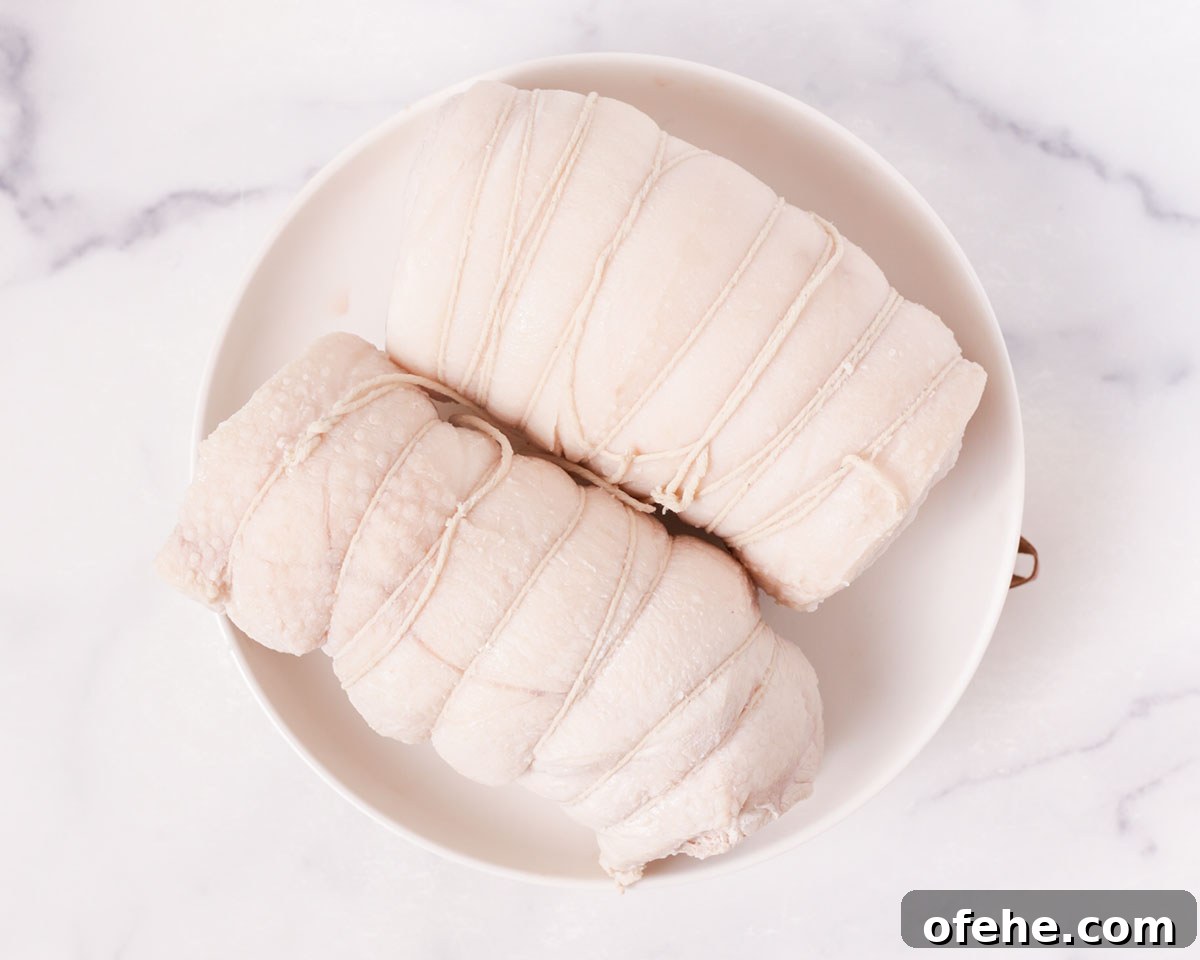
2. Blanch the pork belly. Place the rolled pork belly in a pot, cover with water, and bring to a boil. Remove the pork, pat it dry, and discard the blanching water. This removes impurities and results in a cleaner-tasting chashu.
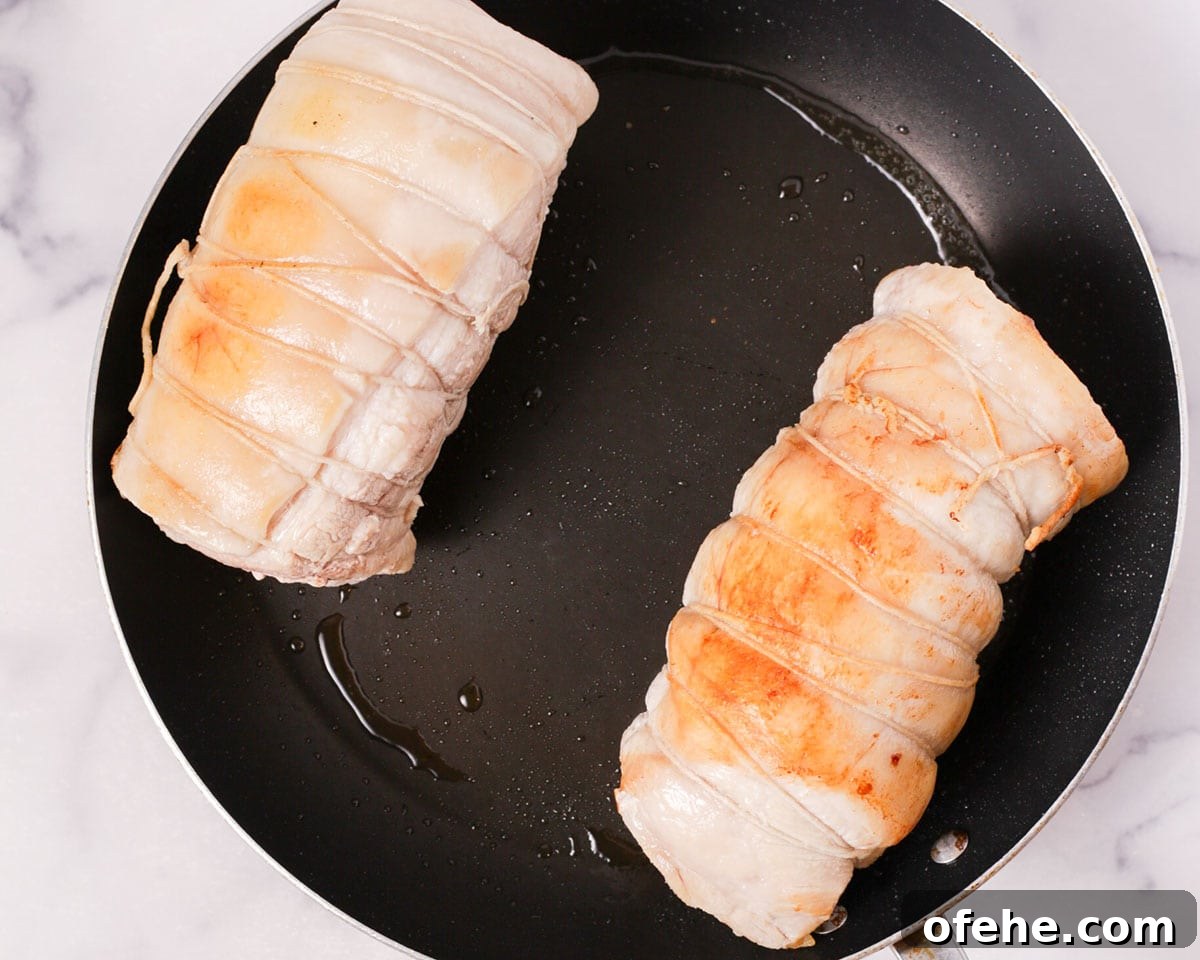
3. Sear the pork belly. In a nonstick pan over medium-high heat, sear the blanched pork until golden on all sides. No additional oil is needed because pork belly renders plenty of fat. Searing adds a pleasant caramelized flavor.
4. Braise the pork belly. Transfer the seared pork to a pot and add the braising liquid ingredients (water, soy sauce, sake, mirin, sugar) and aromatics (negi, sliced ginger, garlic). Bring to a gentle simmer, stir until the sugar dissolves, then soak a clean paper towel in the liquid and drape it over the pork to keep the top moist.
Keep the liquid at a low simmer and cook for about 2 hours for tender chashu with a slight chew, or 3 hours for melt-in-your-mouth texture. Rotate the pork every 30 minutes so it braises evenly.
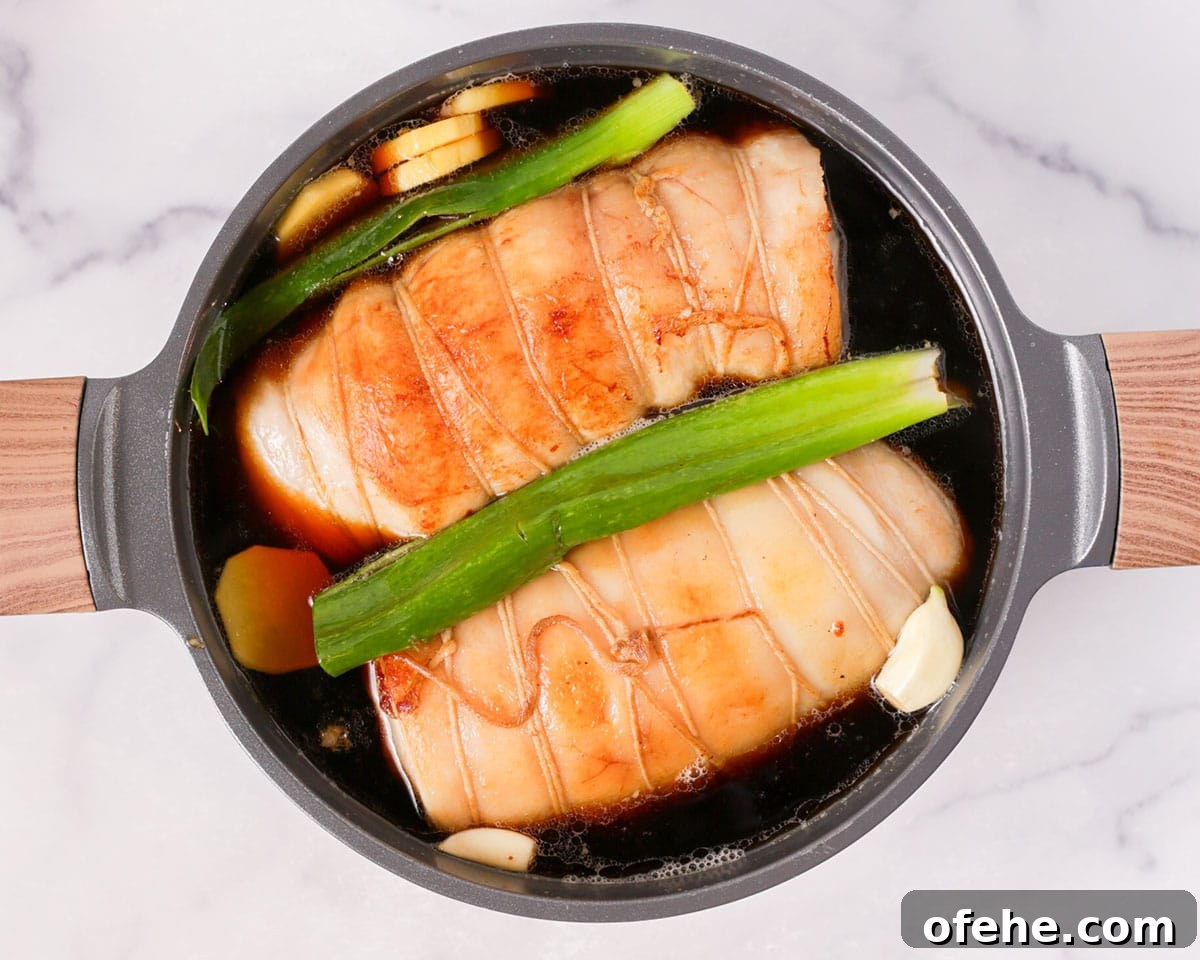
Pro tip: If the braising liquid drops more than halfway below the pork during cooking, add a bit of water and continue braising. Repeat as needed until the final 30 minutes.
Cool, cut, and serve
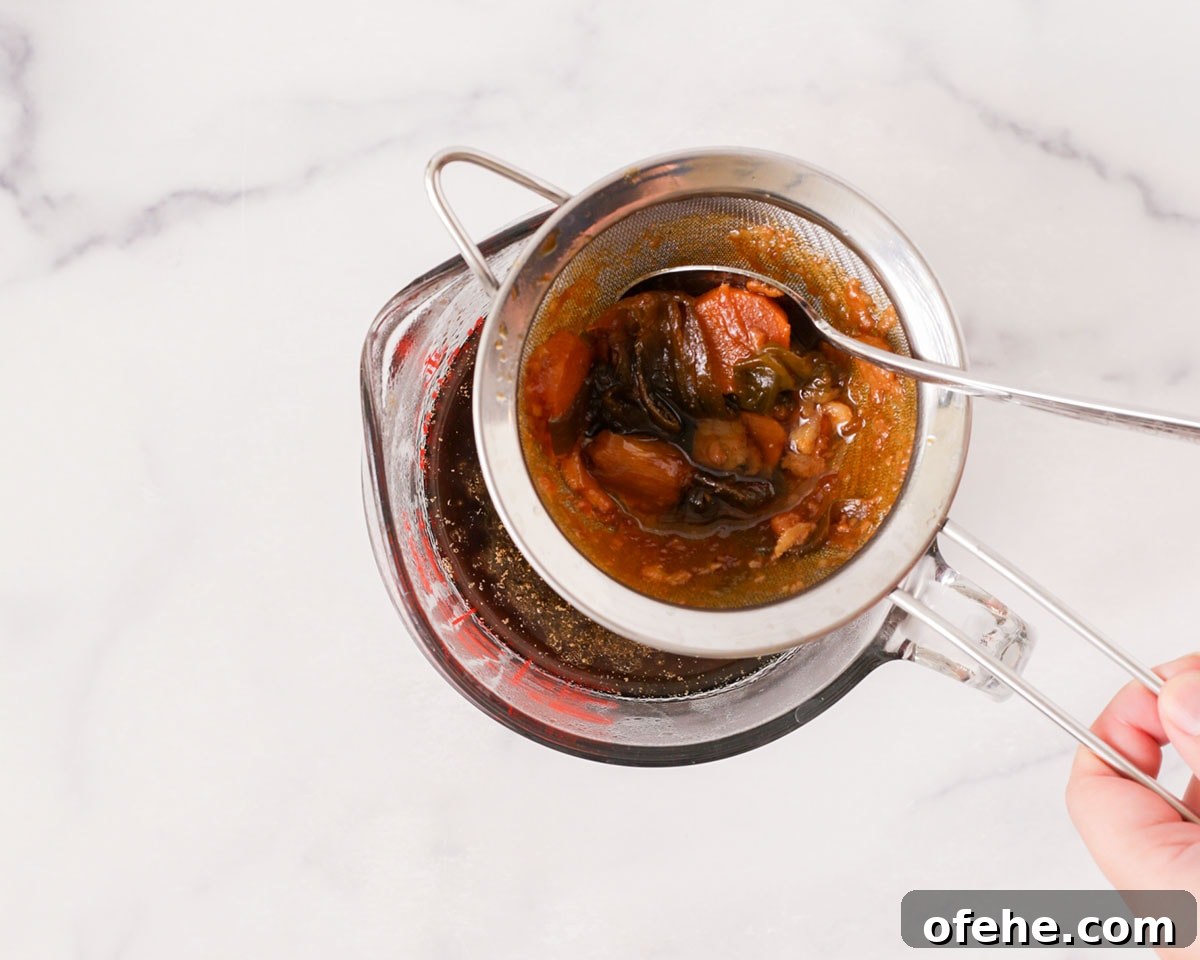
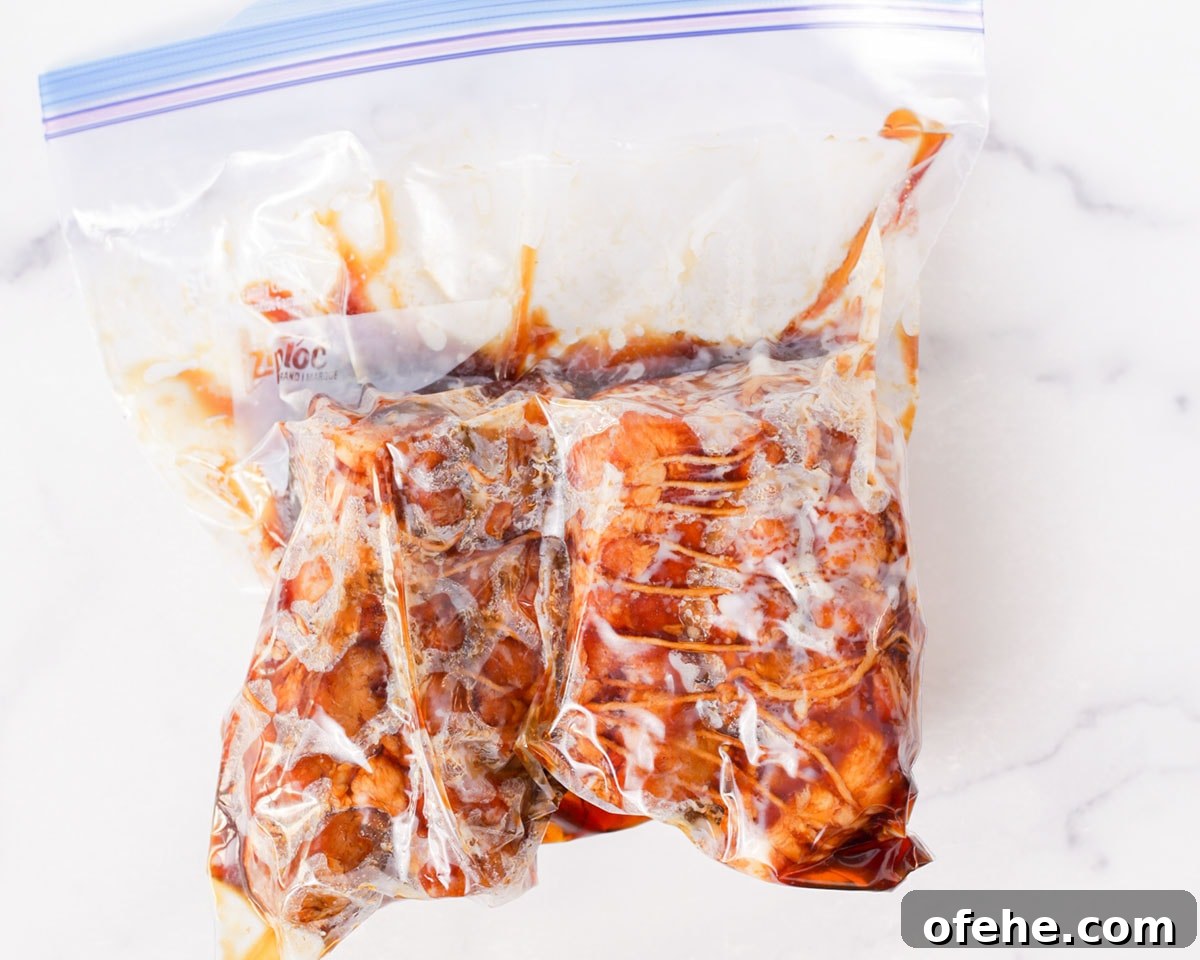
5. Chill. When braising is complete, remove the pork and strain the liquid, discarding the aromatics. Place the pork in a vacuum or resealable bag with about a cup of the strained liquid. Chill the bag in ice water until room temperature, then refrigerate at least 4 hours or overnight to firm up. This helps the chashu hold its shape and allows flavors to develop. Save the remaining braising liquid for other uses.
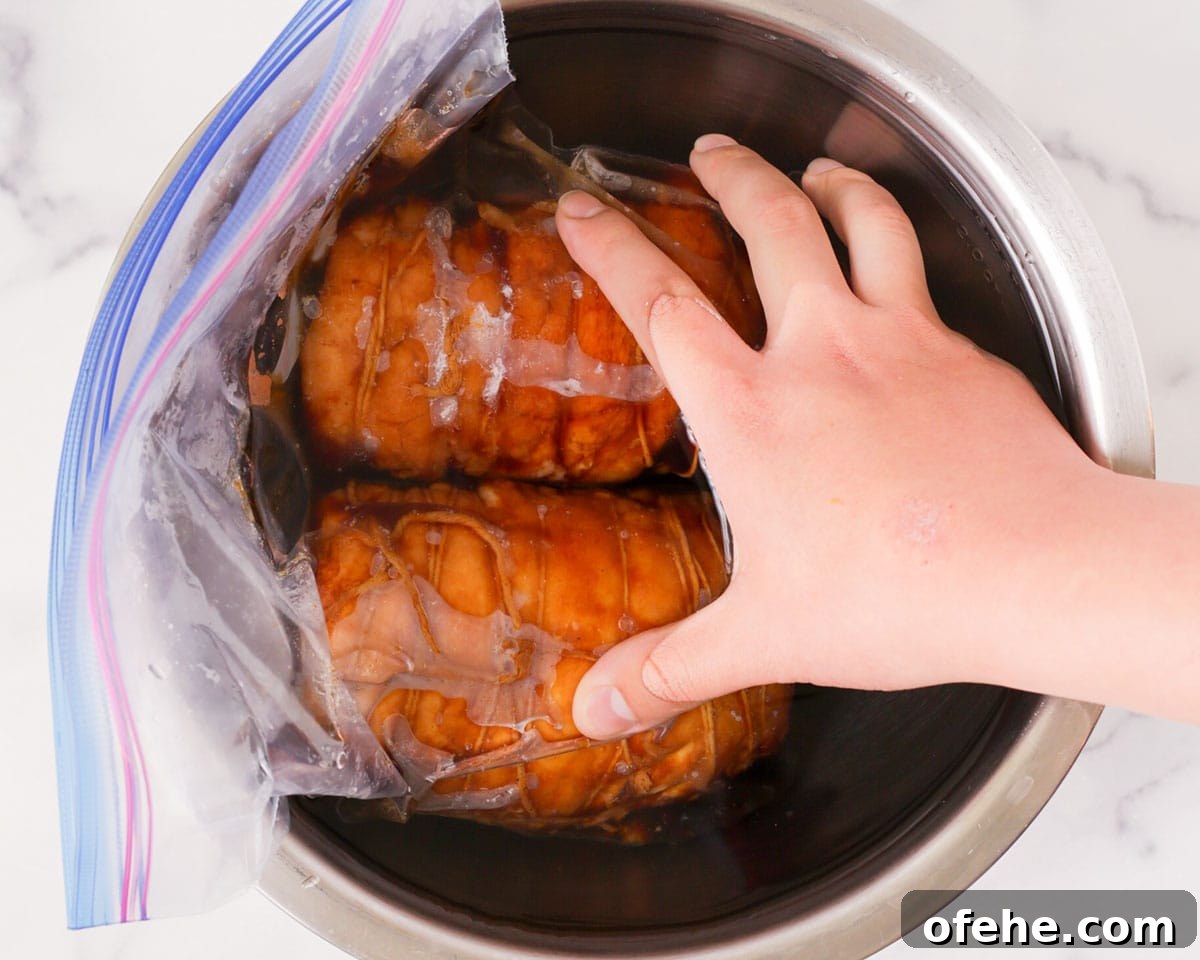
Pro tip: If you don’t have a vacuum sealer, use a resealable bag and a bowl of water to press out air: seal most of the bag, submerge it slowly to push air out, then finish sealing.
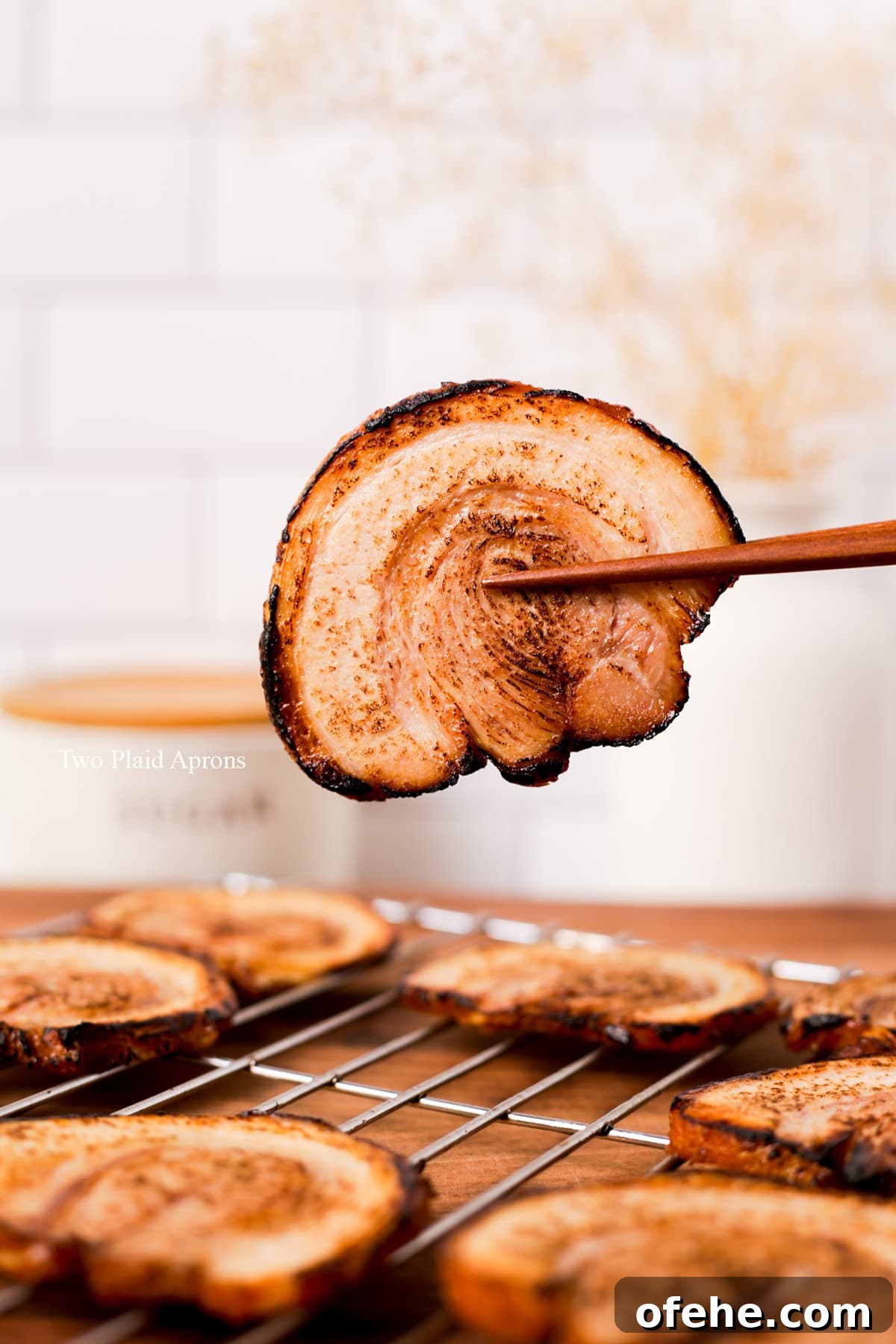
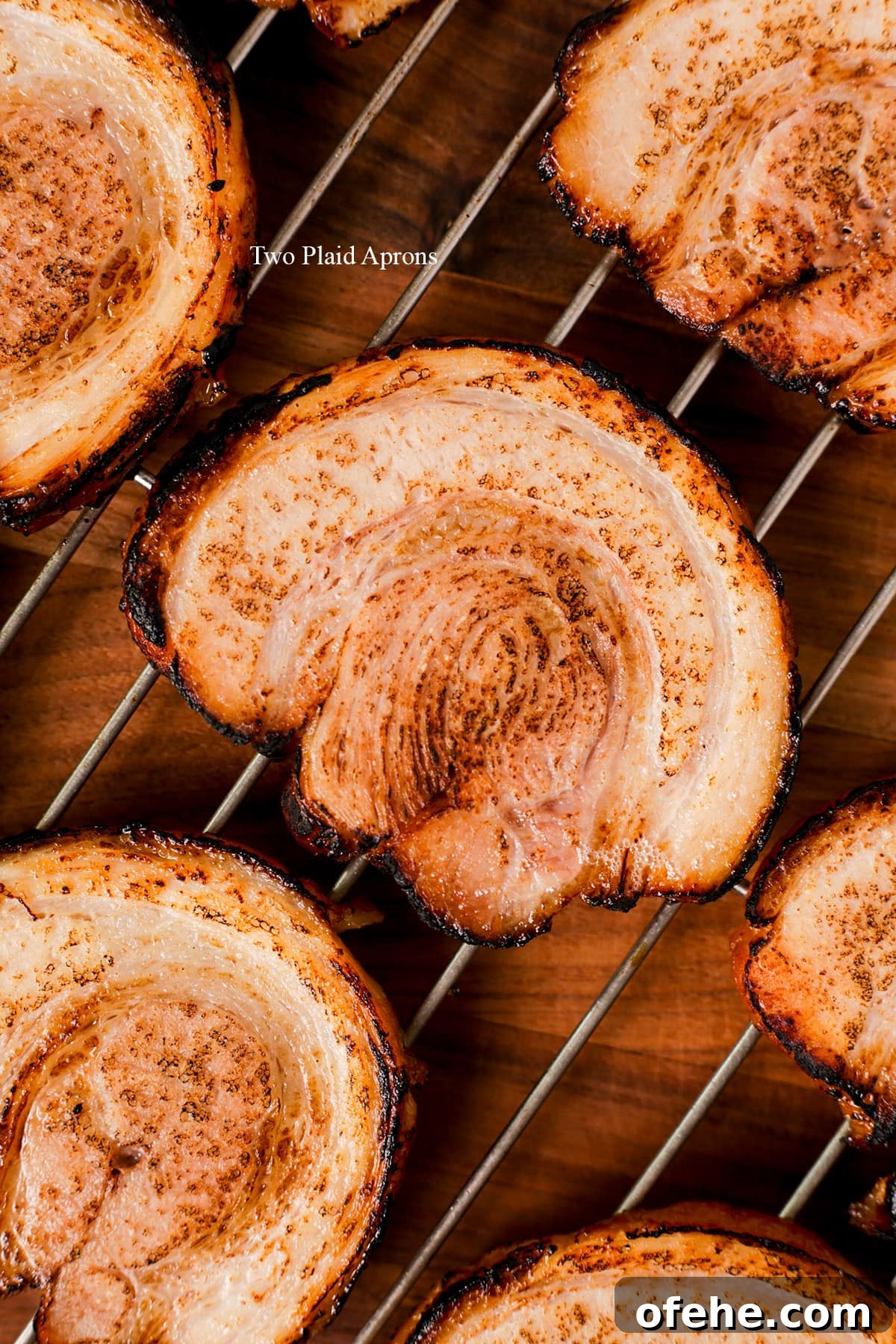
6. Cut and serve. Remove the twine, and slice the chilled pork no thicker than 1/8 inch (about 3 mm). Reheat slices briefly in hot broth, pan-sear, or use a kitchen torch to add a quick char before serving. Chashu is excellent over ramen or warm rice.
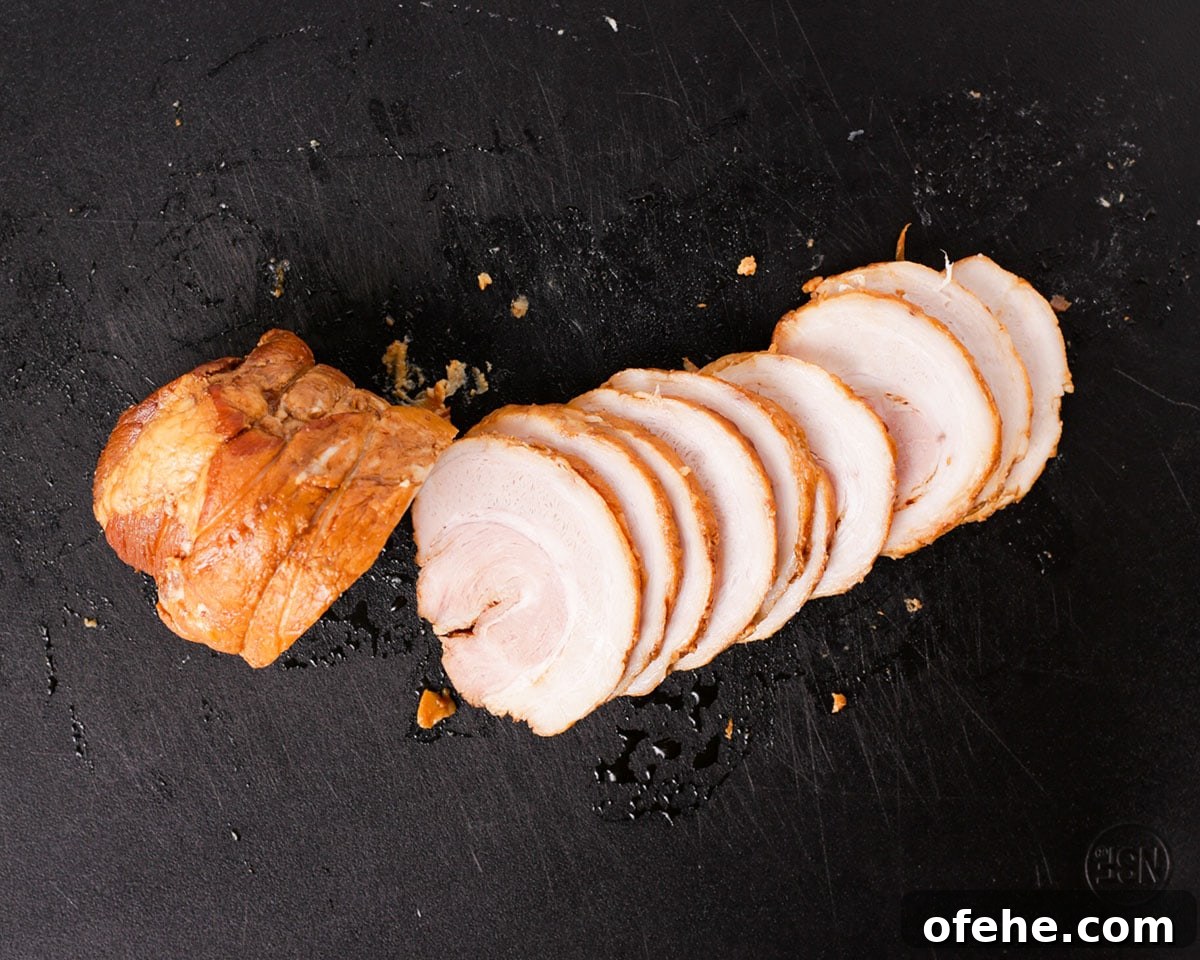
What to do with the leftover braising liquid?
The strained braising liquid is concentrated and flavorful. Skim excess fat from the top if you want a cleaner sauce. Popular uses include:
- Soup base – Use it as a ramen or noodle broth base, diluted with stock or bone broth to taste.
- Stir-fry sauce – Marinate proteins briefly and finish stir-fries with the braising liquid for rich savory flavor. Thicken with a cornstarch slurry (1:1 cornstarch to cold water) if desired.
- Fried rice – Use the reduced braising liquid to season fried rice instead of typical sauces; reduce first so rice doesn’t become soggy.
- Marinade – Soak soft-boiled eggs to make ajitama or marinate other proteins overnight.
Storage
Store chashu in the refrigerator for up to 4 days; let it cool completely before refrigerating. Vacuum sealing is ideal. For longer storage, slice the log into 2–4 portions, wrap tightly, and freeze in airtight containers for 2–3 months. Thaw in the fridge before slicing.
Strained braising liquid keeps in the fridge up to 2 weeks or frozen for up to 4 months — handy for quick sauces and marinades.
Reheating
Reheat slices briefly in hot braising liquid, in the broth you’ll serve with the ramen, or pan-sear/torch for a quick char. If frozen, thaw chashu overnight in the fridge before slicing and reheating.
If you make this recipe, consider sharing your results on Instagram with #twoplaidaprons — creators love seeing your photos!
📖 Recipe
Chashu (Japanese Braised Pork Belly)
Ingredients
- 4 lb pork belly, preferably skinless (about 9 x 7 in / 23 x 18 cm)
- 2 cups water
- 1 cup soy sauce
- 1/2 cup sake
- 1/2 cup mirin
- 1/2 cup sugar
- 1 stalk negi (green part only) or 2–3 green onions
- 2 inches ginger, sliced
- 4 cloves garlic
Instructions
- Prepare the pork: Trim skin if present. Roll the pork belly lengthwise into a tight log (fat side out) and tie with butcher’s twine. If it’s too long for your pot, cut in half before rolling.
- Blanch: Place the roll in a pot, cover with water, and bring to a boil. Remove the pork, pat dry, discard the water, and clean the pot.
- Sear: Sear the blanched pork in a nonstick pan over medium-high heat until golden all over. Place into the braising pot.
- Braise: Add water, soy sauce, sake, mirin, sugar, negi, ginger, and garlic. Bring to a simmer and stir until sugar dissolves. Soak a clean paper towel in the liquid and drape it over the pork to keep the top moist. Simmer gently for 2 hours (for a bit of bite) or 3 hours (very tender), rotating the roll every 30 minutes. Add water if the liquid falls more than halfway below the pork.
- Cool: Strain the braising liquid, discard aromatics, and place the pork in a vacuum or resealable bag with about 1 cup of the strained liquid. Chill in ice water until room temperature, then refrigerate at least 4 hours or overnight to firm up.
- Slice and serve: Remove twine, slice no thicker than 1/8 inch (3 mm). Reheat briefly in hot broth, pan-sear, or torch for a char. Serve over ramen or rice.
Notes
- Serving size is estimated from a 9-inch pork belly sliced into 1/8-inch pieces, yielding about 16 portions.
- Choose a pork belly with an even distribution of fat and meat and consistent thickness for the best results.
Recommended equipment
- Liquid measuring cup
- Butcher’s twine
- Nonstick pan
- Plastic cutting board
Nutrition (approx.)
Serving: 4 slices | Calories: 598 kcal | Protein: 10.6 g | Fat: 60.1 g