
Eggs in Purgatory is a rustic Italian dish of eggs gently poached in a savory tomato sauce. Simple to prepare and full of flavor, it’s a versatile one-skillet brunch or weeknight meal. The only essential accompaniment is a crusty bread for sopping up the sauce and runny yolks.

Also called Uova al Purgatorio or the Italian take on shakshuka, this recipe feels special while staying easy. Shakshuka has North African origins and commonly features tomatoes, peppers, cumin, and paprika; the Italian version pares the flavors down to pantry staples—tomatoes, garlic, onion, olive oil, and fresh herbs—to make a bright, rustic sauce that showcases the eggs.
The evocative name comes from the eggs nestled in bubbling red sauce, often likened to souls suspended between heaven and hell. It’s dramatic, but the result is comforting and addictive rather than ominous—perfect for sharing at brunch or enjoying for a cozy dinner.
Key ingredients and substitutions
Minimal, accessible ingredients deliver maximum flavor. Swap or omit items to suit what you have on hand.

- Canned tomatoes – Whole canned tomatoes give the best texture and flavor; crush them by hand or in the skillet.
- Onion – Yellow or white onion adds sweetness; shallots work well too.
- Garlic – Fresh garlic is classic; roasted garlic can be used if you have some.
- Herbs & spices – Dried oregano, fresh basil, and parsley are excellent. Season with salt and pepper.
- Heat (optional) – Crushed red pepper or Calabrian chile paste adds warmth. Omit if you prefer mild flavors.
- Eggs – Any size works; cook to your preferred yolk doneness.
- Olive oil – For sautéing and flavor.
- Bread – A crusty Italian loaf, baguette, sourdough, or focaccia is ideal for dipping.
The full ingredient list and amounts appear in the recipe card below.
Step-by-step instructions
This one-skillet dish comes together in about 30 minutes. If you’ve made a simple tomato sauce before, you’ll be right at home.
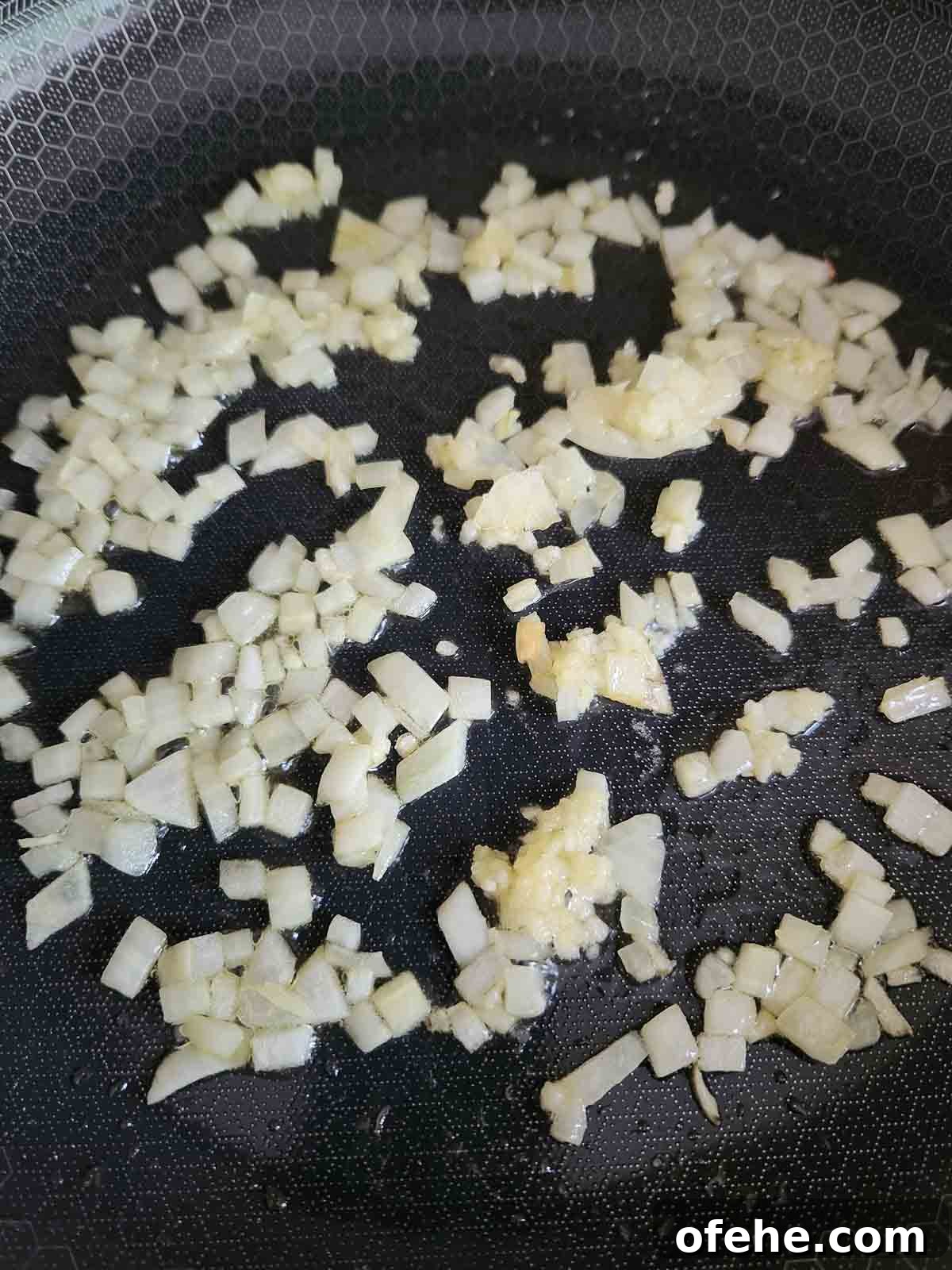
Step 1. In a large skillet over medium heat, sauté the chopped onion in olive oil until softened, about 4–5 minutes. Add minced garlic and cook 30 seconds without browning.
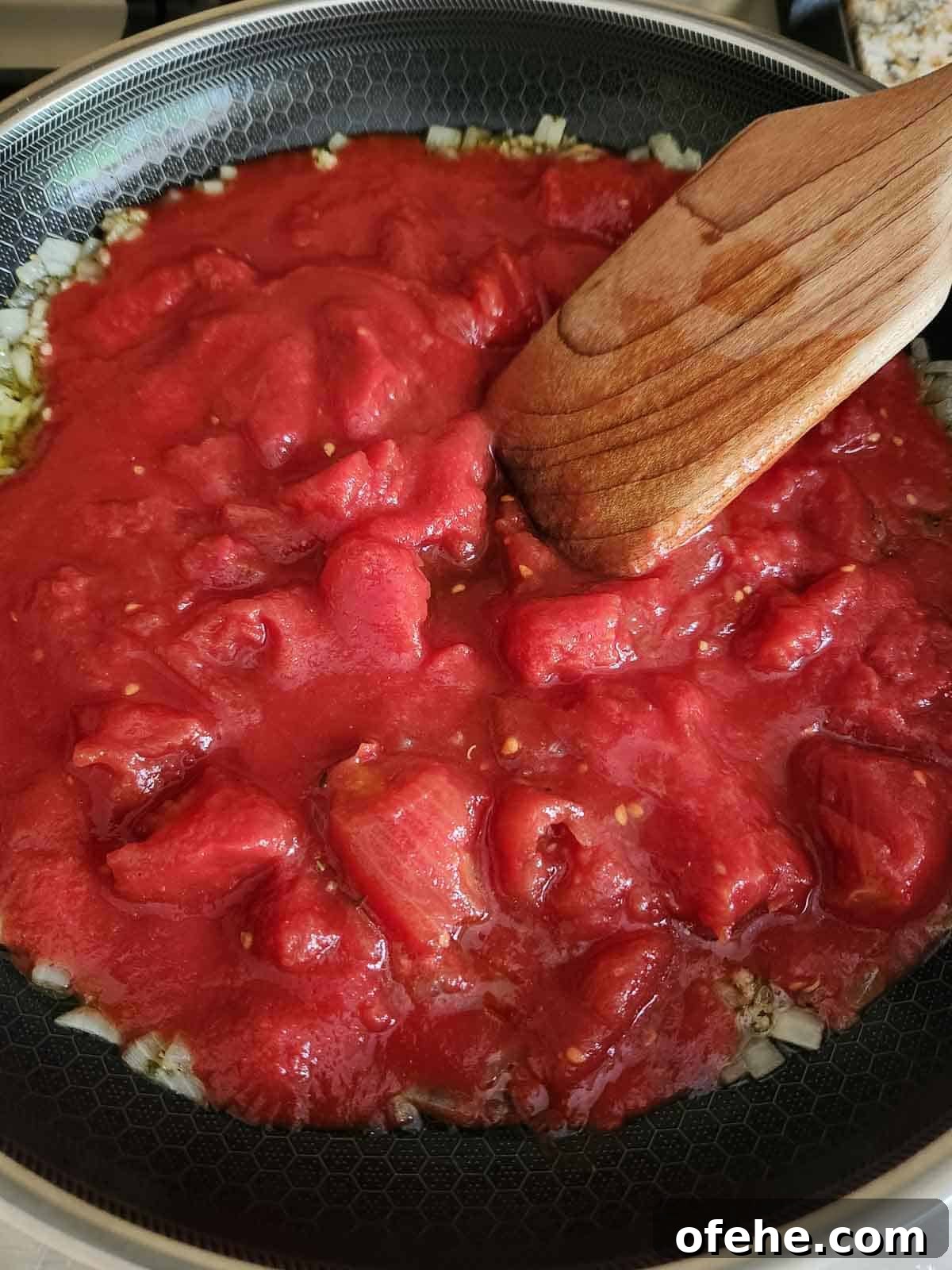
Step 2. Stir in the canned tomatoes, breaking up whole tomatoes with the back of a spoon or spatula.
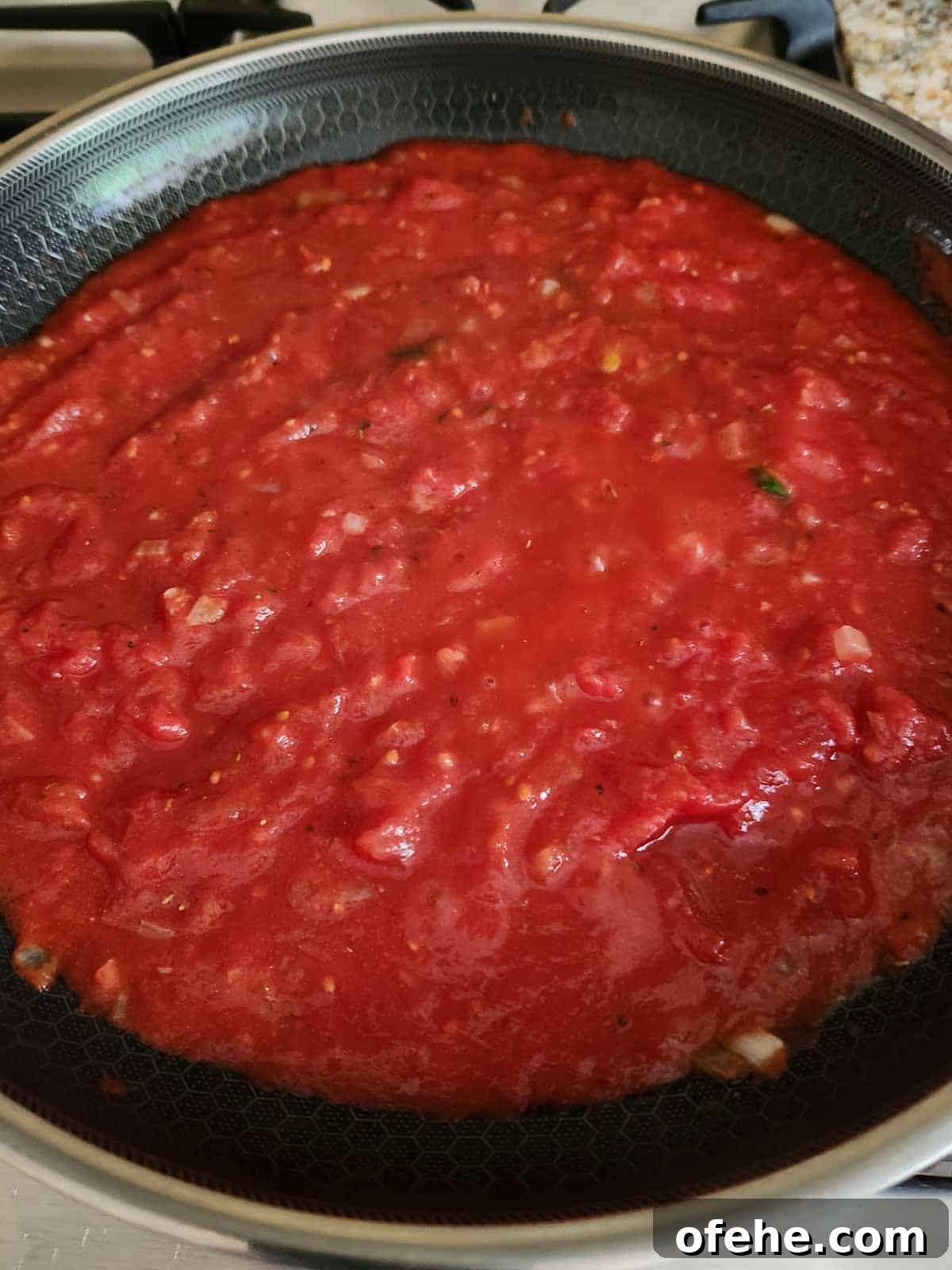
Step 3. Add salt, pepper, oregano, chopped basil, and chili if using. Reduce heat to medium-low and simmer, uncovered, stirring occasionally until the sauce thickens.
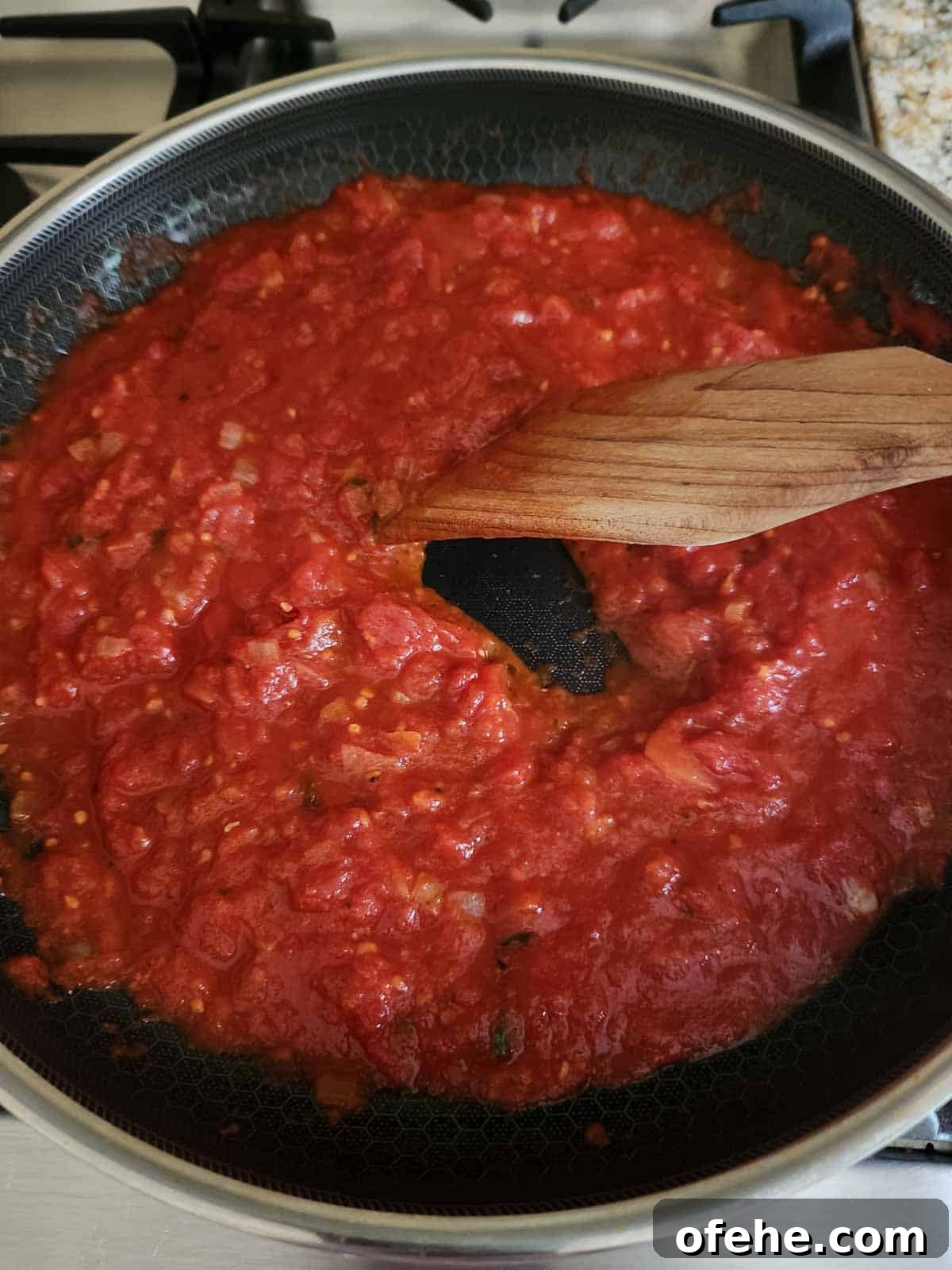
Step 4. Test the sauce by swiping a spoon through it—if the sauce holds its shape and doesn’t run back immediately, it’s ready.

Step 5. Make 5–6 small wells in the sauce around the skillet and gently slip an egg into each well. Season the eggs with a little salt and pepper.

Step 6. Cover the skillet and cook on low until whites are set and yolks reach your desired doneness, about 5–8 minutes.
*These are the condensed steps; see the recipe card below for exact ingredient amounts and full directions.
Expert tips
- Use whole canned tomatoes when possible; they preserve flavor and let you control sauce texture.
- Crack eggs into small bowls first. This makes it easy to remove any shell fragments and helps you add eggs quickly so they cook evenly.
- Toast or pan-fry your bread. Brushing slices with olive oil and toasting in a skillet adds crunch and flavor—slice on the diagonal for a nicer presentation.
Variations
Eggs in Purgatory adapts well to additions and swaps—try any of the ideas below.
- Extra vegetables: Sauté bell peppers with the onions or add mushrooms, peas, or cubed eggplant.
- Add protein: Browned sausage, ground pork, or turkey make the sauce heartier.
- Different spices: Try sage, cumin, or smoked paprika for new flavor profiles.
- Caponata version: Swap the tomato sauce for eggplant caponata and poach the eggs in that savory mixture.
- Use leftovers: Spoon leftover chili or a prepared tomato-based stew into the skillet and poach eggs right in it.
If you’re short on time, a good-quality jarred tomato sauce works—brighten it with fresh basil or parsley before adding the eggs.

Serving suggestions
Serve immediately with plenty of crusty bread for dunking. Good alternatives include baguette, sourdough, focaccia, pita, or naan—toast first for best texture. Leftovers can be served over roasted potatoes or polenta for a hearty twist.
Storage
Eggs in Purgatory is best enjoyed fresh but can be refrigerated for up to 2 days. Reheat gently on the stovetop in a skillet or in short bursts in the microwave; reheating will further firm the eggs, so plan for slightly less runny yolks.

Frequently asked questions
No worries—keep simmering the sauce uncovered on medium-low until excess liquid evaporates and it thickens. Cooking time varies with skillet size and the brand or type of canned tomatoes.
More cozy recipes
Warm, comforting recipes that pair well with this dish.
 Cherry Tomato Confit with Garlic and Thyme
-
Baked Brioche French Toast
-
Honeycrisp Applesauce with Brown Sugar and Cinnamon
-
Blackberry Boursin Grilled Cheese




Made this recipe? I’d love to hear about it. Please leave a rating and comment below the recipe. If you snapped a photo, tag @brunchandbatter on Instagram so I can see your creation!
Recipe

Eggs in Purgatory (Poached Eggs in Tomato Sauce)
Equipment
- Large skillet with a lid
- Small bowls or ramekins for cracking eggs (optional)
Ingredients
- 1 tablespoon extra virgin olive oil
- 1/3 cup chopped yellow onion
- 2 large garlic cloves, minced
- 1 (28-ounce) can whole or crushed tomatoes
- 1/2 teaspoon kosher salt, plus more to taste
- 1/4 teaspoon freshly ground black pepper, plus more to taste
- 1/4 teaspoon dried oregano
- 1/2 teaspoon Calabrian chile paste or 1/4–1/2 teaspoon crushed red pepper flakes (optional)
- 2 large fresh basil leaves, chopped, plus more for garnish
- 5–6 eggs (any size)
- 1 tablespoon chopped fresh parsley for topping
- Grated Parmesan or Pecorino Romano for serving (optional)
- Italian or French bread, toasted, for serving
Instructions
- Heat the olive oil in a large skillet over medium heat. Sauté the chopped onion until softened, about 4–5 minutes. Add the garlic and cook 30 seconds without browning.
- Add the canned tomatoes, breaking up whole tomatoes with your spoon. Stir in salt, pepper, oregano, chopped basil, and chili if using. Reduce heat to medium-low and simmer uncovered until the sauce thickens—test by swiping a spoon through the sauce; when it holds its shape, it’s ready. Taste and adjust seasoning.
- Prepare the eggs by cracking each into a small bowl or ramekin (optional). Make 5–6 wells around the skillet and gently slip an egg into each well. Season the eggs and cover the skillet. Cook on low until the whites are set and yolks reach desired doneness, about 5–8 minutes.
- Serve immediately topped with extra basil and parsley, grated cheese if desired, and plenty of toasted bread for dipping.
Notes
- Whole tomatoes are more flavorful: Choose whole canned tomatoes when possible for better texture and flavor control.
- Crack eggs into bowls: This reduces mess, prevents shell bits, and helps you add eggs quickly so they cook evenly.
- Toast your bread: Pan-frying slices in a little olive oil adds crunch and flavor; cut on the diagonal for a nicer look.
Nutrition*
Serving: 2 eggs with sauce (without bread). Calories: 42 kcal. Values are estimates and will vary by ingredients and portion sizes.
Made this recipe? Leave a comment and a star rating below. If you snapped a photo, tag @brunchandbatter on Instagram!