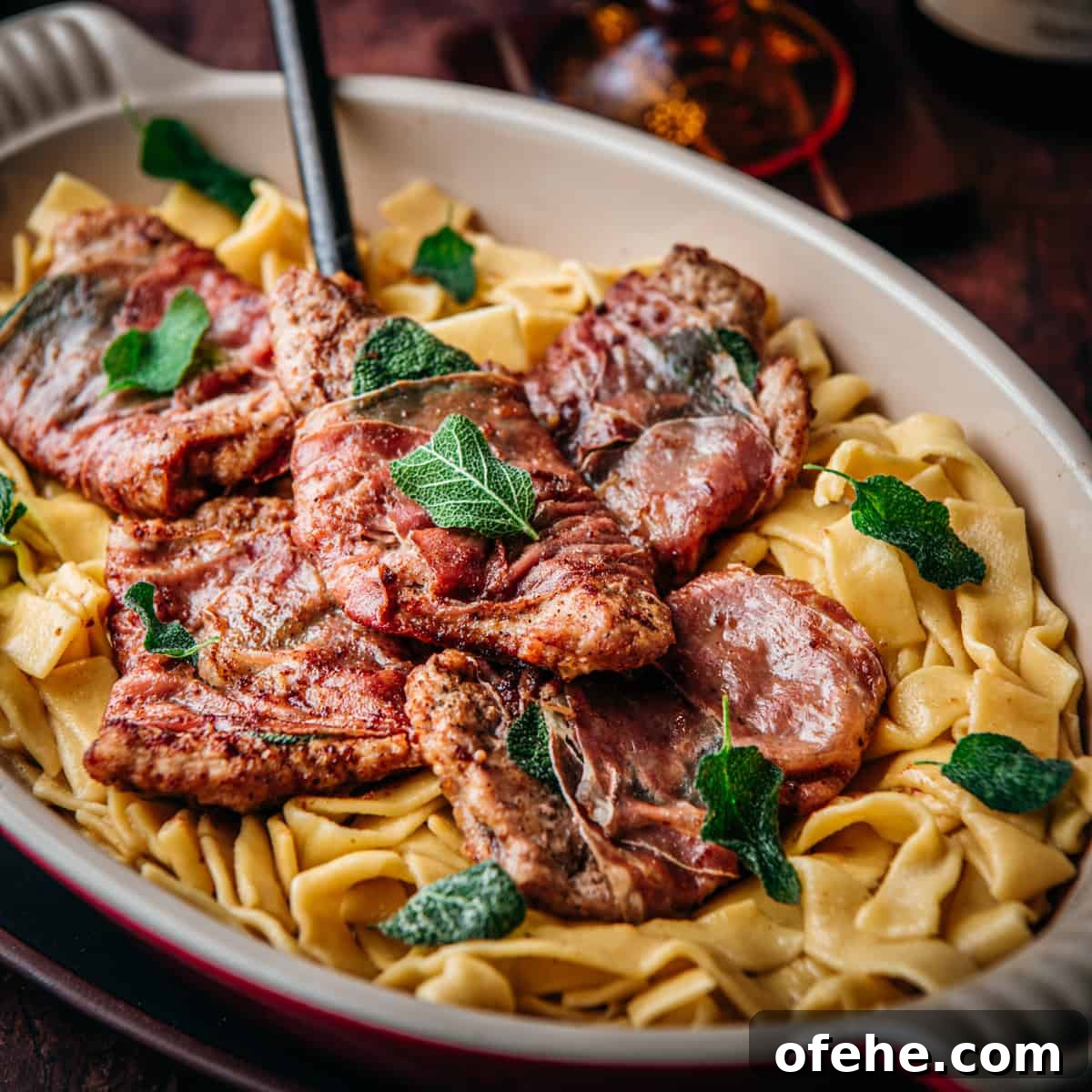
Saltimbocca alla Romana is a classic Italian dish made of thin veal cutlets (you can also use chicken or pork) topped with sage and wrapped in prosciutto. The cutlets are quickly pan-seared, then finished with dry white wine and butter to create a glossy, flavorful sauce. Simple to prepare yet impressive on the plate, this dish pairs beautifully with pasta, polenta, or seasonal green vegetables.
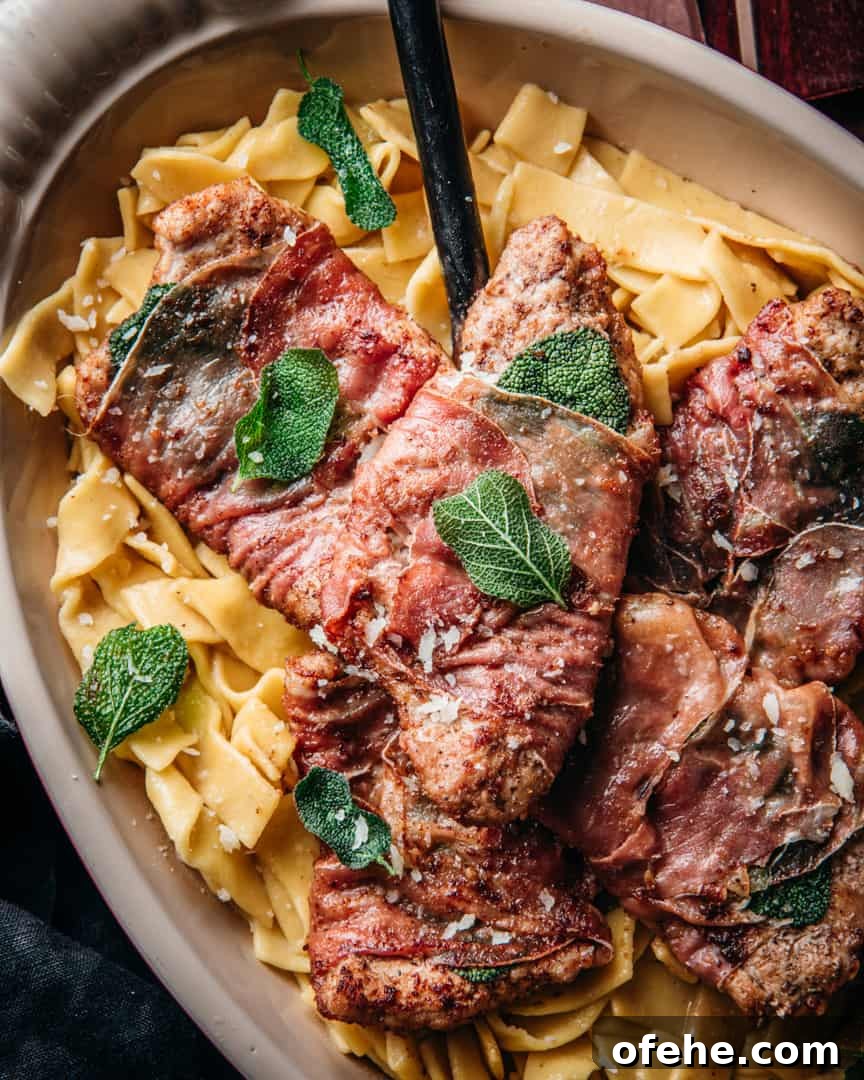
What is Saltimbocca?
The name saltimbocca literally means “jumps in the mouth” in Italian, a fitting description for a dish packed with savory, aromatic flavors. Often called Saltimbocca alla Romana, the recipe is associated with Rome, where this preparation—veal topped with sage and prosciutto, then cooked briefly in butter and wine—has long been enjoyed.
Veal, Chicken, or Pork?
Traditionally saltimbocca uses veal scallopini—thin, tender slices pounded to about 1/4 inch—because veal’s delicate texture and mild flavor complement the prosciutto and sage perfectly. If veal is unavailable or you prefer another protein, thin chicken breasts or pork cutlets work well and retain the spirit of the dish.
Ingredients
Veal Saltimbocca is remarkably straightforward. For four servings you’ll need:
- 4 veal scallopini, pounded to 1/4 inch thick (or 2 chicken breasts halved horizontally or pork cutlets)
- 4 slices prosciutto
- 4 fresh sage leaves
- 1 teaspoon kosher salt
- 1 teaspoon black pepper
- 1/2 cup all-purpose flour, for dredging (optional)
- 6 tablespoons unsalted butter, divided
- 1 teaspoon olive oil
- 1/2 cup dry white wine (Pinot Grigio or another crisp dry white)
Use unsalted butter so you can control seasoning. Quantities in this list match the recipe instructions below.
Substitutions
- Protein: Substitute chicken or pork for veal if preferred.
- Flour: Dredging is optional. Flour adds a light crust and helps thicken the sauce; omit it for a gluten-free version without significantly changing the flavor.
How to Make Saltimbocca alla Romana
This recipe requires no special skills—just quick cooking and a few simple steps.
Equipment
- Large sauté pan or heavy skillet (stainless steel or nonstick)
- Wooden spoon or spatula
Step-by-Step Instructions
Step 1: Assemble
- Season both sides of each veal slice lightly with salt and pepper. Place one sage leaf on each scallopini. Wrap a slice of prosciutto around the veal to enclose the sage; if the prosciutto won’t wrap fully, secure it with a toothpick and remove before serving. Lightly dredge both sides in flour, shaking off any excess.
Step 2: Cook the veal
- In a skillet over medium-high heat, melt 2 tablespoons of butter with the olive oil. Reduce heat to medium-low and add the veal. Cook about 1.5 minutes per side until golden and cooked through—veal scallopini are thin and cook quickly. Transfer the cooked cutlets to a plate and keep warm under foil or in a low oven.
Step 3: Deglaze
- With the pan over medium-high heat, pour in the white wine and scrape up the browned bits from the pan using a wooden spoon. Let the wine reduce until it’s roughly half its volume and slightly syrupy.
Step 4: Finish the sauce
- Remove the pan from the heat and whisk in the remaining 4 tablespoons of butter, one tablespoon at a time, to create a glossy pan sauce. Spoon the sauce over the veal and serve immediately. If serving with pasta, toss the cooked pasta in the pan with the sauce before plating.
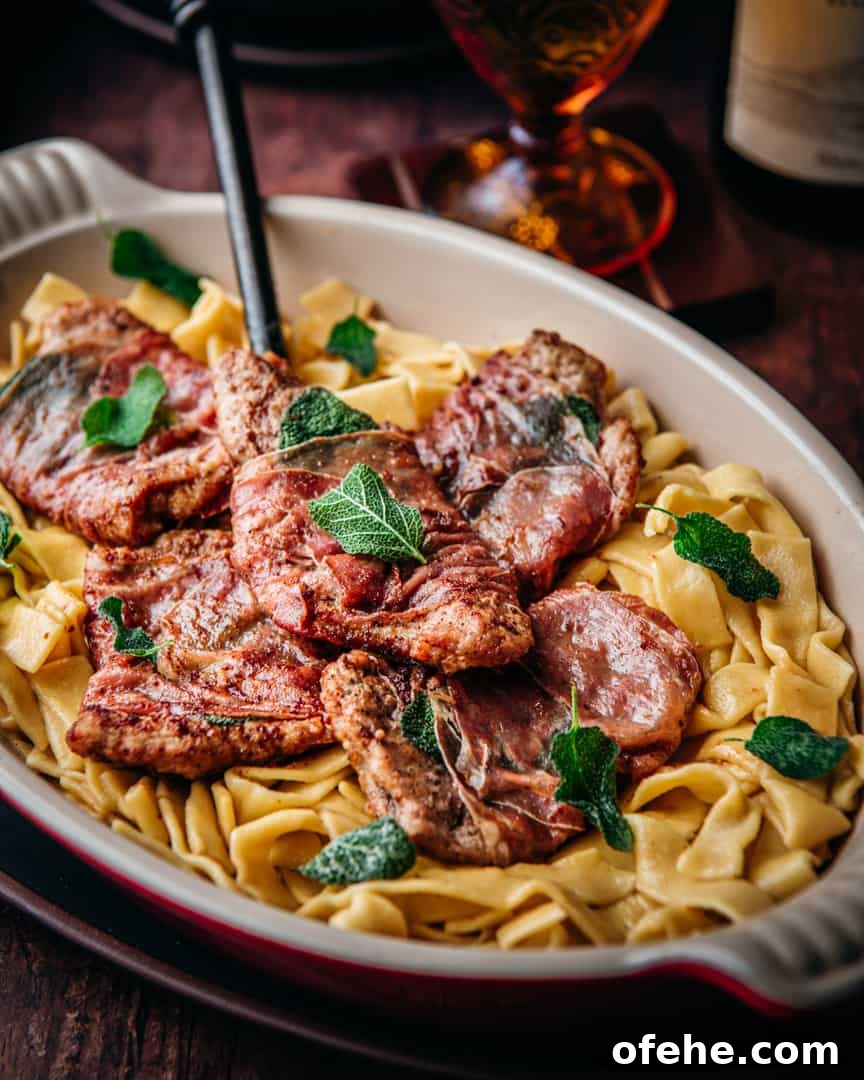
Variations
- Rolled saltimbocca: Instead of flat scallopini, place sage on the veal, top with prosciutto, roll, and secure with toothpicks. Rolling changes the texture and takes slightly longer to cook but is a traditional alternative.
- Different proteins: Try chicken or pork if veal isn’t available.
Storage and Reheating
Store leftovers in an airtight container in the refrigerator for up to 4–5 days. Freezing is not recommended because the texture of the cooked meat and sauce changes, and refreezing previously frozen meat is discouraged. Reheat gently in a skillet over low to medium-low heat until warmed through to preserve texture.
Top tip
If the veal pieces are too large for the prosciutto to wrap fully, use toothpicks to secure the prosciutto; remove them before serving. Cooking the sage between the meat and prosciutto keeps the herb tender and aromatic rather than crisping it to bitterness.
Troubleshooting
Veal scallopini and prosciutto cook very quickly. Keep the heat moderate so the exterior browns without overcooking the thin meat. About 1–2 minutes per side is usually sufficient.
What to Serve With Saltimbocca
This dish pairs well with simple sides that balance richness: buttered pasta, polenta, sautéed spinach, asparagus, peas, or green beans. A light green salad also works well. For a complementary starch, try polenta with a touch of brown butter and sage.
Wine Pairing
Pinot Grigio or another crisp, dry white complements the sauce. If you prefer red, a light Pinot Noir or a medium-bodied Chianti pairs nicely with the salty prosciutto and the dish’s savory profile.
FAQ
It translates as “jumps in the mouth,” referring to the dish’s bold, immediate flavor.
A dry, acidic white like Pinot Grigio is ideal for deglazing and balancing the richness of the butter and prosciutto.
Veal is common in many Italian dishes, from simple scallopini preparations like saltimbocca and piccata to classics like Osso Buco and veal alla Milanese.
📖 Recipe
Saltimbocca alla Romana
Ingredients
- 4 veal scallopini, pounded to 1/4 inch (or 2 chicken breasts halved or pork cutlets)
- 4 slices prosciutto
- 4 fresh sage leaves
- 1 teaspoon kosher salt
- 1 teaspoon black pepper
- 1/2 cup all-purpose flour (optional)
- 6 tablespoons unsalted butter, divided
- 1 teaspoon olive oil
- 1/2 cup dry white wine (Pinot Grigio)
Instructions
Preparation
- Season veal lightly with salt and pepper.
- Place a sage leaf on each piece, wrap with prosciutto, and secure with toothpicks if needed. Dredge lightly in flour and set aside.
- In a skillet, melt 2 tablespoons butter with the olive oil over medium-high heat. Reduce to medium-low and cook veal 1–1.5 minutes per side until golden and cooked through. Keep warm.
- Add the white wine to the pan and scrape up any browned bits. Reduce by about half until slightly thickened.
- Remove from heat and whisk in the remaining butter, one tablespoon at a time, until the sauce is glossy. Serve the sauce over the veal. If serving with pasta, toss the pasta in the sauce before plating.
Nutrition
Carbohydrates: 13 g
Protein: 3 g
Fat: 21 g
Let us know how it turned out!